

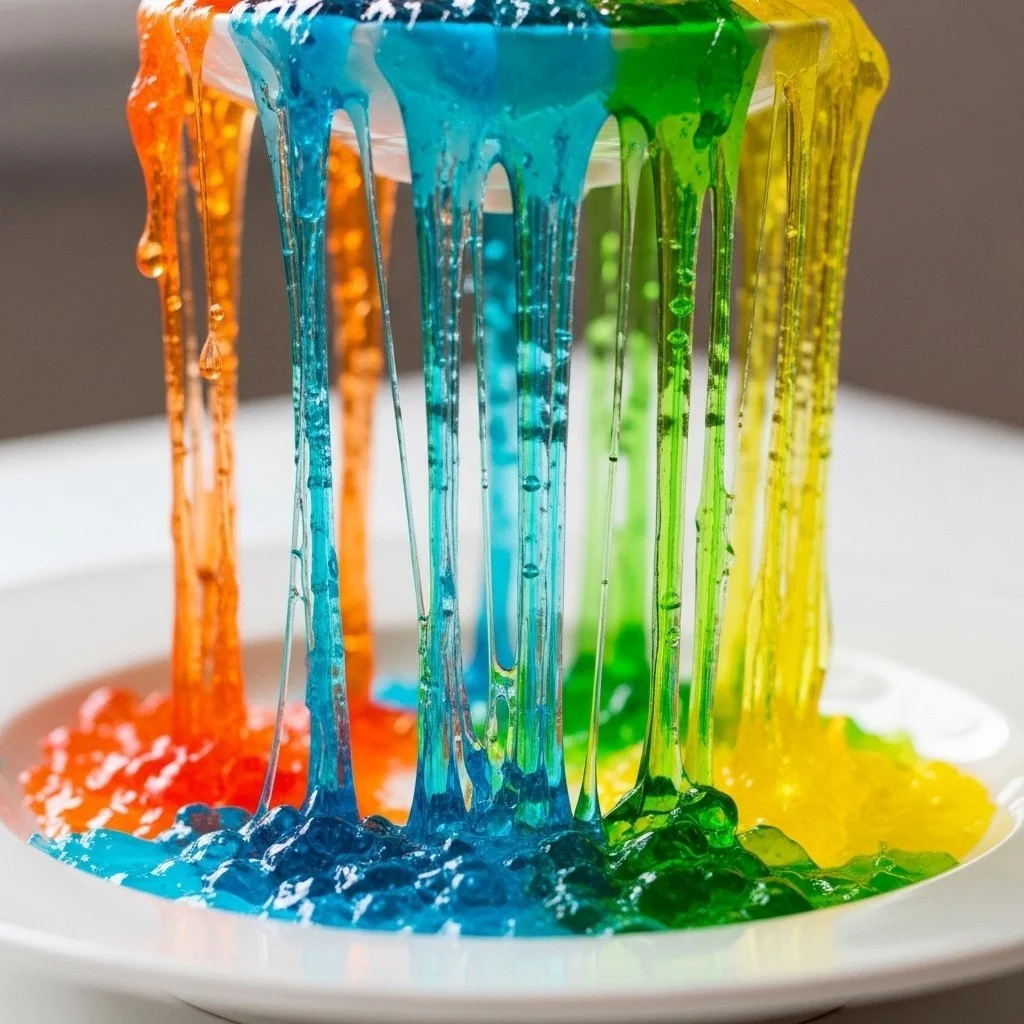
A rainy afternoon, kids staring at you and saying they want to make something now, or a last-minute activity when the usual craft supplies feel tired these moments call for an easy win. Rainbow Sugar Crystal Eruption fits that bill. It needs simple things you likely have in the kitchen, and it turns into a colorful, hands-on experiment that looks like a tiny candy science show. If you want a faster twist on the idea later, try our rapid version for a quicker result: Rapid Growing Rainbow Sugar Crystal Eruption.
Why You’ll Love Making Rainbow Sugar Crystal Eruption
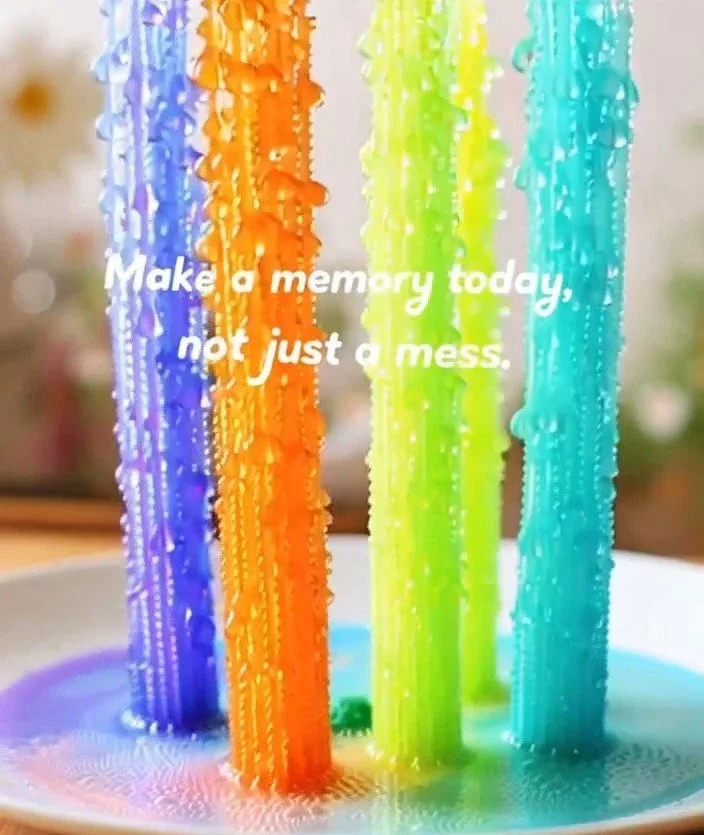
This project works well because it asks for very little setup and gives a clear result kids can watch develop over a few days. You do a short, warm-up step on the stove, pour into jars, add color, and then wait. That waiting part makes it perfect for busy days: active time is short, and the rest is observation.
It also uses common kitchen items, so you do not need a special trip to a craft store. The materials keep costs low, and the cleanup stays manageable if you protect the workspace. That makes it easy to fit this into school breaks, after-dinner boredom, or small-group play.
The process feels like a mini science project with an art twist. You get bright colors, sparkling crystals, and a moment where kids notice cause and effect. It gives you a real result you can display or gift without fuss.
A Quick Look Before You Begin
This DIY takes about 15 to 30 minutes of hands-on time and a few days of watching. The stove step only heats water and dissolves sugar, so an adult should do that part while older kids help measure and stir.
Setup takes ten to fifteen minutes: lay down a tray or towel, prepare jars, tie strings, and warm the sugar solution. Most of the work happens in the first session. After that, you check once or twice a day and gently lift any top crust so crystals can grow freely.
Expect a little stickiness and some sugar dust if kids help stir. The mess level stays low if you use the tray or towel and keep a damp cloth nearby. For a slightly different version that uses baking soda and textures differently, take a look at our baking soda rainbow setup to see how the steps compare: Baking Soda Rainbow Crystal Forest.
Materials You’ll Need
Granulated sugar
common household item, the main ingredient for crystals
Water
plain tap water works fine
Food coloring or liquid watercolors
budget-friendly, pick bright colors
Cotton string or thin kitchen twine
natural fiber helps crystals form
Wooden skewers, pencils, or popsicle sticks
for suspending strings across jars
Clothespins or clips
holds the skewer steady on the jar
Small paper clips or metal washer
to weigh the string so it hangs straight
A small saucepan
for warming the water and dissolving sugar
Measuring cups and a spoon
accurate measuring helps consistent results
Tray or towel for workspace protection
easy cleanup and protects your table
If you already tried colorful sugar crafts, you will see a lot of overlap with other projects. For example, the supplies here work well for small fireworks-style sugar displays that focus on bright bursts of color: Fireworks Rainbow Sugar Explosion.
STEP-BY-STEP DIRECTIONS

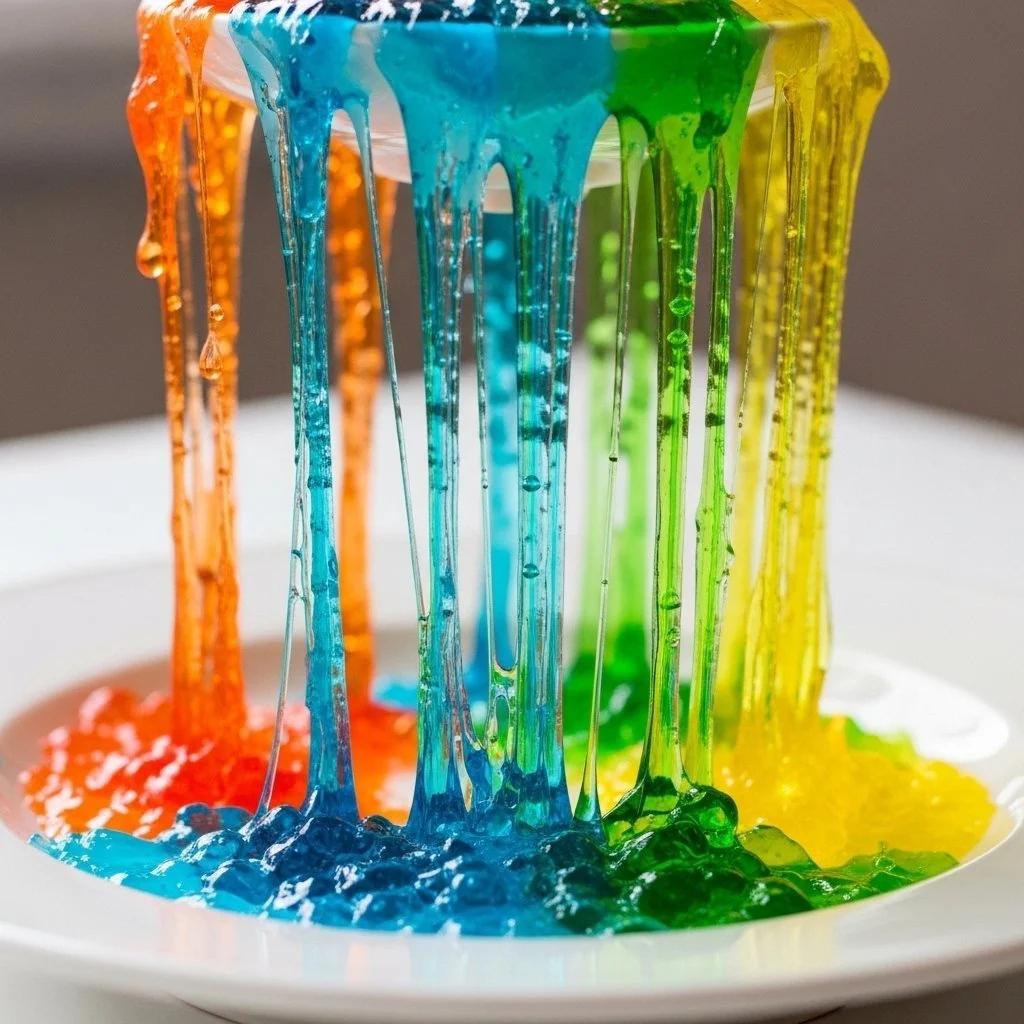
- Prepare your workspace and jars with a tray or towel to catch drips.
Lay the tray where you will work and set jars on it so spills stay contained.
Give kids a towel to wipe sticky hands as they help. - Tie a string to a skewer or pencil, leaving enough length to hang into the jar without touching the sides, and add a small paper clip to weigh it down.
Make the knot snug and trim excess string so it looks neat.
The weight helps the string hang straight and encourages even crystal growth. - Warm water in the saucepan on low to medium heat.
Heat slowly so the water gets warm without boiling over.
A gentle steam and a few small bubbles on the sides means the temperature is right. - Gradually add sugar, stirring until dissolved, until the mixture looks glossy.
Add sugar a little at a time and stir in between so it dissolves fully.
The syrup looks shiny and smooth when you reach the right concentration. - Test for saturation by dropping syrup onto a cold plate.
Drop a small bead and let it cool for a few seconds.
If it firms slightly and holds shape, it is saturated enough; if it runs, add a bit more sugar then test again. - Divide the hot solution into jars and carefully pour without splashing.
Pour slowly down the side of the jar to avoid creating bubbles.
Fill each jar to about three-quarters full so there is room for the string and airflow. - Add food coloring to each jar and stir slowly.
Use a different color for each jar or repeat favorites; a few drops go a long way.
Stir gently to mix the color without cooling the solution too fast. - Suspend the strings into each jar and clip the skewer across the jar mouth.
Position the string so it hangs in the center and does not touch the sides.
Clip the skewer or pencil across the top so it stays steady while crystals form. - Move the jars to a quiet place to cool and cover loosely with a paper towel.
Avoid moving the jars once they cool, since motion can disturb crystal formation.
A low-traffic shelf or counter works well; the paper towel keeps dust out but lets moisture escape. - Check once or twice a day for crystal formation and gently break any crust that forms on top.
Look for small sparkles at the base of the string and tiny points growing out.
If a hard crust appears, gently lift and break it with a spoon so new crystals can grow. - When the crystals look full, lift the string and let them dry for a few hours.
Hold the string over a tray or plate to catch any drips and let air dry until firm.
Dry crystals feel gritty and solid to the touch when they are ready. - Enjoy your finished rainbow sugar crystals by arranging them or hanging them for decoration.
They make cheerful displays on jars, cards, or simple wooden holders.
For a heart-themed presentation, try shaping the dried crystals onto a backing from our heart idea: Rainbow Crystal Heart.
The Simple Science or Skills at Work
You help crystals appear by making a sugar solution that holds more dissolved sugar than it would at room temperature. As the solution cools, the water loses some capacity to keep sugar dissolved and the sugar comes out of solution in tiny, orderly patterns called crystals.
Crystals start where a surface gives them a place to grab hold. The cotton string acts as that surface. The string fibers give many tiny starting points, so crystals appear along the length of the string and grow bigger over time.
Kids practice steady hands and measuring when they help. They watch cause and effect as heat and cooling change the solution. They learn patience while checking growth over days. Observing small changes and noting differences between colors or jars builds a simple science habit.
Troubleshooting Common Issues
If crystals do not form, it usually means the solution did not reach saturation. Warm the solution again gently and add a bit more sugar, testing on a cold plate until that bead firms slightly.
If the top of the jar forms a hard crust, it can block vapor and slow growth. Gently break the crust once or twice during the first days. Use a spoon or clean finger, then cover loosely again to avoid dust.
If strings touch the jar sides, crystals will grow flat against the glass instead of around the string. Reposition the string so it hangs in the center. If needed, untie and retie to get a better hang.
If the crystals look cloudy or have lots of tiny crystals instead of a few larger ones, you either had too many nucleation points or you cooled too quickly. That result still looks pretty. For larger crystals next time, try fewer strings per jar and let the jars sit undisturbed.
If kids stir too hard or the solution bubbles a lot when pouring, wait for the syrup to calm or pour slower down the side of the jar. Bubbles can make uneven crystal starts but do not ruin the experiment.
Easy Variations to Try
Layered colors
Make two or three jars with different colors and pour gently into a single larger jar in thin layers after the first batch cools slightly. The layers give a striped effect when crystals grow.
Mix colors in one jar
Start with one color and add a drop of a second color partway through growth to see streaks or blended tones.
Tiny jars for gifts
Use small jars or cups and grow one crystal string per jar. Let kids decorate lids and tie a ribbon for a simple gift.
Different fibers
Try a cotton swab or a thin paper string and note how the texture changes growth. Natural fibers work best but experimenting teaches observation.
Seasonal shapes
After the strings dry, glue them to cardstock to make ornaments or gift tags. Bend them into shapes and arrange them flat while they dry.
Storing or Reusing This Project
If you keep crystals on display, store them in a dry place. Moist air can make them sticky again, so an airtight container or a sealed jar helps for longer displays.
Save jars and skewers for another round. Rinse the jars with warm water and let them dry. If sugar stuck inside, soak jars in hot water for a few minutes to dissolve residue and then wash as usual.
Leftover solution does not store well. It will crystallize in the pot or bottle and become hard to pour. If you want to reuse the sugar, dissolve it again in hot water and use it for cleaning sticky messes on counters, or pour small amounts into compost if your local rules allow it.
If children taste a tiny bit of the crystals, remind them these used food-safe ingredients but possible dust and repeated handling make them a craft rather than a snack. If you plan to eat the crystals, make a fresh batch and keep them covered and clean while they form.
FAQs About Rainbow Sugar Crystal Eruption
Will this make a big mess?
You will get some sugar on the tray and maybe sticky fingers if kids help. A tray or towel catches the worst, and a damp cloth cleans most spots quickly. The real mess usually ends after the first session when you pour and suspend the strings.
Is this safe for young children?
An adult should handle the hot saucepan and hot sugar. Kids ages five and up can help with measuring, stirring once cooled a bit, and tying strings. Supervise closely around the stove and keep handles turned away from curious hands.
Can I swap ingredients or skip the food coloring?
Food coloring gives the rainbow effect but does not change the crystal process. You can omit it for clear crystals. Do not substitute other chemicals for sugar or salt without checking a tested recipe; this method uses granulated sugar specifically because of how it dissolves and reforms.
What if my crystals are small or crumbly?
Small or crumbly crystals often mean the solution cooled too quickly or the jar had lots of tiny starting points. Try fewer strings per jar next time and keep jars in a stable, undisturbed spot so the crystals can bond into larger shapes.
How long will these last on display?
In a dry spot, crystals stay looking good for weeks or months. In humid rooms they can get sticky or lose sparkle. Store finished crystals in a sealed jar if you want to keep them longer.
A Final Helpful Note
This project favors steady moves over perfection. If something shifts or a jar gets knocked, you can usually recover by gently breaking any odd crust and giving the jar time again. Celebrate small wins a string with a few big crystals looks wonderful and teaches a real science lesson about patience and change. Trust the simple steps, enjoy the colors, and remember that a little experimentation is part of the fun.
Conclusion
For another clear, kid-friendly guide on growing sugar crystals that walks you through the steps with extra photos and tips, see this sweet science example: Grow Dazzling Sugar Crystals: A Sweet Science Experiment for Kids.
If you enjoy colorful eruptions and want more craft inspiration that blends bright visuals with simple chemistry, check out this playful take on rainbow sugar: Rainbow Sugar Eruption – The Buzzy B.
PrintRainbow Sugar Crystal Eruption
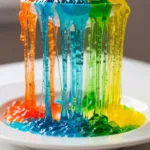
A fun, hands-on experiment for kids that transforms simple kitchen ingredients into colorful sugar crystals.
- Prep Time: 15 minutes
- Cook Time: 15 minutes
- Total Time: 30 minutes
- Yield: 1 set of sugar crystal jars 1x
- Category: Dessert
- Method: Candy Making
- Cuisine: American
- Diet: Vegetarian
Ingredients
- 1 cup Granulated sugar
- 1 cup Water
- Food coloring or liquid watercolors
- Cotton string or thin kitchen twine
- Wooden skewers, pencils, or popsicle sticks
- Clothespins or clips
- Small paper clips or metal washers
- A small saucepan
- Measuring cups and a spoon
- Tray or towel for workspace protection
Instructions
- Prepare your workspace and jars with a tray or towel to catch drips.
- Tie a string to a skewer or pencil, leaving enough length to hang into the jar without touching the sides.
- Warm water in the saucepan on low to medium heat.
- Gradually add sugar, stirring until dissolved, until the mixture looks glossy.
- Test for saturation by dropping syrup onto a cold plate.
- Divide the hot solution into jars and carefully pour without splashing.
- Add food coloring to each jar and stir slowly.
- Suspend the strings into each jar and clip the skewer across the jar mouth.
- Move the jars to a quiet place to cool and cover loosely with a paper towel.
- Check once or twice a day for crystal formation and gently break any crust that forms on top.
- When the crystals look full, lift the string and let them dry for a few hours.
- Enjoy your finished rainbow sugar crystals by arranging them or hanging them for decoration.
Notes
This project is great for educational fun and helps kids practice patience and observation. Adult supervision is required for the stove step.
Nutrition
- Serving Size: varies
- Calories: 200 per jar
- Sugar: 40g
- Sodium: 0mg
- Fat: 0g
- Saturated Fat: 0g
- Unsaturated Fat: 0g
- Trans Fat: 0g
- Carbohydrates: 50g
- Fiber: 0g
- Protein: 0g
- Cholesterol: 0mg