

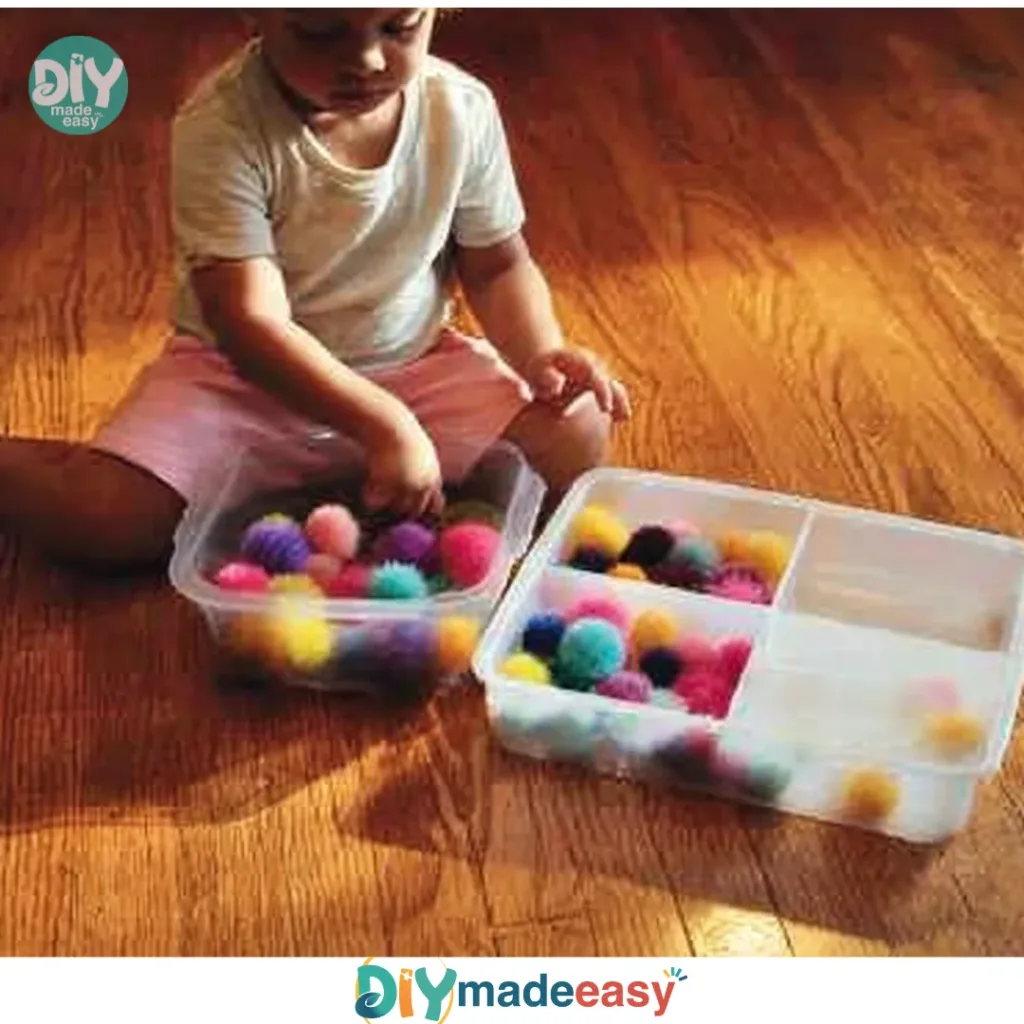
A busy afternoon, a child asking for something to do right now, and exactly five minutes to set up. That is the scene where POM-POM SCOOP & TRANSFER COLOR SORT shines. Pull out a tray, a handful of mixed pom-poms, a couple of scoops or plastic spoons, and you have an instant activity that looks like play and teaches like a tiny lesson. If you have tried our colorful chromatography coffee butterflies, you already know how small, simple materials can make a big difference in a child’s day. Try that project next when this one leaves everyone smiling and ready for the next thing.
Why This POM-POM SCOOP & TRANSFER COLOR SORT Works So Well
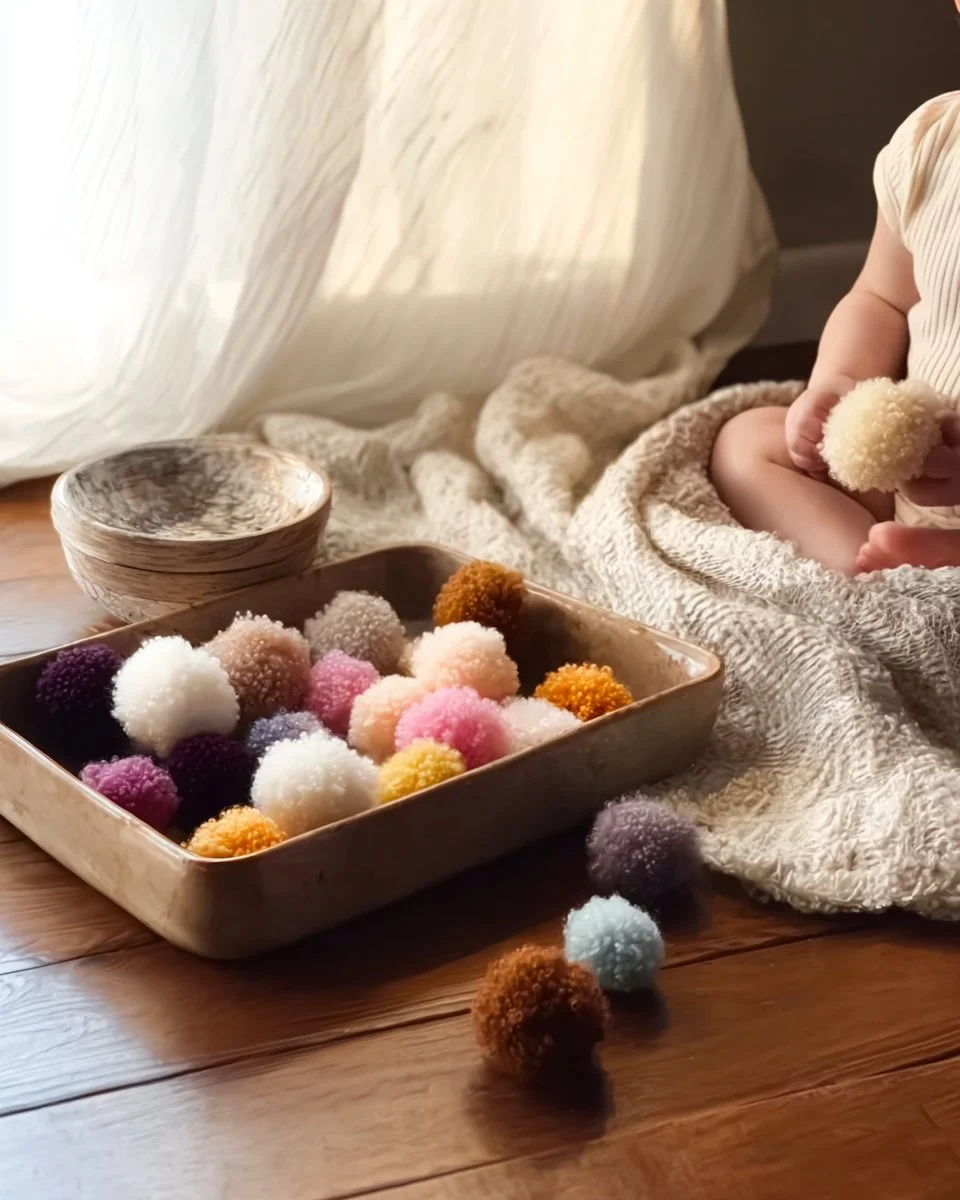
This activity works mainly because it keeps things simple and immediate. You do not need special prep. Empty cups, a tray, and a handful of pom-poms create a game in under two minutes. That makes it easy to pull out on busy days or when motivation lags.
Children like clear goals. Sorting by color gives a visible, satisfying result. Each scoop that lands in the right cup shows progress. That small success keeps kids engaged without complicated instructions.
The setup limits mess naturally. A shallow box or tray catches most runaway pom-poms, and paper towels nearby handle the few that escape. For a parent or caregiver, that low clean-up cost makes you more likely to try the activity again.
Finally, it scales gently with skill. A toddler can start with spoons. An older child can switch to tweezers, race the clock, or count and compare piles. That same little setup offers repeated learning moments over several days.
A Quick Look Before You Begin
This DIY takes about 5 to 20 minutes depending on how many pom-poms you use and how involved the child wants to be. Setup only takes a couple of minutes and cleanup rarely takes more than the activity itself.
Expect a low to medium mess level. Most pom-poms stay on the tray. A few may roll off. Keep a cloth or paper towel handy and you will handle spills in seconds.
Adult involvement starts as guiding and naming colors. With repeated play, children often do most of the activity independently. Stay nearby for safety with small parts, and offer help when scoops or tweezers feel tricky.
Materials You’ll Need
Pom-poms in mixed colors
common household craft stash or a small, budget-friendly bag from a store
Small scoops or large plastic spoons
easy substitute: measuring spoons or small ice cream scoops
Small cups or muffin tin for sorting
use paper cups, reusable plastic cups, or a muffin tin you already own
Tray or shallow box to contain pom-poms
keeps things tidy and prevents rolling; a baking sheet works well
Tweezers or child-safe tongs (optional)
optional for fine motor challenge; kid-friendly tongs work best
Paper towels or cloth for cleanup
for quick pick-up of dropped pom-poms and any sticky fingers
Timer or stopwatch (optional)
optional for a gentle challenge or timed rounds
Step-by-Step Directions
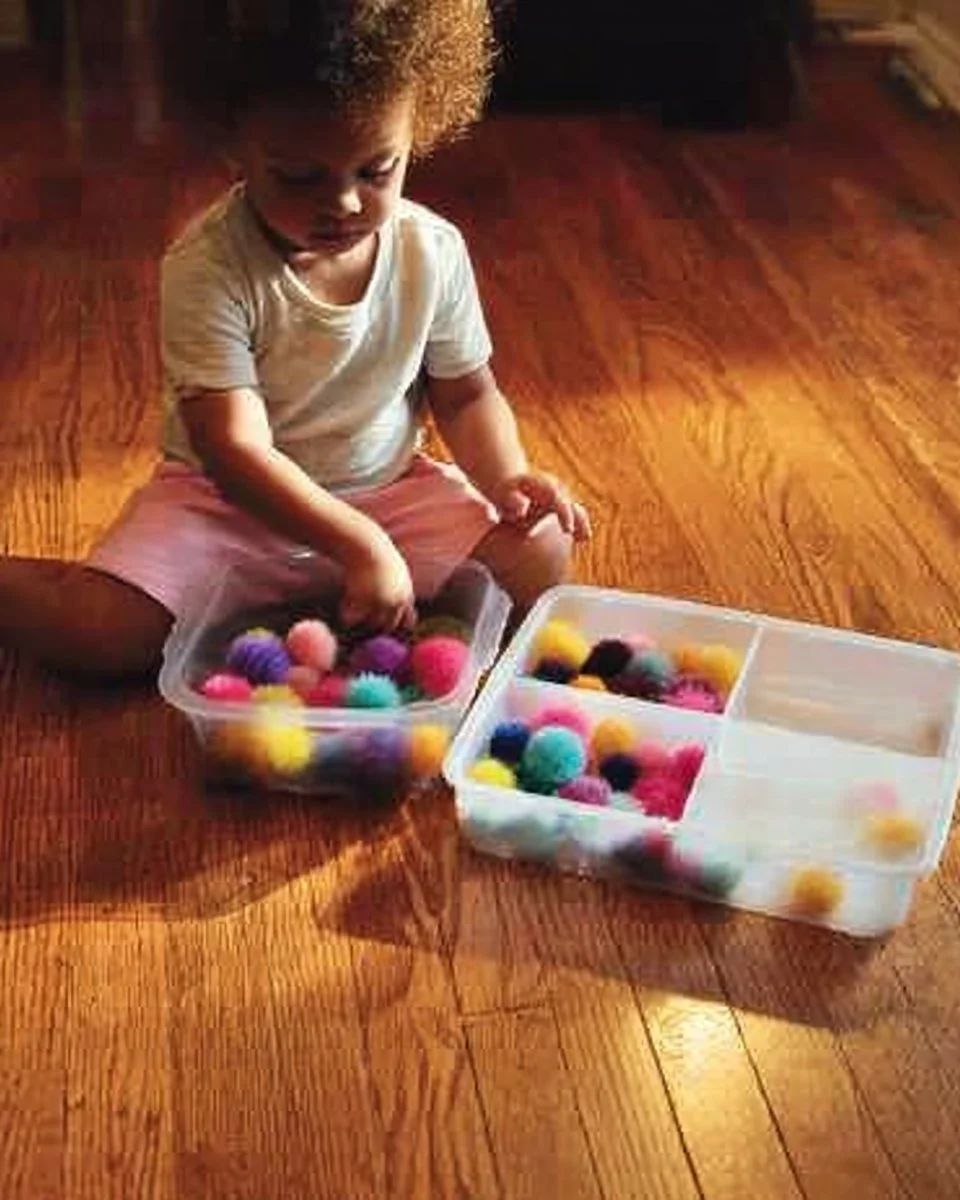
- Prepare your workspace by placing the tray on a table and arranging empty cups or muffin tin cups around one side.
Place the tray where your child can reach comfortably. Line up cups by color in a semi-circle or row. - Pour a mixed pile of pom-poms into the tray and show your child the scoops and empty cups.
Let your child touch a few pom-poms and name the colors together. Show how a scoop holds a pom-pom before trying. - Ask your child to scoop one pom-pom and transfer it to the matching color cup while you provide guidance.
Model one scoop slowly if your child needs it. Say the color out loud and encourage their attempt. - Continue until all pom-poms are sorted into cups.
Keep the pace relaxed. Pause to celebrate small wins when a pom-pom lands in the right cup. - For added challenge, switch the scoops with tweezers or tongs.
Offer tweezers for fine motor practice or set a gentle timer for a speed round. Adjust difficulty to the child’s comfort. - Invite your child to help clean up by returning pom-poms into a container.
Turn cleanup into the last sorting round. Use a small container they can hold and encourage counting as they scoop them back.
What Kids Practice While Making This
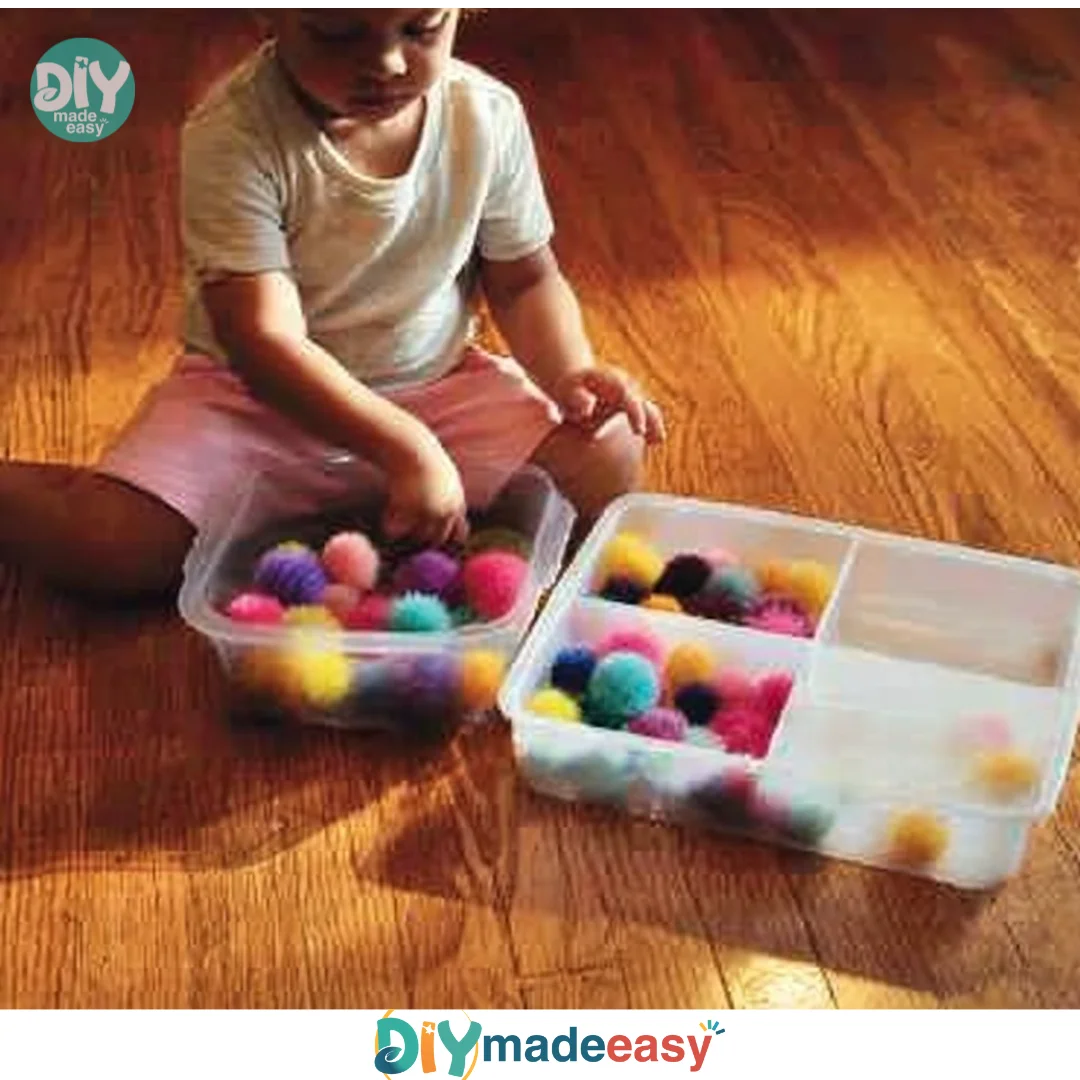
Children work on several useful skills in this activity without it feeling like work. Fine motor control improves as fingers, spoons, or tweezers hold and release tiny pom-poms. That grip and release action strengthens hand muscles used later for writing, buttoning, and using cutlery.
Sorting by color exercises categorization and visual discrimination. Kids learn to compare shades and make choices. That simple decision-making builds early reasoning skills.
Hand-eye coordination grows naturally. Watching the pom-pom move from tray to cup and guiding the scoop tightens the link between what children see and how they move their hands.
Finally, this project introduces cause and effect. A misplaced scoop shows that slower, steadier movements work better. Children experience trial and error and learn to adjust their actions.
Troubleshooting Common Issues
If pom-poms keep rolling off the tray, the tray might be tilted or too small. Flatten the tray and move the cups so they do not crowd the scoop space.
If your child gets frustrated with tweezers, switch back to spoons for a round. Tweezers require a different hand shape. Try them again later when fingers feel steadier.
If pom-poms clump together or stick, check for residue from glue or wet surfaces. Dry the pom-poms gently with a paper towel and make sure the tray is clean and dry.
If attention wanes quickly, shorten the session and celebrate the small accomplishments. Offer a variation like counting or making little color patterns to renew interest.
Easy Variations to Try
- Counting rounds: After sorting, ask your child to count how many pom-poms are in each cup. Turn numbers into simple comparisons like more and less.
- Pattern practice: Make a simple color pattern and ask your child to copy it in the muffin tin cups. Use two colors to start, then add more for a challenge.
- Race the clock: Use a timer to make a non-competitive challenge. See how many pom-poms the child can sort in one minute. Repeat and watch their speed and accuracy improve.
- Opposite day: Ask your child to sort by size or texture if you have mixed-size pom-poms or add a few fuzzy craft balls as a gentle twist.
- Cooperative play: Two children can work side by side, each managing certain colors. They learn taking turns and sharing space.
Storing or Reusing This Project
Keep your pom-poms in a small container with a lid so they stay clean and ready next time. A reused yogurt tub or a small craft box works well and keeps the set together.
If you use a muffin tin, wash it if it touched glue or sticky fingers. Dry it before storing. Paper cups stack flat and take little space.
Turn leftover sessions into other activities. Pom-poms work for simple crafts, sensory bottles, or as counters for math games. Reuse rather than throwing out and you will get many minutes of play out of a small purchase.
If you want themed storage, label a small container with color stickers that match the pom-poms. Kids enjoy returning items to a labeled spot, and it keeps your supplies organized.
A Practical Making Moment
I once set this up at my kitchen table while making a sandwich. My four-year-old started with spoons and named each color loudly and proudly. A few pom-poms escaped onto the floor, but a quick hand scoop and a laugh fixed it, and the child moved on. Switching to tongs about halfway through made the activity feel new, and we ended up counting the piles together. Cleanup took under five minutes. That quick rhythm of play, short guidance, and tidy finish is exactly what makes this activity repeatable on busy days.
Common small hiccups happen. One time a younger child wanted only blue pom-poms and ignored others. I turned that into a game: blue was “treasure” and we had to find all treasures, then find the reds. Another time the tweezers were too hard to open. I switched to spoons and showed a two-handed hold. Those quick adjustments kept the moment positive and kept us playing.
FAQs About POM-POM SCOOP & TRANSFER COLOR SORT
Can my toddler play with pom-poms safely?
Pom-poms are small and can be a choking hazard for children who still put things in their mouths. Stay nearby and supervise if your child is under three or if they mouth objects. I usually offer larger pom-poms or set the activity as a lap activity where I can watch closely.
How messy will this get on my table or floor?
Most of the mess stays in the tray. Expect a few stray pom-poms to roll away. Keep a cloth or paper towel nearby and set the tray on a washable surface. If you use a rug, the pom-poms will sit on top and scooping them back is easy. It rarely creates anything that requires vacuuming.
What if my child loses interest quickly?
Shorten the session and celebrate small wins. Switch tools, try a timer, or add a counting twist. I often introduce one small rule change, like using tweezers or making a pattern, and that refreshes interest without rewriting the game.
Can I substitute other materials if I do not have pom-poms?
I recommend sticking with pom-poms for the soft texture and ease of scooping. If you must substitute, try larger items that do not pose a hazard, like cotton balls or large buttons for older kids, but supervise closely and consider the choking risk.
How long will the child stay engaged?
Expect 5 to 20 minutes depending on age and interest. Repeated short sessions work better than one long stretch. You will likely find the child returns to the tray multiple times over a few days.
A Final Helpful Note
Keep this activity light and flexible. The point is not perfect sorting or strict timing. The point is the hands-on practice, the short wins, and the quick clean finish. If a round lasts two minutes today and ten minutes tomorrow, that is success.
Trust your instincts about supervision and adjust the tools to match your child’s skill. Put the timer away if it stresses your child and bring it back when they ask for a challenge. The materials are forgiving and the activity fits neatly into a busy day.
You do not need every color or a perfect tray. Use what you have and know that even a small handful of pom-poms creates a meaningful moment of learning and play. Come back to it again and again; it grows with the child and stays simple for you.
Conclusion
For a ready-made step idea, see the original inspiration at Pom-Pom Scoop and Transfer Color Sort – Happy Toddler Club, which shows another take on the same game. For additional ideas that support learning at home and family routines, check resources like Home Learning – Child Abuse Prevention Council.
PrintPom-Pom Scoop & Transfer Color Sort
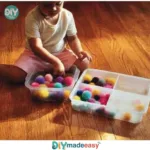
A fun and engaging activity for children to practice fine motor skills, color recognition, and sorting through a simple play with pom-poms.
- Prep Time: 2 minutes
- Cook Time: 20 minutes
- Total Time: 22 minutes
- Yield: 1 engaging activity session
- Category: Activity
- Method: Interactive Play
- Cuisine: N/A
- Diet: N/A
Ingredients
- Mixed color pom-poms
- Small scoops or large plastic spoons
- Small cups or muffin tin for sorting
- Tray or shallow box to contain pom-poms
- Tweezers or child-safe tongs (optional)
- Paper towels or cloth for cleanup
- Timer or stopwatch (optional)
Instructions
- Prepare your workspace by arranging empty cups or muffin tin on one side of a tray.
- Pour a mixed pile of pom-poms into the tray; let the child touch them and name the colors.
- Guide the child to scoop a pom-pom and transfer it to the matching cup while providing encouragement.
- Continue until all pom-poms are sorted; pause to celebrate small wins.
- For added challenge, switch to tweezers or tongs and invite the child to help clean up at the end.
Notes
Keep a cloth or paper towel handy for quick clean-up of any fallen pom-poms. Adjust the complexity based on the child’s age and skill level.
Nutrition
- Serving Size: 1 child
- Calories: 0
- Sugar: 0g
- Sodium: 0mg
- Fat: 0g
- Saturated Fat: 0g
- Unsaturated Fat: 0g
- Trans Fat: 0g
- Carbohydrates: 0g
- Fiber: 0g
- Protein: 0g
- Cholesterol: 0mg