

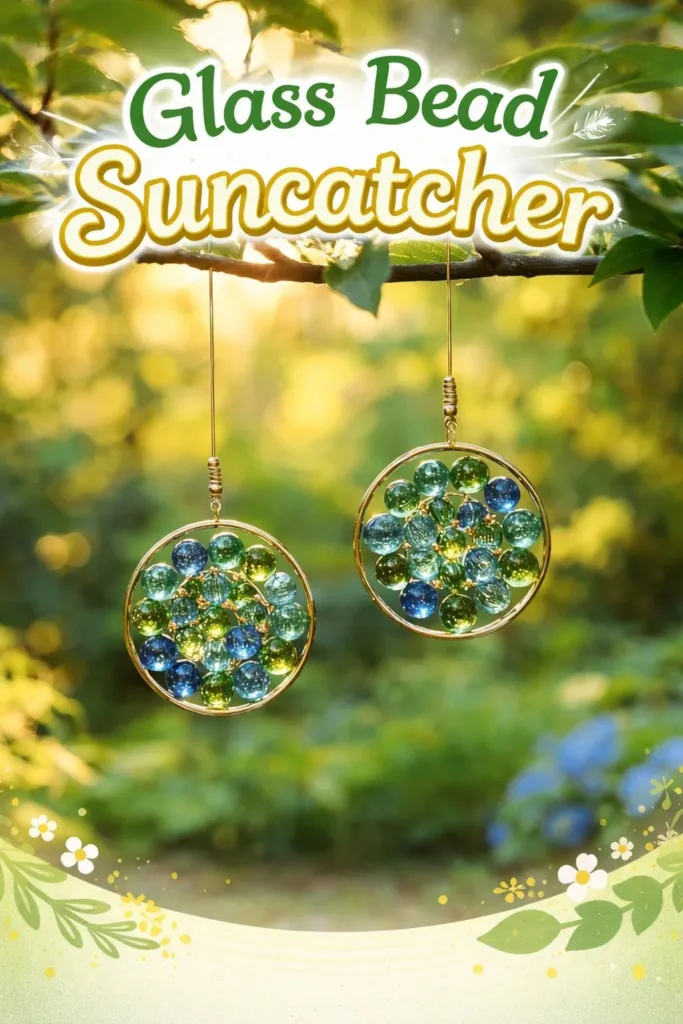
A rainy afternoon, a pair of bored kids, and a kitchen counter that suddenly looks like a craft station. You want something quick, hands-on, and satisfying to do right now. Glass Bead Suncatcher fits the bill. It uses beads you may already have, a little wire, and simple tools to make something that catches the sun and feels like a small celebration.
I remember helping my daughter thread beads while the toddler watched from a high chair. The jingle of beads, the careful loops, and the moment sunlight hit the finished strands made everyone grin. If you need a calm, low-prep activity that finishes with a real result, this is it. For another kid-friendly window craft you can pair with this later, try this colorful crayon suncatcher project for a different look: enchanting crayon suncatchers.
Why You’ll Love Making Glass Bead Suncatcher
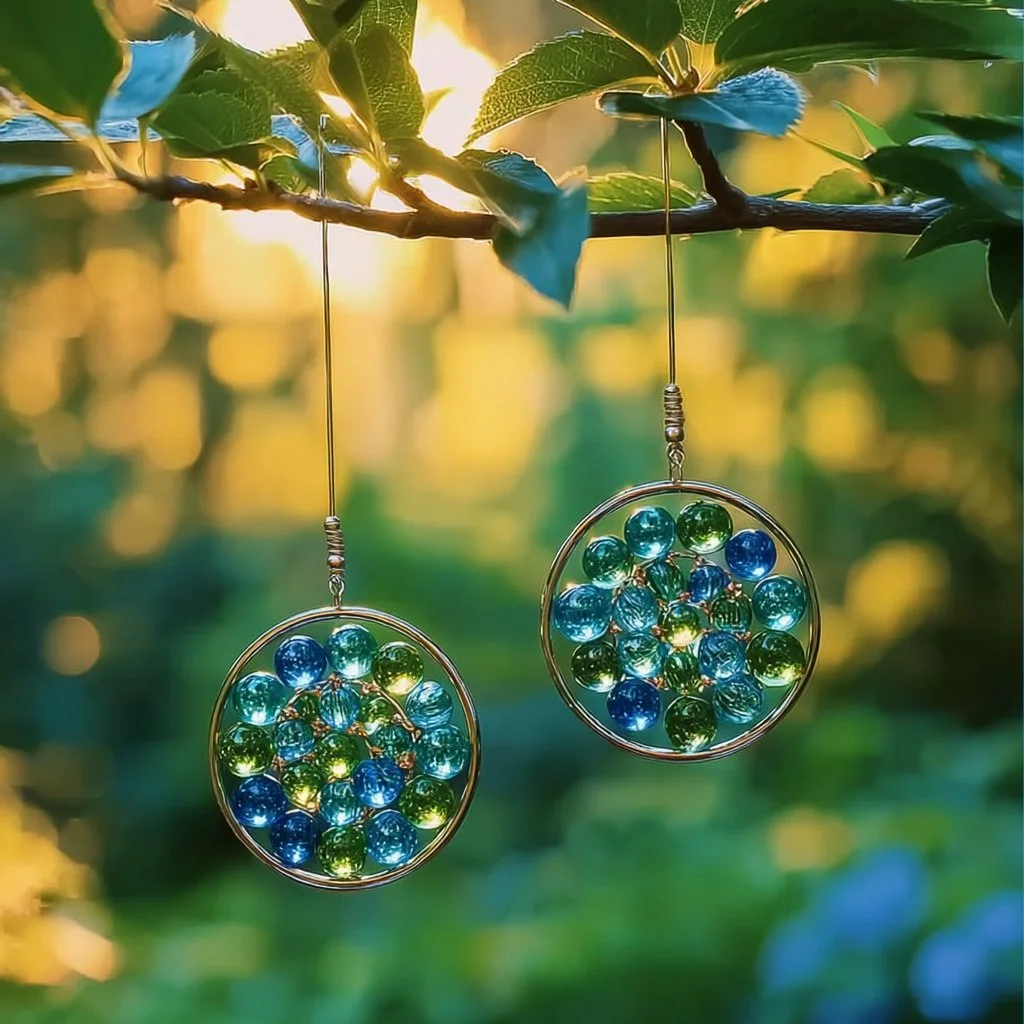
This project works because it keeps things simple from the start. You do not need special skills to get a lovely result. The materials take almost no prep, and the main action is threading beads and making small loops. That simplicity makes it easy to start even with short attention spans.
It stays approachable because it uses obvious choices. Glass beads are colorful and reflective on their own. Thin craft wire bends easily and holds shape without heavy tools. Kids can join in small ways, and adults can finish or help with the loops.
It proves reliable in everyday life. You can make one strand in 10 minutes. You can link a few strands together the same afternoon. The finished suncatcher gives immediate payoff a strip of color and sparkle in a sunny window without a big mess or deep clean-up.
How This DIY Comes Together
This craft comes together in a rhythm you can tune to your time. Setting up takes about five minutes. Laying out beads and cutting wire takes another five. Threading and finishing each strand usually takes 5 to 10 minutes, depending on length and fussiness.
Expect a low to medium mess level. The main mess is loose beads, which sit on a tray or mat and usually stay put if you use a bead mat. You might see a few beads roll away; that is normal. Clean up takes a few minutes and often becomes part of the activity for curious helpers.
Adult involvement depends on age. Young children do the fun part choosing colors and threading larger beads. Older kids can do loops with supervision. Adults should handle wire cutters and sharp ends, and help make secure top loops for hanging. If you want a variation that uses paper or wax elements, try a companion suncatcher craft like these no-curl heart suncatchers for a second, softer project: no-curl swirled heart suncatchers.
Materials You’ll Need
Glass beads in mixed sizes and colors
- Colorful, reflective, and ready to catch light.
Thin, flexible craft wire (20 to 26 gauge)
- Easy to bend and holds loops nicely. Choose thinner for small beads.
Clear fishing line or nylon thread (optional)
- Use if you prefer a nearly invisible string for hanging.
Small jump rings or metal hoops (optional)
- Handy for linking strands to a central ring.
Round-nose pliers
- The tool for neat loops and gentle shaping.
Wire cutters
- For clean ends. Keep them away from tiny hands.
Needle-nose pliers (optional)
- Helpful for tucking ends and tightening loops.
Small suction cup with hook or hanging ring
- For mounting in a sunny window without drilling.
Soft cloth or bead mat
- Keeps beads from rolling and cushions your workspace.
Ruler or small tape measure
- To make even strand lengths. A scrap of paper works in a pinch.
Small dish or tray for beads
- Keeps colors organized and reduces spills.
Clear-drying craft glue (optional)
- For extra security on stubborn beads or thread ends.
Safety glasses (optional)
- Good when cutting wire or snapping ends. Use if anyone is nervous.
STEP-BY-STEP DIRECTIONS
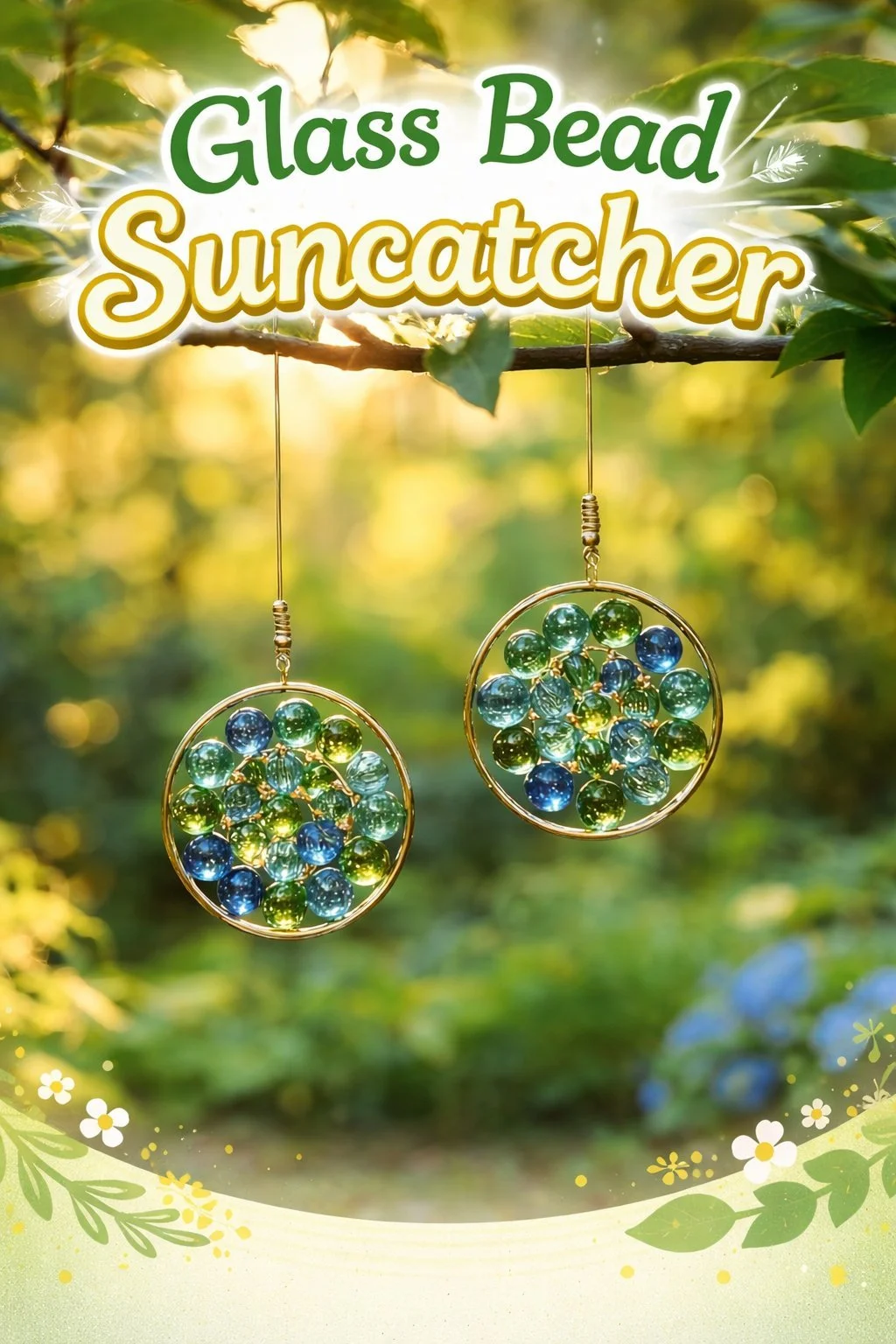
- Prepare a calm workspace with a bead mat or soft cloth.
Spread the mat on a table so beads do not roll away and small pieces stay visible.
Keep a tray and a dish towel nearby for quick corral and clean-up. - Set out your beads by color or size.
Sort by color for patterns or by size for texture variety so the next steps move smoothly.
You will notice color combos that work together once you see them in small piles. - Cut wire or line to your desired hanging length with a small extra tail.
Add an inch or two to the length so you have room for loops and handling.
Measure against the window or hook if you want consistent strand lengths. - Form a small loop at one end of the wire using round-nose pliers.
Make a clean loop that will stop beads from sliding off and give a neat top finish.
If the loop feels loose, pinch gently with needle-nose pliers to tighten. - Thread beads onto the wire in the chosen order.
Slide beads on with a steady hand, nudging them down toward the first loop.
If a bead sticks, twist the wire slightly or try a thinner bead hole. - Alternate bead sizes for dynamic light play.
Put a larger bead, then a small one, then a medium one to create movement in sunlight.
That staggered look makes more interesting shadows and reflections. - Leave gaps between beads for movement or space them tightly for a static effect.
Small gaps let beads swing and catch light from different angles during wind or drafts.
Tight spacing gives a cleaner line and a denser color band in the window. - Finish the strand with another loop at the top.
Bend the wire back and form a secure loop with pliers so beads stay put.
Trim excess tail close to the loop and tuck the cut end so it cannot snag. - Link several strands to a central ring.
Open a small jump ring or metal hoop, slide strand loops onto it, then close it securely.
Adjust spacing on the central ring so the suncatcher fans out evenly. - Attach a hanging line or hook for mounting.
Tie clear fishing line to the central ring, or use the central ring directly on a suction cup hook.
Test the hanging weight gently before elevating it to a higher window. - Hang in a sunny window and adjust as necessary.
Pick a spot that gets morning or afternoon sun and watch the beads change through the day.
If a strand twists or hangs oddly, shorten or re-balance it by sliding beads or moving loops.
Skills This Activity Supports

This simple project helps kids practice fine motor skills through threading and loop tightening. These small, repeated motions strengthen fingers and improve hand-eye coordination in a gentle way.
It teaches pattern thinking when children choose colors and sizes in sequences. They learn about repetition and balance by experimenting with alternating beads or grouping similar hues.
The suncatcher also shows cause and effect. When the beads move, they throw specks of color across the room. Kids see how spacing, bead shape, and sunlight affect the result. That feedback makes the whole activity feel like a small science demonstration.
Troubleshooting Common Issues
If beads keep slipping off the wire, check the loop at the end. Often the loop did not close tightly, or the wire tail is too short. Re-open the loop slightly and make a firmer turn; tighten with needle-nose pliers.
If the wire kinks or feels stubborn, you probably used a lower gauge wire or bent it sharply. Start with a fresh piece and bend slowly. Run your pliers along the wire to smooth minor kinks before threading beads.
If a strand hangs lopsided, the likely cause is uneven bead weight or length. Swap a heavy bead for a lighter one or shorten the longer strand a bit. Sometimes moving a large bead closer to the center ring balances the whole piece.
If you spill a handful of beads, stay calm. Use a small dustpan and brush, a shallow tray to gather beads, or press a piece of tape on the cloth to pick up tiny ones. For beads under furniture, a damp paper towel or a vacuum with a stocking over the nozzle helps pick them up.
If kids get restless, break the activity into stages. Let them sort beads first, then thread a few beads at a time, then take a snack break, and finish later. That pacing keeps patience steady and the result tidy.
Easy Variations to Try
Try color gradients. Pick beads from light to dark of the same color family and make a fading strand. The sun shows subtle shifts beautifully and gives a calm, polished look.
Make wind-chime style strands. Use slightly more space between beads and add small metal or wooden spacers for a gentle clink. Hang several different lengths from the central ring for a layered effect.
Use clear thread for a floating look. If you want beads to seem suspended in air, switch to fishing line or nylon thread and knot carefully. Add a dab of clear-drying glue to knot ends for extra security.
Mix materials for texture. Add a few wooden beads or small metal charms to contrast with the glass. The change in texture changes the sound and the visual interest without complicating the process.
Make them seasonal. Use reds and greens for winter windows, soft pastels for spring, or warm ambers for autumn. Switching bead palettes refreshes the same technique for different times of year.
Storing or Reusing This Project
Store extra beads in small jars, pill organizers, or resealable bags so you can rebuild or refresh suncatchers later. Label containers by color or size to save sorting time next craft day.
If you want to change the design, open the bottom loop and slide beads off onto a tray. Reuse wire only if it still looks smooth and straight. Bent or kinked wire snaps more easily, so replace it for safety.
Clean glass beads with a damp cloth if they collect dust. Wipe gently and dry before re-stringing so glue or knots do not get damp. For quick display cleanup, remove the suncatcher, wipe the window, and re-hang it in a minute.
If you change your mind and want a new shape, untwist the jump rings and re-link strands to a different central ring. That flexibility keeps the project useful over time and reduces waste.
FAQs About Glass Bead Suncatcher
How messy is this? My living room is already a disaster.
It stays mostly tidy if you use a bead mat and a small tray. Set a towel under the work area and keep a cup for stray beads. If a few roll away, pick them up with a piece of tape or a damp paper towel. The biggest mess is handfuls of beads, but that cleans quickly and does not stain.
How old does my child need to be to help safely?
Small kids can choose beads and hand them to an adult. Children around five to seven often thread large glass beads with supervision. Always supervise closely with small beads because they are a choking hazard. Adults should handle cutters, pliers, and final loop closing.
Can I substitute anything if I do not have beads?
You can try larger, lightweight objects like buttons or wooden beads, but note the look and weight change. Glass beads catch light best. If using glued elements, wait for full drying and consider a stronger wire for heavier pieces.
Will these fall and break easily?
The suncatcher will hold well if loops and jump rings close tightly. Test the finished piece gently before leaving it unsupervised. If you hang from a suction cup, check it periodically. Glass beads can chip if they fall, so hang where they will not get knocked by pets or doors.
What if the wire keeps sticking out or snagging?
Trim the wire close to the loop and tuck the end into a nearby bead hole or use pliers to flatten it. You can add a small dot of clear craft glue at the loop to keep the trim from moving. That simple step reduces snags and keeps strands neat.
A Final Helpful Note
Take the pressure off perfection. The charm of a Glass Bead Suncatcher comes from the little irregularities the tiny gaps, the mixed sizes, the way beads catch the sun slightly differently as they move. Focus on the moments: the quiet threading, the tinkle of beads landing, and the first time light paints the wall.
If something feels fiddly, pause and breathe. Move one thing at a time. Use the bead mat to prevent escapees and the tray to keep choices organized. Remember that you can always change things tomorrow. That flexibility makes crafts feel like play, not a test.
Conclusion
If you want a different take on glass bead suncatchers with step-by-step photos and patterns, this guide from One Little Project gives a clear visual companion: DIY Suncatchers with Glass Beads – One Little Project. For a quick source of assorted beads and suncatcher-friendly options, check the selection here: Suncatcher Beads – Amazon.com.
PrintDIY Glass Bead Suncatcher
Create colorful glass bead suncatchers that bring light and joy into your home with this easy kid-friendly craft.
- Prep Time: 5 minutes
- Cook Time: 10 minutes
- Total Time: 15 minutes
- Yield: 1 suncatcher
- Category: Crafts
- Method: Crafting
- Cuisine: N/A
- Diet: N/A
Ingredients
- Glass beads in mixed sizes and colors
- Thin, flexible craft wire (20 to 26 gauge)
- Clear fishing line or nylon thread (optional)
- Small jump rings or metal hoops (optional)
- Round-nose pliers
- Wire cutters
- Needle-nose pliers (optional)
- Small suction cup with hook or hanging ring
- Soft cloth or bead mat
- Ruler or small tape measure
- Small dish or tray for beads
- Clear-drying craft glue (optional)
- Safety glasses (optional)
Instructions
- Prepare a calm workspace with a bead mat or soft cloth.
- Set out your beads by color or size.
- Cut wire or line to your desired hanging length with a small extra tail.
- Form a small loop at one end of the wire using round-nose pliers.
- Thread beads onto the wire in the chosen order.
- Alternate bead sizes for dynamic light play.
- Leave gaps between beads for movement or space them tightly for a static effect.
- Finish the strand with another loop at the top.
- Link several strands to a central ring.
- Attach a hanging line or hook for mounting.
- Hang in a sunny window and adjust as necessary.
Notes
This craft is great for practicing fine motor skills and teaches kids about colors and patterns.
Nutrition
- Serving Size: 1 suncatcher
- Calories: N/A
- Sugar: N/A
- Sodium: N/A
- Fat: N/A
- Saturated Fat: N/A
- Unsaturated Fat: N/A
- Trans Fat: N/A
- Carbohydrates: N/A
- Fiber: N/A
- Protein: N/A
- Cholesterol: N/A