

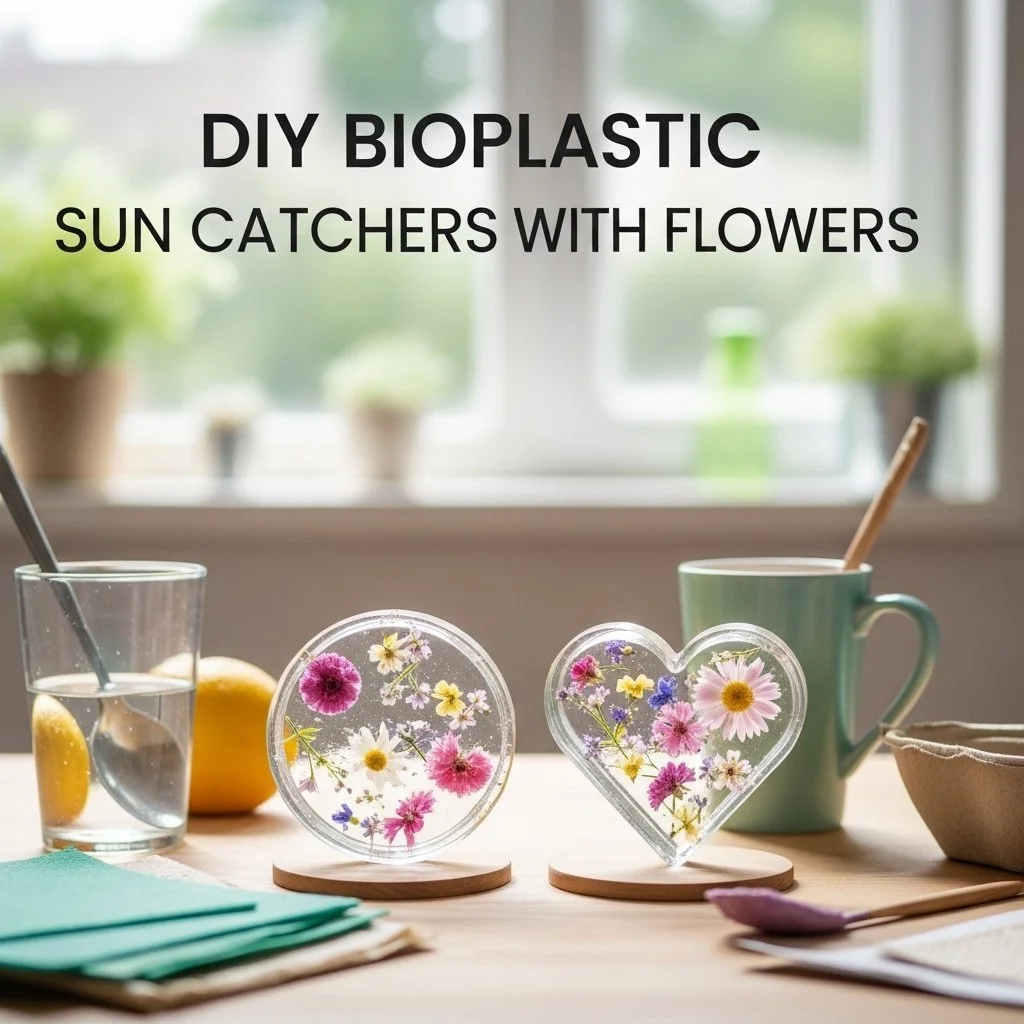
A busy afternoon, a counter full of mugs, and kids asking for something to do right now. That is the kind of moment when Beautiful Bioplastic Suncatchers with Natural Flowers become a small, satisfying rescue. You clear a patch of kitchen, pull fresh petals from a quick walk in the yard or the florist stash, and you get something bright and handmade in a couple of hours. If you want a slightly different recipe or more photo steps, take a look at our full bioplastic recipe page right here and then come back for the easy, family-friendly version below.
Why You’ll Love Making Beautiful Bioplastic Suncatchers with Natural Flowers
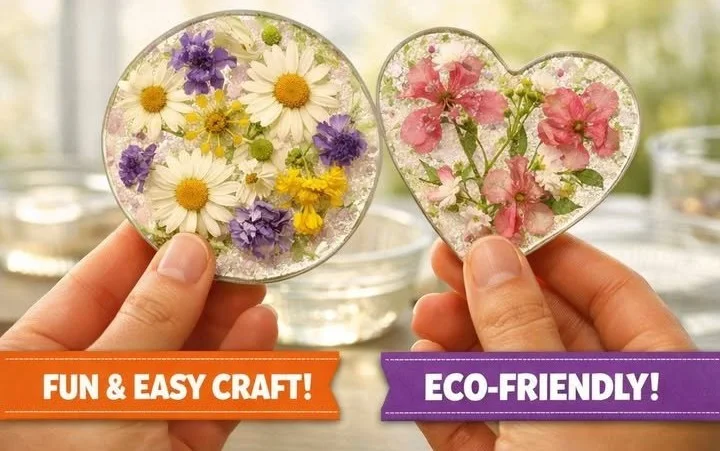
This project fits a busy day. It uses items you likely already have in a kitchen cabinet. It does not need fancy tools. You can set kids up to trim petals and arrange designs while an adult does the gentle heating.
It stays low-prep. There is one short cook step and a hands-on assembly step. The mess is mostly contained to one saucepan and a baking sheet. That makes cleanup straightforward and realistic for families.
It also gives real results. The finished pieces catch light like a stained glass window. They do not look perfect like store-bought glass, but they look handmade and lovely. That makes them great for gifts, window displays, or as a simple craft to mark a sunny day.
How This DIY Comes Together
This project moves in calm stages. You spend a little time on prep, a short moment at the stove, then some waiting while pieces set and dry. The active time totals about 20 to 30 minutes. Most of the rest is waiting for the bioplastic to cool and harden.
Set aside about 2 to 4 hours for the whole process if you include drying time before hanging. You can make several suncatchers in one session and let them dry overnight.
Expect to be nearby when you heat the mixture. The saucepan step needs attention. After that, children can take over placing petals and threading ribbons. If you want a more detailed guide for beginners, we have a step-by-step gallery that pairs well with this quick flow and shows variations over here.
Materials You’ll Need
Cornstarch
common household ingredient; forms the base of the bioplastic
Glycerin (food-grade)
keeps the bioplastic flexible; available in pharmacy or baking sections
Distilled white vinegar or lemon juice
helps the mixture set; a small splash goes a long way
Water (filtered if possible)
simple tap water works, filtered is optional for clarity
Fresh or dried small flowers and leaves
small blooms work best; try pansies, clover, baby’s breath, or tiny leaves
String, embroidery thread, or thin ribbon
for hanging; embroidery thread makes neat little knots and bright accents
Step-by-Step Directions

- Prepare your workspace and flowers by trimming petals and arranging them.
Wipe the counter and lay down parchment or a silicone mat for easy cleanup.
Trim stems and pick small petals, arrange designs on paper so you see the layout. - Combine cornstarch, glycerin, vinegar, and water in a bowl and stir until smooth.
Measure carefully and stir to remove lumps; the mixture should look like thin paste.
Small lumps make the stove step take longer, so aim for smooth before heating. - Heat the mixture slowly in a saucepan while stirring, watching for it to turn clear and glossy.
Use low to medium heat and a nonstick or heavy-bottom pan for even heat.
Stir constantly; the mix will thicken, bubble a little, and then clear up stop when glossy. - Pour a thin layer onto parchment paper, and place the petals into the liquid, ensuring they don’t trap air.
Work quickly but gently; pour about a nickel to quarter inch thickness for best light transmission.
Lay petals flat and press lightly from the center outward so no air pockets remain. - Smooth the edges, allow to cool, and peel away slowly once set.
Run a clean fingertip or spatula around the edges to neaten while warm.
Let the sheet cool until firm to the touch, then lift slowly to avoid tearing. - Trim edges and make a hole for hanging before threading a ribbon and letting dry completely.
Use small scissors to create smooth shapes and a hole punch or heated skewer for hanging holes.
Thread string or ribbon and lay flat to dry fully; expect a few hours to overnight for best strength.
The Simple Science or Skills at Work
Making these suncatchers teaches simple cause and effect in a hands-on way. Cornstarch turns soft when mixed with water and heat because the starch granules swell and release molecules that bind together. Glycerin keeps the result flexible so the finished piece does not snap easily.
Parents can explain that the vinegar or lemon juice helps the mix come together and helps preserve clarity. You do not need a chemistry lesson. A short sentence like, “The starch and heat make a soft plastic and the glycerin keeps it bendy,” gives kids the idea and keeps it approachable.
This activity also practices fine motor skills. Trimming petals, placing small flowers, and threading ribbon improve hand-eye coordination. Watching the mix change from cloudy to glossy gives a clear visual cue that something is happening, which young makers enjoy.
Troubleshooting Common Issues
If the mixture stays cloudy or grainy, it probably needs a bit more heat and steady stirring.
Bring it back to the pan for another minute while stirring until it clears and becomes glossy. Keep the heat low so you do not scorch.
If petals sink or fold, press them gently flat once placed and give them a moment to settle.
Small bubbles often show up under petals. Press from the center outward or lift a corner and push the bubble out with a clean tool.
If the sheet tears when you peel it off parchment, let it cool a little longer next time.
Warm sheets are more elastic but also more fragile. Wait until the surface feels firm, not hot, before peeling.
If finished pieces feel sticky after drying, they may need more time.
Leave them in a dry spot for another day. You can also lay them on a wire rack to improve air flow and speed drying.
Easy Variations to Try
Try a layered look by making two thin sheets and pressing them together with petals between.
Make one sheet, let it cool, then add another layer of warm bioplastic and press. This adds depth and reduces the chance of petals shifting.
Make a nature mobile by combining several small shapes on a branch or hoop.
Vary lengths of ribbon and alternate colors for a gentle, breezy display.
Use dried flowers for a flatter, pressed look that lasts longer.
Dried petals sit flat more easily and show detail without as much shifting.
For a playful summer twist, let older kids experiment with tiny beads or very small leaves tucked at the edges.
Keep these additions minimal and flat so they do not interfere with the light-catching quality.
To get creative ideas that pair well with pressed floral crafts, check out our crystal flower guide for inspiration here.
Storing or Reusing This Project
Store finished suncatchers flat in a dry, cool place if you are not hanging them right away.
Avoid stacking heavy items on them; they bend slightly when something heavy sits on top.
If pieces get dusty, wipe lightly with a soft cloth or rinse gently in cool water and air dry.
The pieces are not dishwasher safe. Treat them like delicate craft items rather than dishes.
You can reuse leftover bioplastic scraps by reheating small pieces and pressing them together to form new shapes.
Keep scraps in a small covered container so they do not dry out before you get another chance to use them.
If you want a different project with a similar finish, try a fun crayon suncatcher idea that uses simple melting techniques and bright color blocks here.
FAQs About Bioplastic Suncatchers with Natural Flowers
Will this project make a big mess in the kitchen?
It can stay tidy if you plan one small workspace and lay down parchment or a silicone mat. The saucepan and a few utensils pick up most of the mess. Spills happen, especially with kids, but a quick wipe of warm soapy water cleans the counter and the tools well.
Is this safe for young children to help with?
Children can do safe parts like trimming petals and placing them once an adult handles the warm saucepan. Keep small kids away from the heat and supervise older children around hot pans. Explain that glycerin is food-grade but the finished piece is not for eating.
Can I substitute ingredients if I do not have glycerin or cornstarch?
We stick to the listed materials because they give predictable results. Small substitutions often change texture or drying time. If you do experiment, keep a tiny test piece to see how it behaves before making the whole project.
How perfect will my suncatchers look?
These suncatchers look handmade. You will see tiny bubbles, uneven edges, or slight ripples sometimes. Those give them character. If you want cleaner edges, trim carefully when the piece is fully cool and use a small heatproof punch or skewer for holes.
How long do they last hanging in a window?
With gentle handling they can last for months. Direct sun over long periods may cause fading in petals. If you see brittleness after long exposure, bring them down and store them flat in a box with tissue for protection.
A Final Helpful Note
You do not need perfect flowers or perfect hands to get good results. The simple materials and calm steps give you room to learn. If a piece tears or a petal shifts, trim and make the next one a little thinner or let it cool a touch longer before peeling.
The project works well as a short family activity or as a peaceful solo craft. Keep extra parchment or a towel handy. Make one piece first as a test and then invite the kids to choose petals and colors. The small victories add up and you will end up with something that feels like a day well spent.
Conclusion
If you want to see a similar project and compare techniques, the Wineberry Woods tutorial for botanical bioplastic sun catchers shows another experienced maker’s process and photos Botanical Bioplastic Sun Catchers – Wineberry Woods. If you are looking for events and workshops that teach petals and plastic techniques in person, check out this spring workshop listing for hands-on sessions and guidance Petals + Plastic Art, Spring Break Workshop.
Thank you for making something lovely today. Keep the steps simple, the work steady, and the kitchen clean around the edges. Your next sunny window will look all the brighter for it.
PrintBeautiful Bioplastic Suncatchers with Natural Flowers
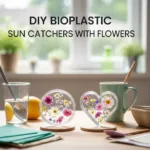
Create beautiful suncatchers using simple ingredients like cornstarch and glycerin, perfect for a fun family craft.
- Prep Time: 20 minutes
- Cook Time: 10 minutes
- Total Time: 150 minutes
- Yield: Multiple suncatchers
- Category: Crafts
- Method: Crafting
- Cuisine: N/A
- Diet: N/A
Ingredients
- Cornstarch
- Glycerin (food-grade)
- Distilled white vinegar or lemon juice
- Water (filtered if possible)
- Fresh or dried small flowers and leaves
- String, embroidery thread, or thin ribbon
Instructions
- Prepare your workspace and flowers by trimming petals and arranging them.
- Combine cornstarch, glycerin, vinegar, and water in a bowl and stir until smooth.
- Heat the mixture slowly in a saucepan while stirring, watching for it to turn clear and glossy.
- Pour a thin layer onto parchment paper, and place the petals into the liquid, ensuring they don’t trap air.
- Smooth the edges, allow to cool, and peel away slowly once set.
- Trim edges and make a hole for hanging before threading a ribbon and letting dry completely.
Notes
Ensure to supervise children around heat and use necessary precautions when handling warm materials.
Nutrition
- Serving Size: Varies
- Calories: N/A
- Sugar: N/A
- Sodium: N/A
- Fat: N/A
- Saturated Fat: N/A
- Unsaturated Fat: N/A
- Trans Fat: N/A
- Carbohydrates: N/A
- Fiber: N/A
- Protein: N/A
- Cholesterol: N/A