
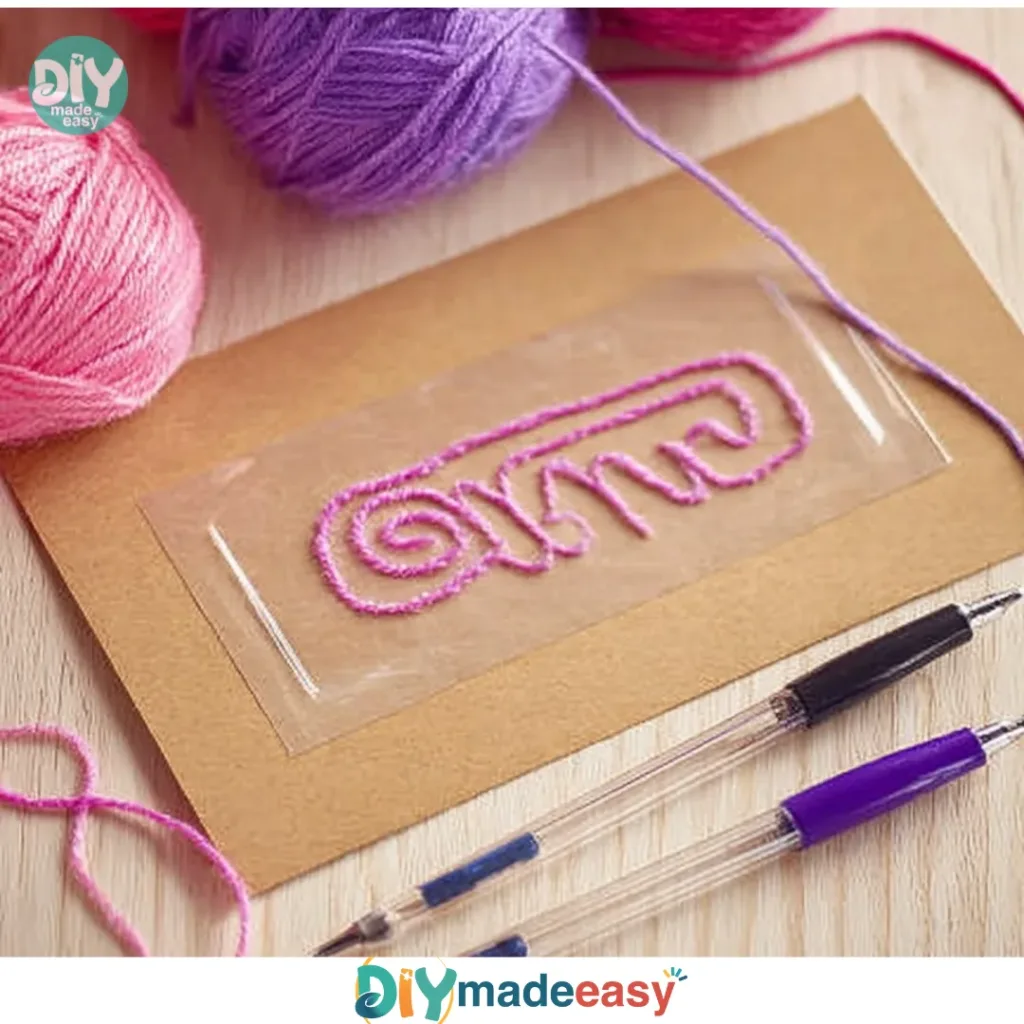
A busy afternoon, a small pile of yarn, and a few markers with caps come off the shelf when the kids shout they want to make something now. I pull out a paper plate with some washable paint, set an old shirt on the kid who is most excited, and we try the Yarn Pen Art Hack. It feels immediate and satisfying because it uses things I already have. If you liked our heart stem challenge, you might enjoy how this one turns listing simple supplies into playful textures and fast colorful pieces that dry quickly for display or gifting like the hearts we made before.
Why You’ll Love Making Yarn Pen Art Hack
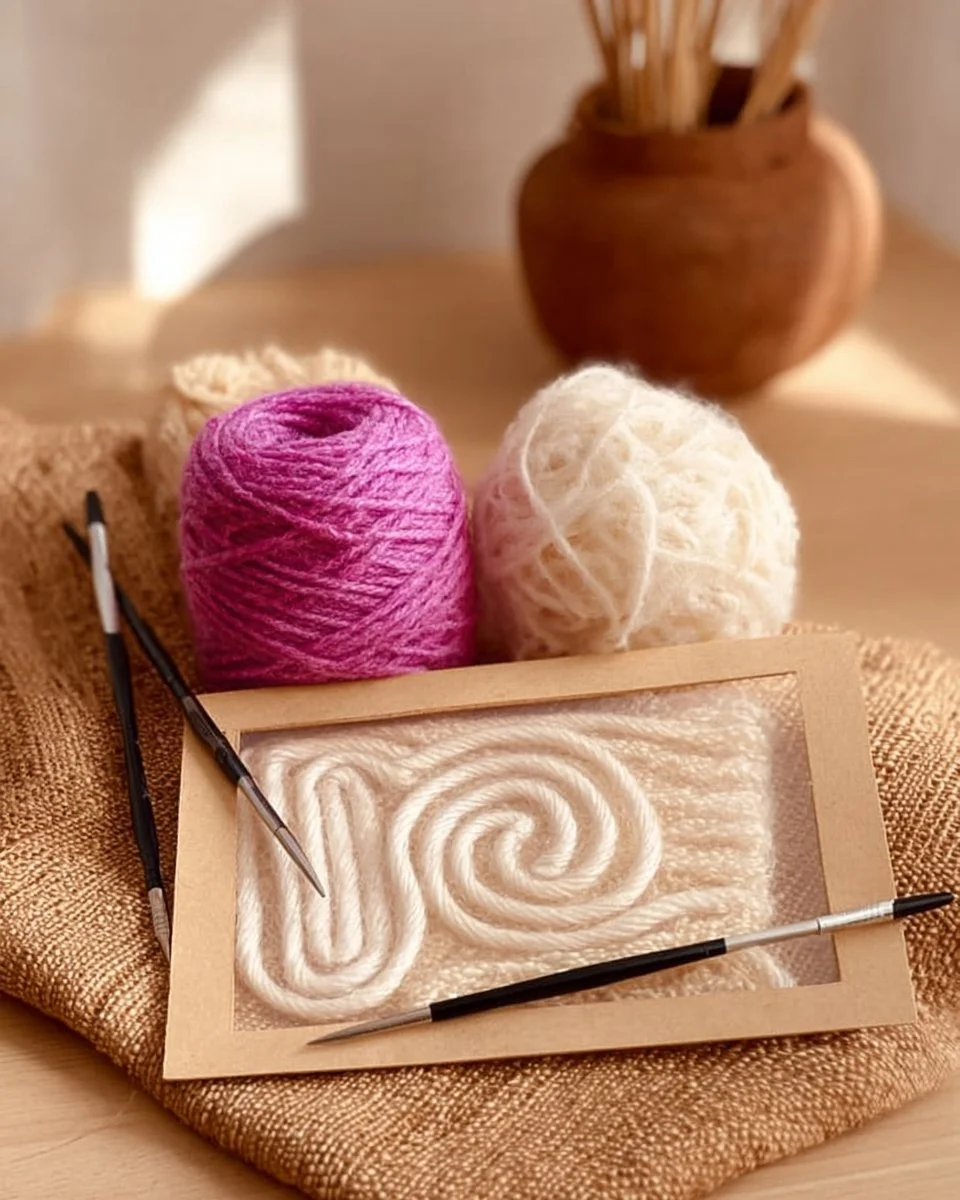
This project works so well because it keeps everything small and simple. You do not mix complicated paints. You do not need special brushes. A single pen and a short yarn tail make a textured brush that gives pretty, surprising lines.
It stays low-prep. You set a plate of washable paint, open a few pens, and you are ready. That short setup means kids can start in minutes, and adults can stay nearby without a long cleanup commitment.
It feels reliable. The yarn holds paint in a soft way. You get textured marks that look intentional even when a child moves quickly. That predictability keeps frustration low and pride high.
It fits real life. You can make this on the kitchen table, a hallway floor, or a small card at the last minute. It does not demand a big clear space or a long block of time, so it works around naps, snack time, and short attention spans.
A Quick Look Before You Begin
This activity takes about 20 to 40 minutes depending on how many pieces you want to make. The setup only takes a few minutes: gather materials, protect the table, and open your paint.
Mess level rates medium, not scary. Paint may splatter if kids swing yarn, so a small cloth or butcher paper under the work helps. The washable paints rinse out of clothes easily if you act quickly.
Adult involvement depends on age. Preschoolers need help tying yarn and watching for drips. Older kids usually work independently once they have the hang of it. Stay nearby for safety and gentle guidance.
Materials You’ll Need
Yarn common household yarn, acrylic or wool both work well and give different textures.
Ballpoint pens or markers with removable caps use pens with caps so you can wrap and access the barrel.
Plain paper or heavyweight paper heavier paper holds paint better than thin copier paper.
Washable paint or tempera paint easy to clean and bright enough for clear texture.
Paper plate or palette a shallow plate makes loading yarn quick and visible.
Tape (optional) to secure paper edges or keep yarn from slipping.
Cup of water for rinsing yarn and pens during clean up.
Paper towels for dabbing yarn and wiping spills.
Old shirt or apron (optional) protects clothes and makes parents calmer.
STEP-BY-STEP DIRECTIONS
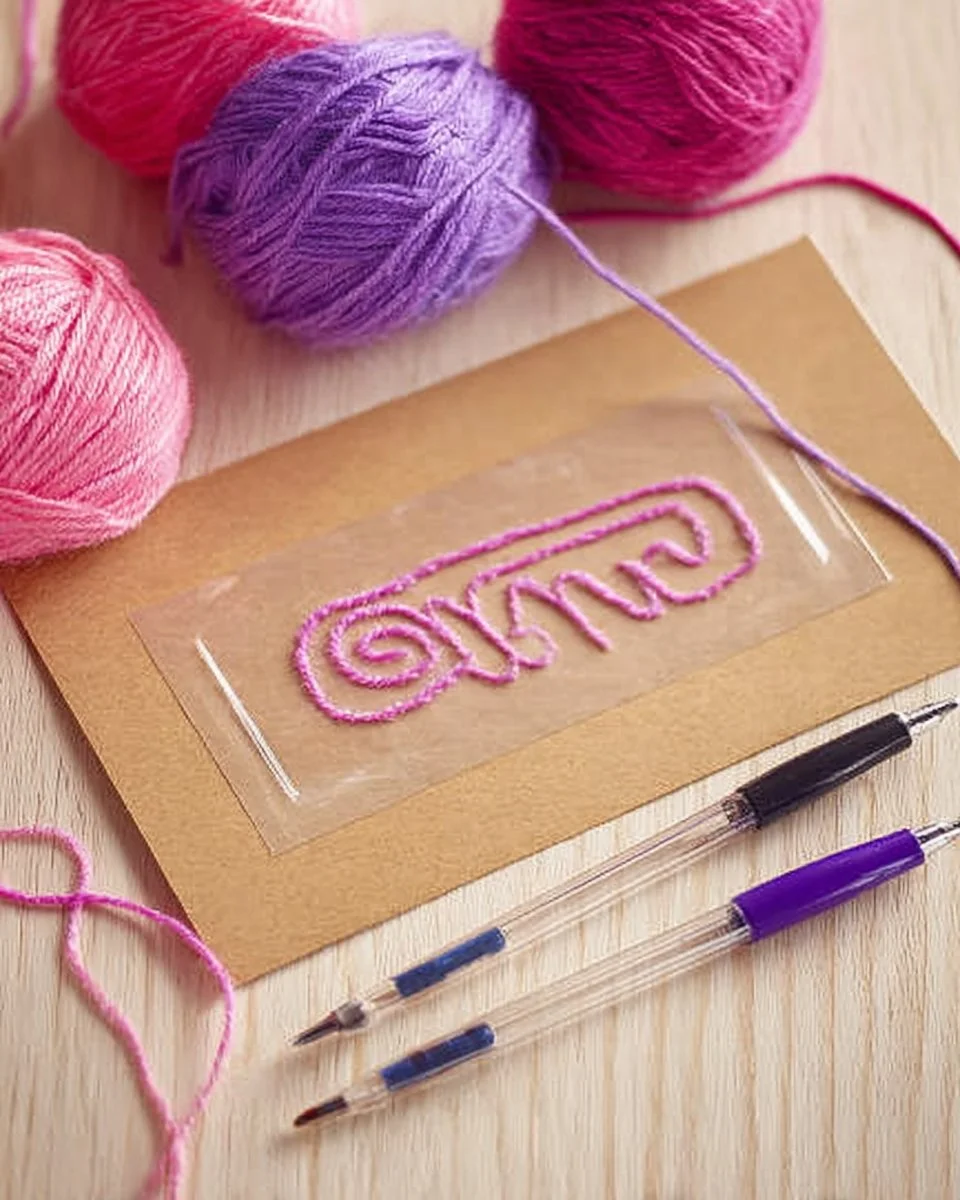
- Gather your supplies and cover the table with paper or a small cloth.
Lay the plate, paints, pens, yarn, water, and paper within easy reach.
Having everything visible helps kids focus and keeps the flow steady. - Keep the paint on a plate and open your pens so they are ready.
Squeeze small puddles of paint on the plate, one color per spot.
Open pen caps and set them nearby so little hands do not fumble. - Tie or tape one end of a short yarn piece to the middle of the pen.
A short tail of yarn, about 8 to 12 inches, works best for control.
Tie firmly or use a small piece of tape so the yarn will not slip. - Wrap the yarn around the pen snugly two or three times to hold it.
Make the wrap tight enough so the yarn does not move while you draw.
Keep the yarn end free so you can dip it into paint easily. - Dip the yarn end into the paint on the plate and make sure it is damp, not dripping.
Press the yarn gently into the paint to load it.
Lift and dab on paper towels if the yarn looks gloopy or full of bubbles. - Lay the yarn on the paper and drag the pen to make textured lines.
Hold the pen and let the yarn drag across the paper like a textured brush.
Try straight lines, curves, loops, and gentle presses for dots. - Reload the yarn with paint as needed or switch colors.
Work quickly while paint stays fresh on the yarn, and reload when marks get faint.
Switch colors by wiping the yarn on a paper towel before dipping again. - Clean up by rinsing the yarn in water and wiping the pen clean.
Rinse a few times until the water runs clear and the yarn does not streak.
Wipe pens and caps with a towel so paint does not dry on them. - Let pieces dry flat to avoid smudging.
Place finished sheets flat and leave them alone for at least 30 minutes to an hour.
Check before stacking so colors do not transfer.
What Kids Practice While Making This
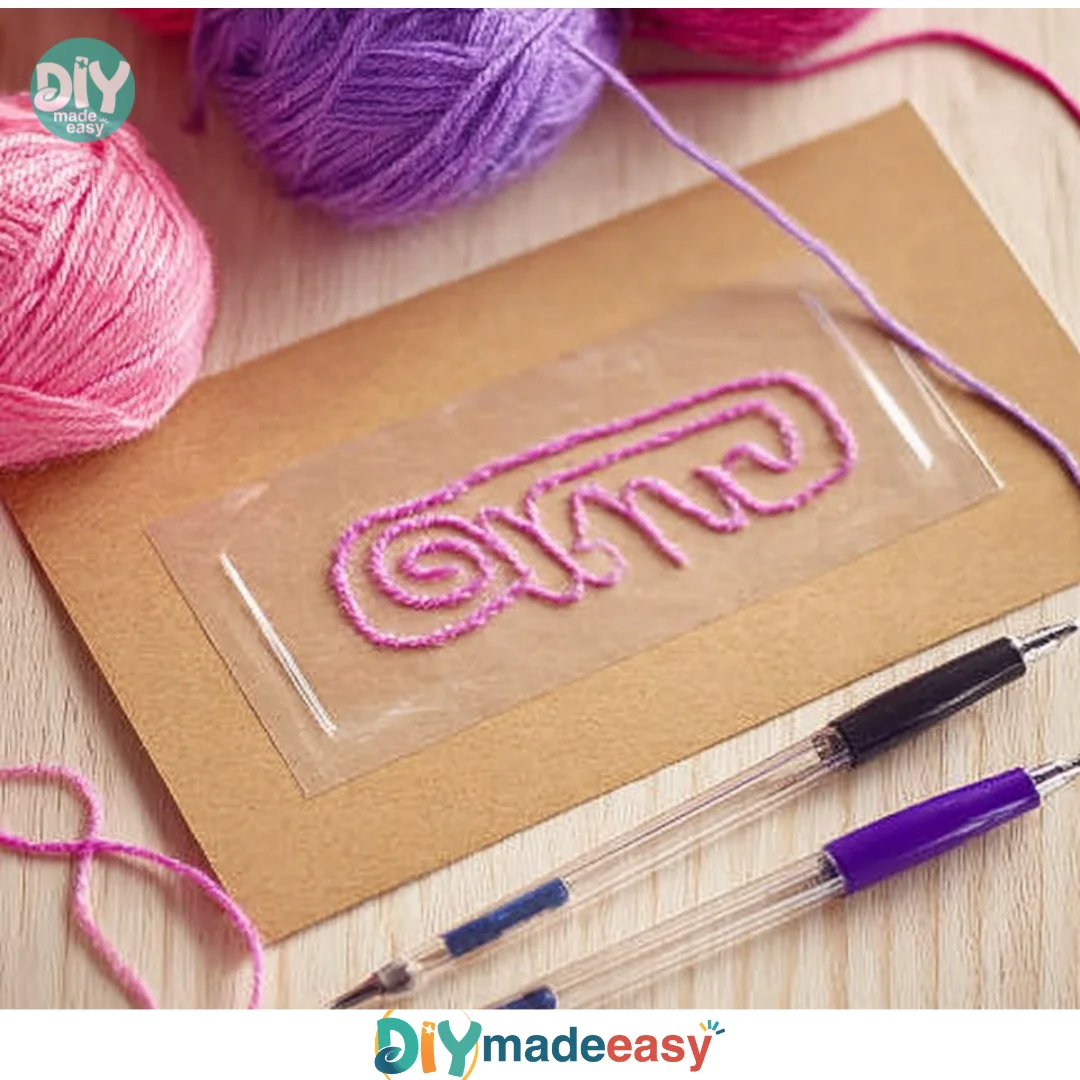
This activity teaches simple fine motor skills. Tying yarn, wrapping it, and guiding the pen help small hands build control. Kids learn to pinch and press gently when they reload the yarn with paint.
They practice coordination between hand and eye. Dragging a pen while the yarn brushes paper takes a steady rhythm. Children notice how pressure changes the mark and learn to adjust by feel.
It supports cause and effect. Kids see how a damp yarn makes bolder lines and dry yarn makes faint ones. They learn to change their actions to change the result.
The process also builds patience and focus. Waiting for paint to dry and rinsing clean are small, real tasks that feel important and manageable.
Troubleshooting Common Issues
If the yarn makes faint lines, it probably needs more paint. Dip the yarn again and press it into the paint more firmly. Avoid overloaded yarn that drips.
If paint blobs or smears, the yarn might be dripping. Dab the yarn on a paper towel to remove excess. Also check that the yarn wraps snugly and does not swing wildly.
If the yarn slips off the pen, tighten the wrap and knot the yarn closer to the pen. Tape the yarn to the pen barrel as a backup for extra wiggly fingers.
If colors mix into a muddy tone, rinse the yarn between colors and use separate plates or spaces on the plate for each color. Small artists learn to rinse like real painters and feel proud doing it.
Easy Variations to Try
Try short yarn tails for tighter, dotted textures and longer tails for looser, flowing lines. You can even braid three thin yarns for a striped effect. Let kids experiment; some results surprise even grownups.
Make greeting cards by cutting heavyweight paper into halves and decorating the front with yarn textures. A few tidy lines across the front can look modern and handmade.
Use seasonal colors. Browns, oranges, and deep reds make fall leaf-like textures. Pastels work for spring cards. Keep palettes small and the results will feel cohesive.
Try layered passes. Let a layer dry, then add another yarn color on top for depth. This creates richer pieces with a sense of space and dimension.
Storing or Reusing This Project
Keep leftover yarn and dry pens together in a small zip bag. You can reuse the yarn for more sessions until it wears thin. Rinse and dry yarn between colors so it lasts longer.
Store finished pieces flat in a folder or under heavy books to avoid curling. If a piece curls slightly, place it under something flat overnight and it will settle down.
Save small painted scraps for collage work later. Kids can cut textured strips and glue them into new art, reducing waste and stretching fun.
For more ideas on turning small papers into display-ready keepsakes, check out this simple suncatcher method that pairs well with yarn textures no-curl swirled heart suncatchers.
FAQs About Yarn Pen Art Hack
Will this make a big mess on clothes?
It can, but washable paint helps. Use an old shirt or apron and keep a cup of water and paper towels nearby. If paint touches clothes, rinse quickly and wash as directed; washable tempera usually comes out.
Is this safe for very young kids?
Supervise toddlers closely. The pens and small yarn lengths can be a choking risk, so do not leave very young children unsupervised. Preschoolers do great with one-on-one help tying and wrapping.
Can I use acrylic paint instead of washable paint?
You can, but acrylic dries hard and can stain fabrics and some papers. Washable tempera works better for short sessions and for easy cleanup. If you use acrylic, protect surfaces and clothes more carefully.
What if my project looks uneven or messy?
That is normal. Textured art celebrates irregular marks. If it feels too messy, try limiting colors to two and encourage slower movements. Often the second layer or a border will bring balance.
How long before these dry enough to send in a card?
Heavyweight paper can be touch dry in 20 to 30 minutes, but allow at least an hour before mailing. If you layer paints, give the piece extra drying time so nothing smudges.
A Final Helpful Note
You do not need to make perfect paintings. This activity rewards curiosity and small experiments. If a child wants to test a dozen colors in five minutes, let them. If an adult prefers quiet, try a calm limited palette.
Make the cleanup part of the lesson. Kids learn to rinse the yarn and wipe the pen and plate. That small habit makes future projects easier and keeps the process feeling light.
Remember: clear steps, simple materials, real results. You will get good pieces on the first try, and better ones as you play more.
Conclusion
If you want a visual how-to or a slightly different take on the same technique, this detailed Yarn Pen “Painting” Hack shows many small variations that inspire quick sessions with kids Yarn Pen “Painting” Hack – One Little Project. For broader classroom-tested tips and teacher tricks that pair well with this low-prep idea, listen to this roundup of favorite art teacher hacks that spark creativity with simple tools My 10 Favorite Art Teacher Hacks (Episode 029) – The Art of Education.
Start with the small setup. Keep one or two colors on the plate and let the kids explore. You will end up with colorful pages, confident makers, and a happy table that cleaned up quickly.
PrintYarn Pen Art Hack
A fun and creative art project using yarn and washable paint to create textured artwork.
- Prep Time: 5 minutes
- Cook Time: 20 minutes
- Total Time: 30 minutes
- Yield: Multiple pieces of artwork
- Category: Art Project
- Method: Crafting
- Cuisine: N/A
- Diet: N/A
Ingredients
- Common household yarn (acrylic or wool)
- Ballpoint pens or markers with removable caps
- Plain or heavyweight paper
- Washable paint or tempera paint
- Paper plate or palette
- Tape (optional)
- Cup of water
- Paper towels
- Old shirt or apron (optional)
Instructions
- Gather your supplies and cover the table with paper or a small cloth.
- Lay the plate, paints, pens, yarn, water, and paper within easy reach.
- Keep the paint on a plate and open your pens.
- Squeeze small puddles of paint on the plate, one color per spot.
- Tie or tape one end of a short yarn piece (about 8 to 12 inches) to the middle of the pen.
- Wrap the yarn around the pen snugly two or three times.
- Dip the yarn end into the paint and make sure it is damp, not dripping.
- Lay the yarn on the paper and drag the pen to make textured lines.
- Reload the yarn with paint as needed or switch colors.
- Clean up by rinsing the yarn in water and wiping the pen clean.
- Let pieces dry flat to avoid smudging.
Notes
Perfect for teaching kids fine motor skills, eye-hand coordination, and patience while enjoying a fun art project.
Nutrition
- Serving Size: N/A
- Calories: 0
- Sugar: 0g
- Sodium: 0mg
- Fat: 0g
- Saturated Fat: 0g
- Unsaturated Fat: 0g
- Trans Fat: 0g
- Carbohydrates: 0g
- Fiber: 0g
- Protein: 0g
- Cholesterol: 0mg