

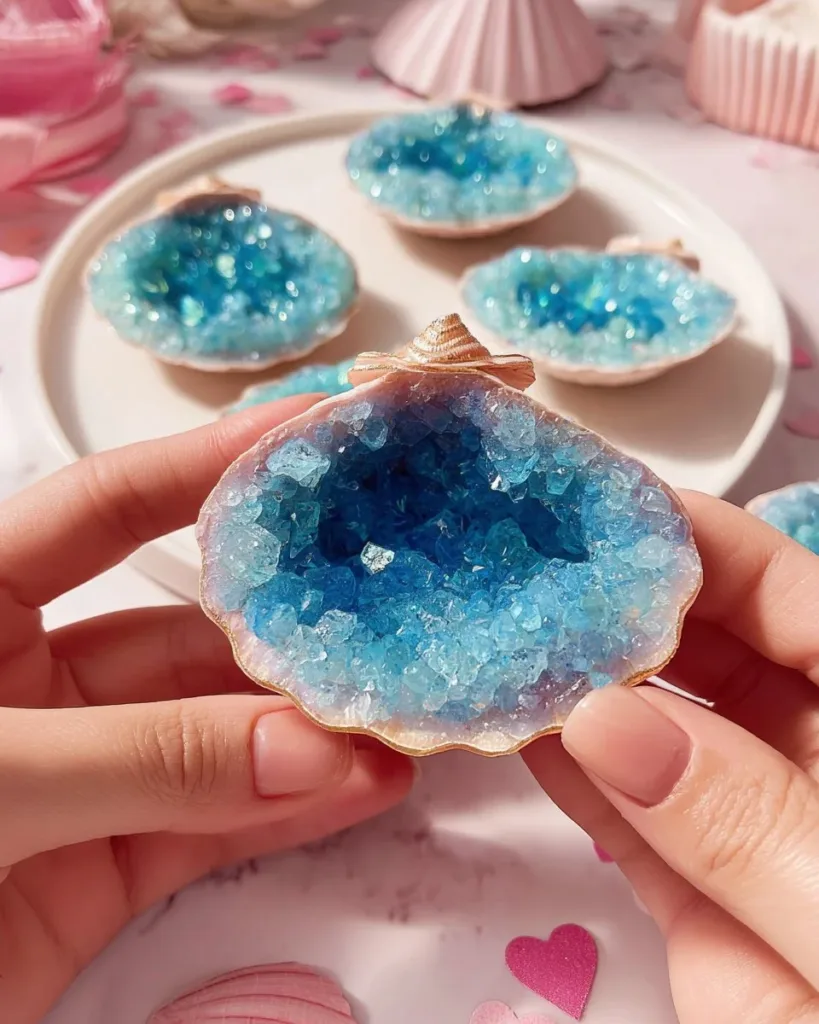
A busy afternoon, the kids asking to make something now, and you with a half hour and a kitchen counter to spare. Seashell Crystal Geodes are perfect for that moment. They turn clean, ordinary shells into tiny sparkly geodes using things you already have on hand. The process feels tidy, takes little hands-on time, and gives a real, visible result that delights kids and adults alike.
Why You’ll Love Making Seashell Crystal Geodes
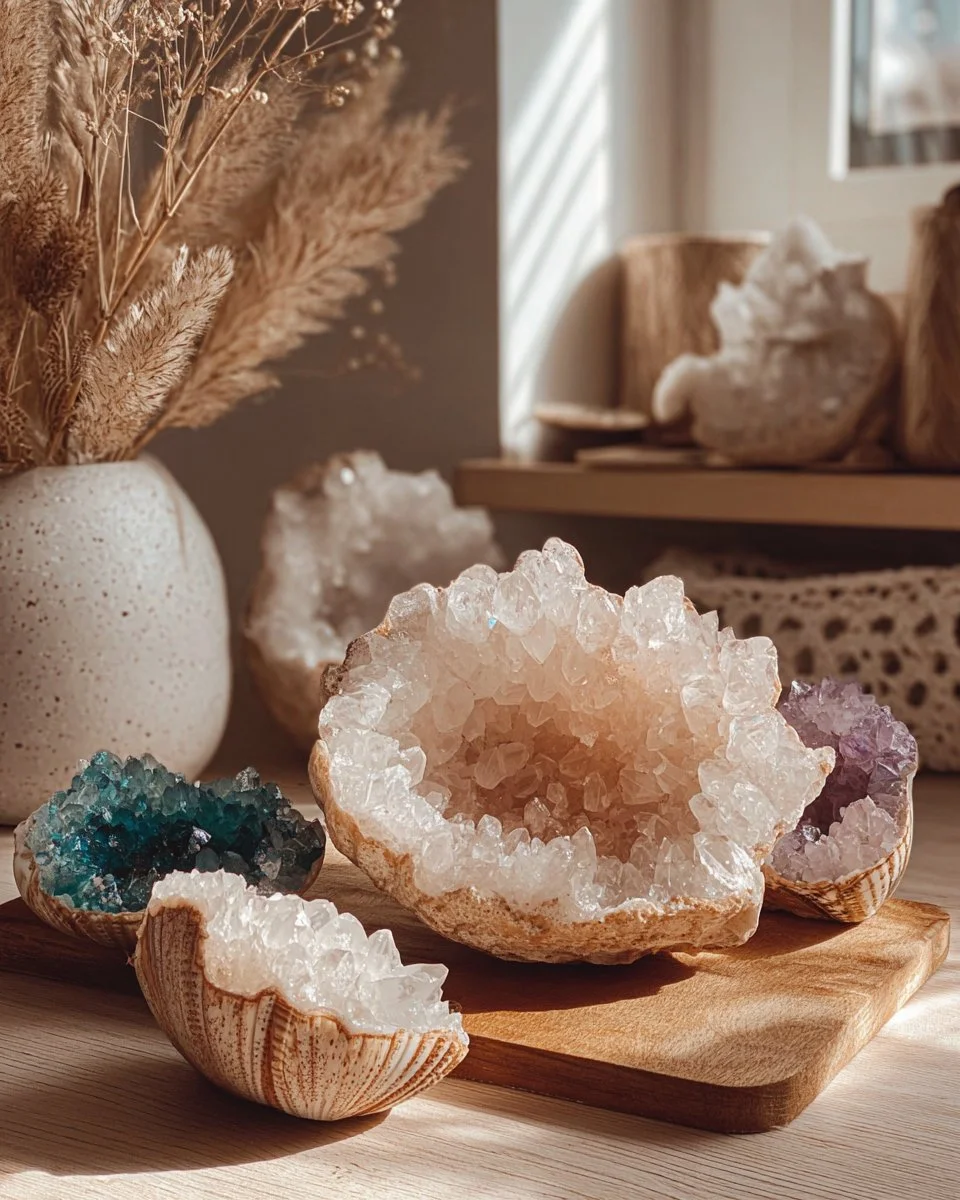
This project works so well because it mixes a quick setup with slow, satisfying results. You do a few simple actions up front and then wait while crystals grow. That makes it ideal for a busy afternoon when you want a hands-on moment and an easy cleanup.
The materials are familiar and inexpensive. Epsom salt or borax, a jar, hot water, and a shell give you the essentials. You do not need specialty tools or long prep, so it feels doable even if plans change.
It fits real family rhythms. Kids can help with stirring, pouring, and choosing colors. Adults can handle the hot water and glue. The slow crystal growth gives time for snack breaks, homework, or a short walk while the geode forms.
You get visible success fast. The first tiny crystals often appear within hours. That immediate feedback keeps kids excited and teaches patience in a gentle way. It also lets you repeat the process for denser crystals if you want a more dramatic result.
A Quick Look Before You Begin
This activity takes under 20 minutes of active work and several hours of watching time. Plan for a warm, undisturbed place to sit the shell while crystals grow. A sunny windowsill or a warm shelf works well.
Mess level stays low if you protect the surface and keep a jar for mixing. You will have some drips and a few loose granules at the end, but a paper towel and a quick rinse handle most of it. Expect a little sparkle and some residues from the glue and salt.
Adult help is useful for the hot water, for mixing the saturated solution, and for applying glue neatly. Kids do fine with stirring, pouring small amounts, and placing larger seed crystals with tweezers. This split of tasks keeps everyone engaged without crowded hands.
Timewise, crystals begin in a few hours and look better after a day. If you want fuller growth, you can top up the shell with more solution and let it sit another day. The most hands-on part is the first 20 minutes; after that you mostly wait and enjoy watching.
Discover Easy Kids Activities
Looking for simple, fun ideas for kids? Explore our Low Prep Kids Activities and find quick projects that spark creativity without long prep time.
Materials You’ll Need
Large clean seashells
common household item; choose shells wide enough to hold a little pool
Epsom salt or borax
both work; borax often gives sharper crystals, Epsom salt gives softer, frostier growth
Hot water
from the tap or kettle; adult-handled
Food coloring or mica powder (optional)
adds long-lasting color; mica gives shimmer, food coloring gives pure color
Clear-drying craft glue or clear PVA glue
helps crystals stick in place; common school glue works
Small paintbrush or cotton swab
for spreading glue neatly; inexpensive and precise
Tweezers or chopsticks
for placing larger seed crystals or moving delicate shards
Small jar or cup for mixing solution
use a heat-safe jar or cup for the hot water
Spoon for stirring
metal or wooden; a mixing spoon keeps hands away from hot water
Disposable gloves (optional)
useful if you have skin sensitivity or want less clean up
Protective work surface and paper towels
catch drips and make cleanup quick
Small display stand or dish for drying (optional)
nice for showing off the finished geode; optional but pretty
Step-by-Step Directions
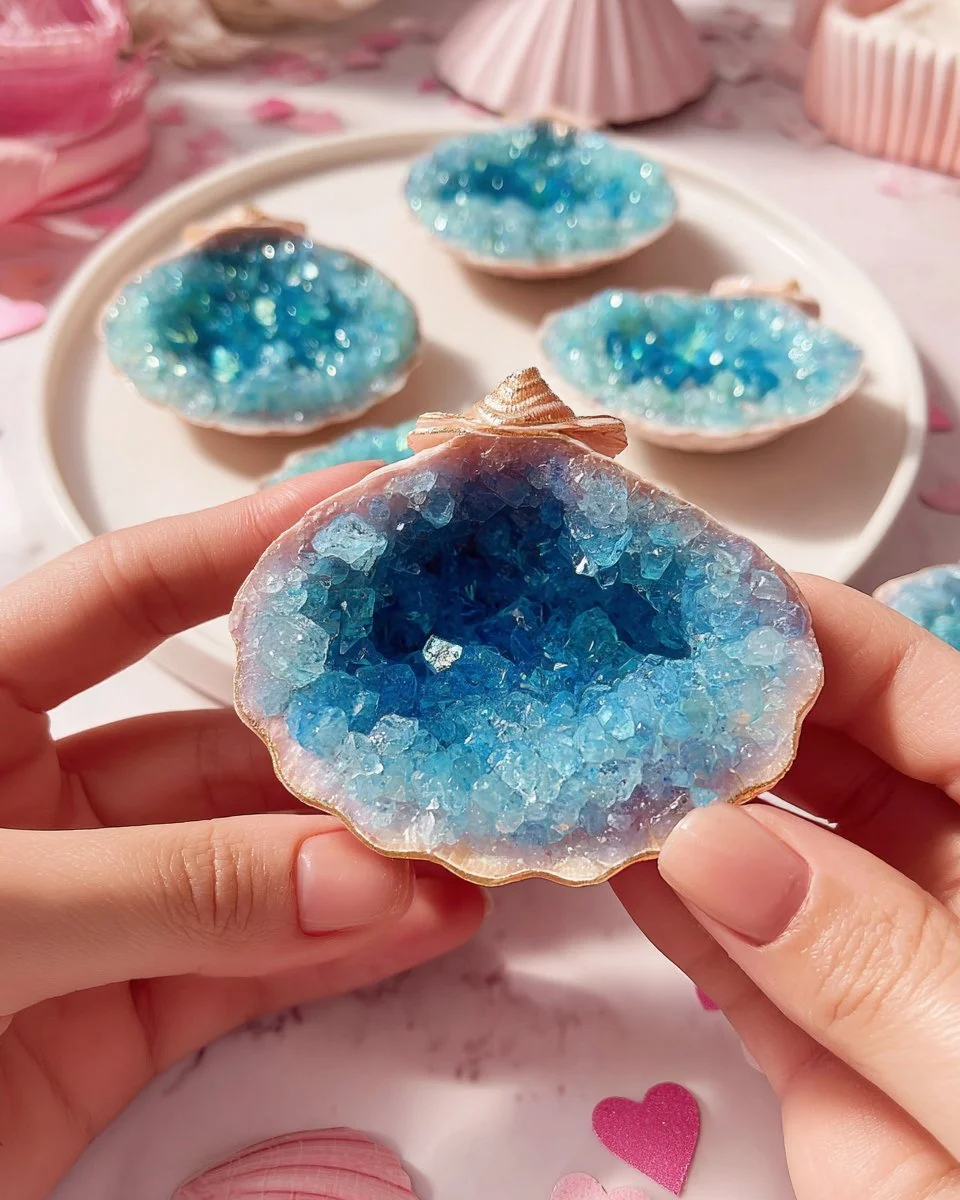
- Choose and clean your shell by rinsing it in warm water and letting it dry fully.
Rinse out grit and any loose bits until the inside looks tidy.
Let it dry completely; damp shells hold the solution oddly and can make thin crystals. - Prepare your workspace to catch drips and place the shell cup-up on a stable surface.
Lay down paper towels or a washable mat to catch spills.
A small dish under the shell helps if the shell tips or overflows. - Mix a saturated crystal solution in a jar by stirring Epsom salt or borax into hot water until no more dissolves.
Start with one cup of hot water and add salt or borax a spoonful at a time.
Stop when tiny crystals remain undissolved on the bottom; that tells you the solution is saturated. - (Optional) Add color with food coloring or mica powder to the solution.
A drop or two of food coloring goes a long way; mica adds sparkle.
Stir gently until color blends evenly; avoid frothing. - Apply a thin layer of glue inside the shell.
Use a small brush or cotton swab to spread a light coat only where you want crystals to stick.
A thin layer works best; thick glue stays tacky and hides crystals. - Spoon or pour some of the warm solution into the shell.
Pour slowly to avoid splashing and overfilling the shell.
Leave a little air gap so crystals can grow without forcing overflow. - Decorate with larger seed crystals if desired.
Place a few granules or tiny chunks on top with tweezers for focal points.
They act as starting points and can give a clustered look. - Let the shell sit undisturbed in a warm spot for several hours to allow crystals to form.
Choose a place with steady warmth and no drafts, like a sunny windowsill.
Do not move the shell while crystals form; agitation will disrupt growth. - Check after one day to see crystal growth and repeat the process for denser crystals if necessary.
If growth looks thin, gently add more saturated solution and let sit another day.
Repeat only if the first layer feels dry to the touch and firm; otherwise you can over-saturate. - Once crystals feel firm, remove loose granules and place the geode in a display area.
Gently brush away any loose salt with a dry brush or tweezers.
Set the shell on a small stand or dish where it can be admired without being jostled.
The Simple Science or Skills at Work
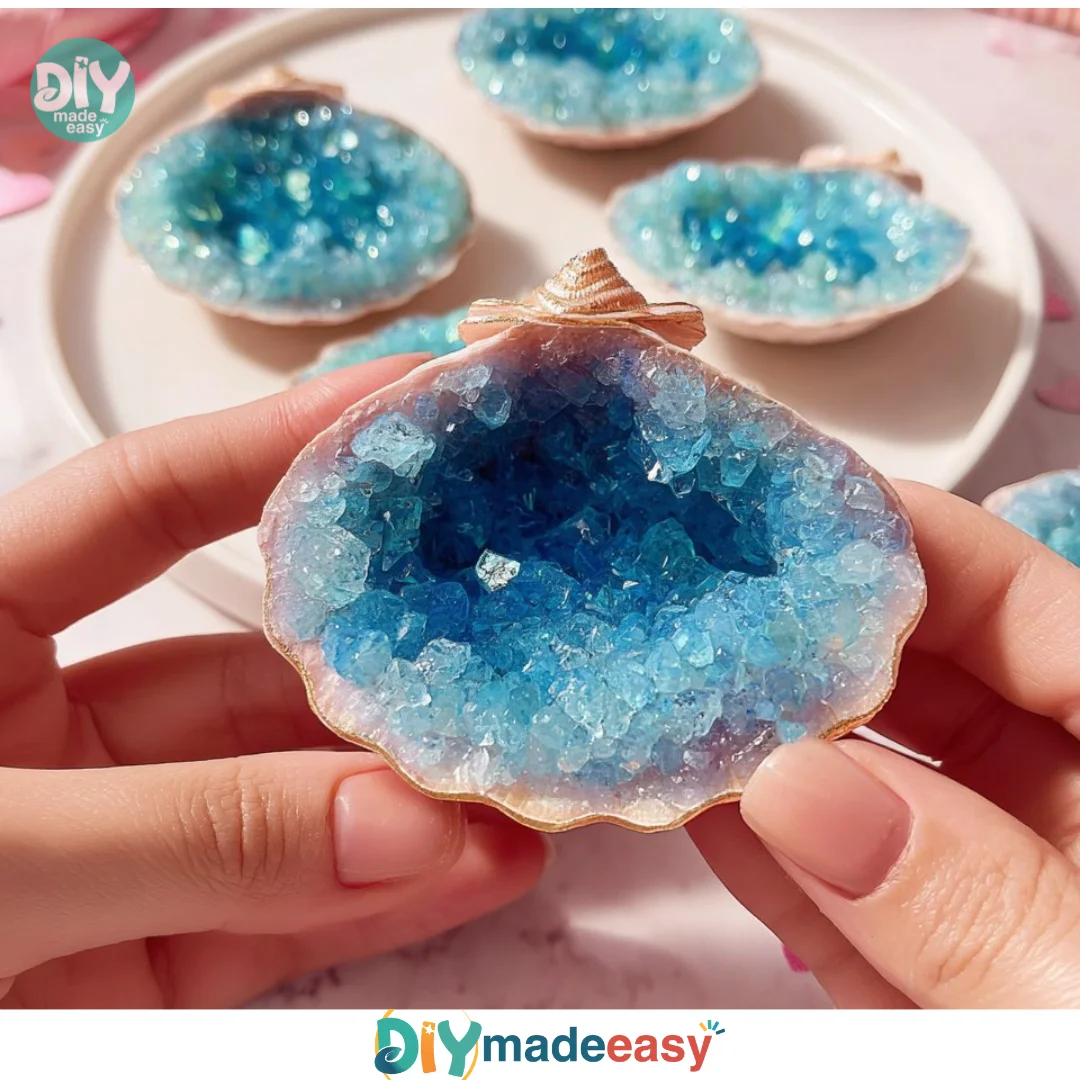
Making Seashell Crystal Geodes mixes plain cause and effect with hands-on skills. When you dissolve Epsom salt or borax in hot water, the heat lets more of the solid fit into the liquid. As the solution cools and some water evaporates, the dissolved minerals come back out of the liquid and form crystals.
Glue gives the crystals places to anchor. Tiny bits of glue catch crystals as they form so the growth sticks in one spot and looks like a miniature geode. Seed crystals give a head start by offering a surface that new crystals want to join.
Kids practice fine motor skills the whole way. Stirring builds coordination, pouring teaches control, and placing seed crystals with tweezers strengthens pincer grip. They also get gentle lessons in patience as they wait a few hours to see change. Watching the slow formation gives a clear example of cause and effect that stays simple and satisfying.
Troubleshooting Common Issues
Crystals look sparse. That happens if the solution was not fully saturated or if the shell was cold and the solution cooled too quickly. Make a slightly stronger solution next time and use a warm shell to begin with. Adding a second layer after the first has set often fills gaps.
Crystals fell apart when touched. If the glue layer was too thin or not spread evenly, crystals may not have had solid anchors. Apply a touch more clear glue in problem areas and add a little more solution, then wait for it to set. Avoid touching the piece until it feels firm.
Solution spilled or the shell tipped. Small spills dry into white trails that brush away; wipe damp spots with a warm, slightly damp cloth to remove residue. To prevent tipping, balance the shell in a shallow dish or on a cloth ring that keeps it level.
Color looks washed out. Food coloring sometimes appears pale once crystals set because crystals reflect light differently than liquid. Use a bit more color in the mixing jar, or try mica powder for shimmer if you want a brighter look.
No crystals formed. That is rare, but it usually means the solution never reached saturation or the shell was in a very humid, cool spot. Reheat the solution, stir in more Epsom salt or borax until undissolved granules appear, and return the shell to a warmer, dry place.
Easy Variations to Try
Try a layered look by pouring a pale color first, letting it set, and then adding a second color on top.
This makes subtle banding like real geodes. Keep the first layer firm to avoid mixing.
Add small glitter or mica to the solution for a metallic sheen.
Mica settles into the crystal matrix and gives a gentle sparkle without changing the basic process.
Use different shell shapes and sizes for contrast.
Deep shells make a bowl of crystals; flatter shells give wide, shallow displays. Mix sizes for a tabletop arrangement.
Make tiny geodes from broken shell fragments.
Use small pieces placed in a shallow tray to make a set. They dry faster and let multiple kids try at once.
Turn the finished shells into magnets or ornaments.
Attach a small loop, glue a magnet on the back, or tie a ribbon for a holiday decoration. Keep the crystal face protected.
Storing or Reusing This Project
Store finished geodes in a low-humidity place to keep crystals firm. Bathrooms can be too humid; a shelf in a bedroom or living room works better. Avoid direct water: a splash or steam can dissolve surface salt.
If you want to reuse the shells, you can dissolve the crystals by rinsing the shell in warm water and gently scraping. Collect the rinse water outside or down the sink; these salts dissolve easily and are generally safe for drains in small amounts.
Keep leftover saturated solution in a sealed jar for a short time if you plan to top up shells the same day. After a few days the solution can grow unwanted crystals in the jar. If that happens, pour the undissolved solids into a compost or trash and rinse the jar.
Reuse tweezers, brushes, and mixing jars after a quick soak and rinse. Paper towels and gloves go in the trash. For less waste, use a washable mat under the workspace and cloth towels that you can launder.
FAQs About Seashell Crystal Geodes
Will this make a big mess?
I worry about glitter and glue everywhere. It stays surprisingly neat if you set a paper towel under the shell and pour carefully. Most drips dry into removable white salt marks. Use a small dish under the shell and a damp cloth for quick cleanup. Glitter and mica can sprinkle a little, so use a tray if you want to keep it contained.
Is this safe for younger kids to do?
Younger kids can join in for rinsing shells, stirring, and placing seed crystals with supervision. An adult should handle the hot water and glue. If you worry about little fingers touching crystals, have them wear disposable gloves or keep them focused on stirring and color choices while an adult pours.
Can I swap Epsom salt for table salt or sugar?
Epsom salt and borax give the best visible crystals. Table salt and sugar behave differently and may not form the same shapes or may attract moisture. If you must substitute, expect softer or slower crystal growth and be honest with kids that the look will change.
How long do the crystals last on display?
If you keep them dry and out of high humidity, they stay stable for months or longer. Steam, water, or heavy handling will dissolve or loosen the crystals. Place finished shells on a shelf or in a display dish away from sinks and humid areas.
What if the crystals look dull or patchy after a day?
That often means the first layer did not fully form or the solution was not saturated. You can very gently add more warm solution only where the growth is thin and let it sit another day. If patchiness persists, remove loose granules with tweezers and accept a more natural, textured look.
A Final Helpful Note
This project rewards small, careful steps and a little patient waiting. Expect tiny imperfections; they make each shell feel handmade and personal. If a shell does not turn out exactly like a polished store geode, that is okay. The best parts are the shared moments of stirring, choosing colors, and the surprised faces when crystals appear.
Treat the process as a relaxed experiment. Try one shell first to get the feel for saturation and drying, then expand to a few at a time. Keep the setup simple, supervise hot steps, and enjoy how a common shell becomes something to admire.
Conclusion
If you want a neat way to display a finished shell, consider a small display stand such as the Hipiwe Gold Metal Arm Display Stand Easel with Acrylic Base to lift it off a shelf and give it presence. For inspiration and real geode shapes to compare your shells to, browse collections like GEODES AND CRYSTAL CLUSTERS | Buried treasure.
PrintSeashell Crystal Geodes
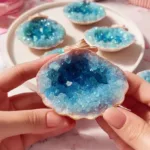
Transform ordinary seashells into sparkling crystal geodes using simple household items. A fun activity for kids that combines creativity with science!
- Prep Time: 20 minutes
- Cook Time: 0 minutes
- Total Time: 720 minutes
- Yield: 1 geode per shell
- Category: Craft
- Method: Crafting
- Cuisine: N/A
- Diet: N/A
Ingredients
- Large clean seashells
- Epsom salt or borax
- Hot water
- Food coloring or mica powder (optional)
- Clear-drying craft glue or clear PVA glue
- Small paintbrush or cotton swab
- Tweezers or chopsticks
- Small jar or cup for mixing solution
- Spoon for stirring
- Disposable gloves (optional)
- Protective work surface and paper towels
- Small display stand or dish for drying (optional)
Instructions
- Choose and clean your shell by rinsing it in warm water and letting it dry fully.
- Prepare your workspace to catch drips and place the shell cup-up on a stable surface.
- Mix a saturated crystal solution in a jar by stirring Epsom salt or borax into hot water until no more dissolves.
- (Optional) Add color with food coloring or mica powder to the solution.
- Apply a thin layer of glue inside the shell.
- Spoon or pour some of the warm solution into the shell.
- Decorate with larger seed crystals if desired.
- Let the shell sit undisturbed in a warm spot for several hours to allow crystals to form.
- Check after one day to see crystal growth and repeat the process for denser crystals if necessary.
- Once crystals feel firm, remove loose granules and place the geode in a display area.
Notes
Expect a little sparkle and some residues from the glue and salt. Adult help is recommended for handling hot water and mixing the solution.
Nutrition
- Serving Size: 1 geode
- Calories: 0
- Sugar: 0g
- Sodium: 0mg
- Fat: 0g
- Saturated Fat: 0g
- Unsaturated Fat: 0g
- Trans Fat: 0g
- Carbohydrates: 0g
- Fiber: 0g
- Protein: 0g
- Cholesterol: 0mg