


A busy afternoon turned into a gentle kitchen lab when my youngest asked for something to make with just a few things from the pantry. I cleared a small patch of counter, washed a heart-shaped glass mold, and we set a tiny prism in the center. That quick setup became our Rainbow Crystal Heart project, an easy, low-prep activity that turned ordinary sugar and water into a glowing keepsake while we chatted and did dishes together. If you like simple heart ideas you can try some related hands-on fun like our Build Heart Stem Challenge for another quick win you can do with kids.
Why You’ll Love Making Rainbow Crystal Heart
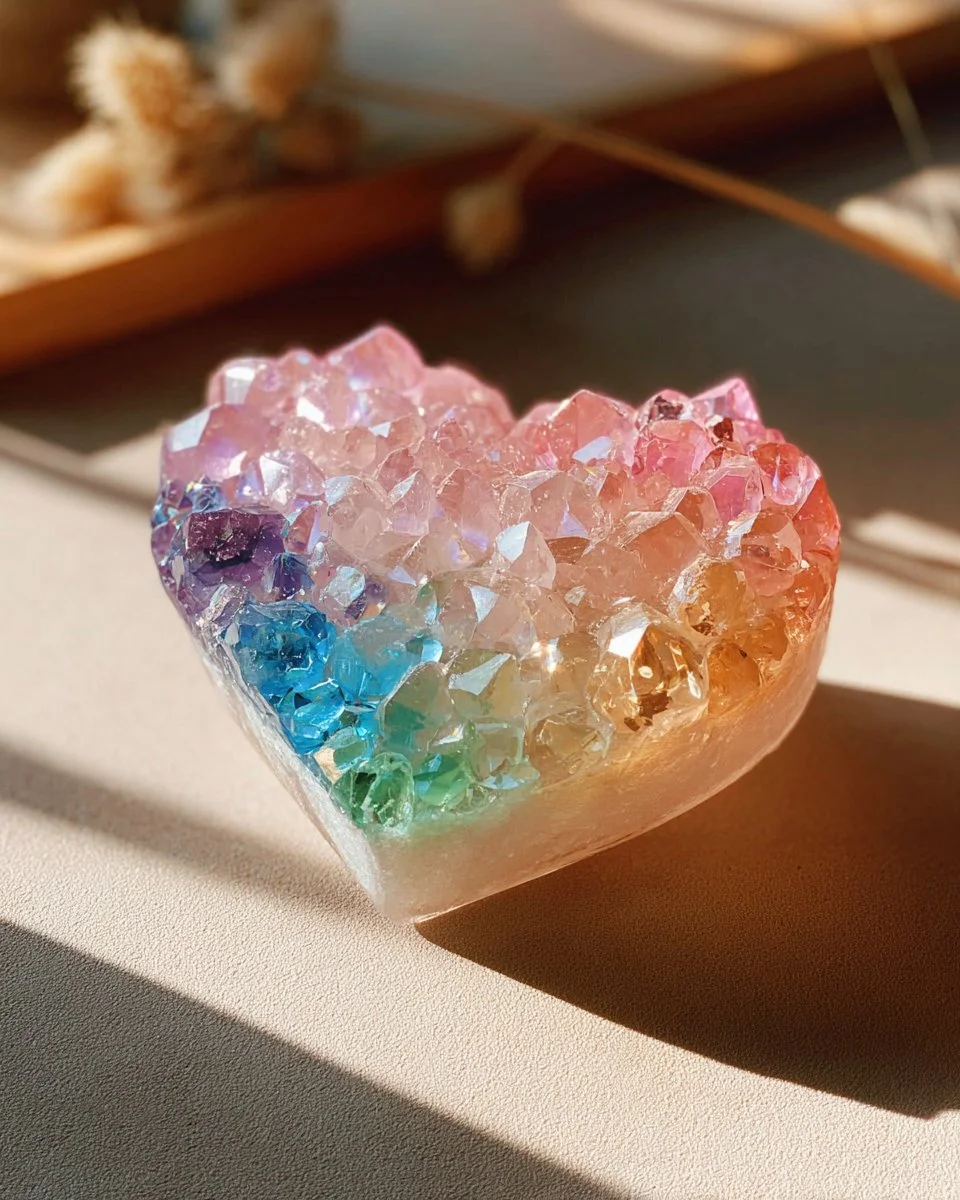
This project works so well because it keeps things simple from start to finish. You use items most homes already have, like granulated sugar or Epsom salts, and a small saucepan. The heart mold does the pretty shaping for you, so the grown-up job stays small.
Timing suits busy days. The active work takes 15 to 30 minutes. Then the wait does the rest as crystals grow over a few days. That makes this craft easy to fit into a homework hour or an afternoon snack break.
It stays tidy when you plan a little. Use a small dish for spills and keep cloths handy for quick wipeups. The process stays calm and predictable, which helps kids stay interested without getting overwhelmed.
A Quick Look Before You Begin
Set aside about 20 minutes for prep and heating, then plan on leaving your heart undisturbed for days. Expect a bit of waiting as the solution cools and crystals form. That waiting is the fun part watching change happen slowly.
Setup takes one counter space and a towel. You do not need a lot of room or special equipment. The mess level is low if you stir carefully and strain the solution before pouring.
Adult help matters mostly for heating and pouring the warm solution. Older kids can stir, choose colors, and place the seed crystal. If you want more light and color ideas to extend play later, try our guide on a Rainbow Light Show ideas for easy follow-up experiments.
Materials You’ll Need
- Heart-shaped glass mold or small heart-shaped jar common household item that gives the project its shape.
- Clear glass crystal or prisms for seeding (optional) optional; a small prism helps crystals form nicely.
- Granulated sugar or Epsom salts easy pantry purchase or craft-store swap.
- Warm water tap water warmed on the stove works fine.
- Food coloring or liquid watercolor (optional) optional for soft rainbow tones.
- Small saucepan used to dissolve your crystal ingredient.
- Wooden spoon or heat-safe stirring stick gentle on glass and good for kids to hold.
- Fine mesh strainer (optional) optional for catching undissolved bits.
- Tweezers or chopsticks helpful for positioning the seed crystal.
- Cloth or paper towels for quick cleanup and drying.
- Small dish or plate to set the mold on while crystals grow.
- Labels and pencil (optional) optional if you want to note dates or colors.
Step-by-Step Directions
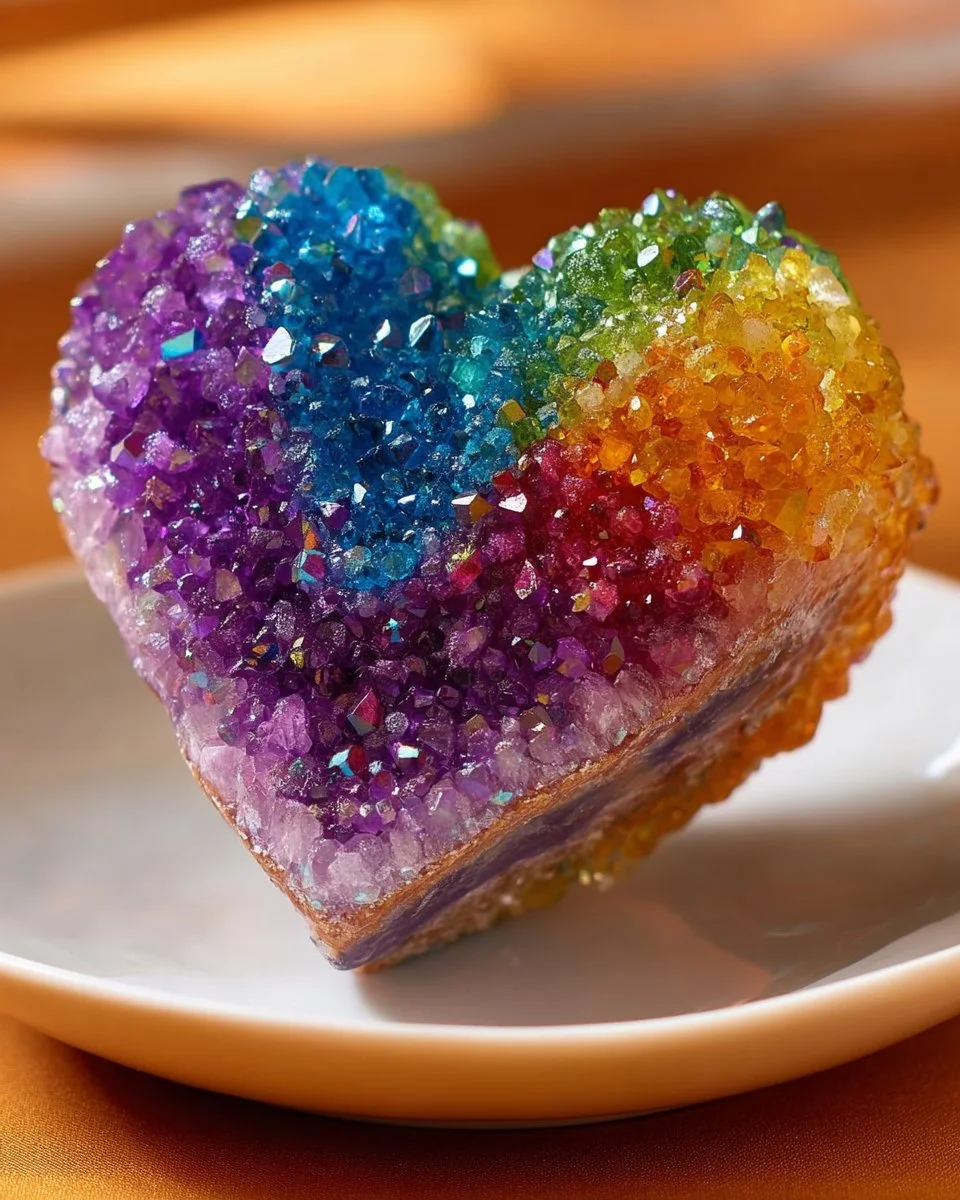
- Clean your heart mold and glass pieces with warm water and a soft cloth.
Dry them slowly without leaving lint by patting gently with a towel and air drying a few minutes. - Heat water in a saucepan until it shimmers.
Stir in your chosen crystal ingredient until it dissolves completely, aiming for a saturated solution and watching for steam not a rolling boil. - Optionally add food coloring and stir gently to disperse.
Add a drop or two at a time to get soft, even tones and stop if the color feels too strong. - Strain the solution into a glass measuring cup if there are any undissolved bits.
This removes grit that can interrupt smooth crystal growth and helps the finished heart look clear. - Place a clear prism or crystal seed into the center of the heart mold.
Use tweezers or chopsticks to lower it in carefully so the seed sits upright and centered. - Pour the warm solution into the heart mold, filling to the brim.
Pour slowly to avoid bubbles and keep the prism steady; if bubbles form, skim gently with the back of a spoon. - Cover the mold loosely to slow evaporation and leave it undisturbed at room temperature.
A loose lid or a paper towel draped over the top will keep dust out while letting moisture escape slowly. - Wait for crystals to form, which may take days.
Check only once a day; you will see tiny sparkles at first, then larger crystal faces over time. - Unmold the heart gently and set it to air dry completely.
Slide the glass or jar out slowly and rest the heart on a small dish to harden and dry for a day or two. - Optionally add a beaded chain or wire loop for hanging.
Attach a loop where there is space at the top, and let kids help choose beads or colors for a personal touch.
The Learning Behind This DIY
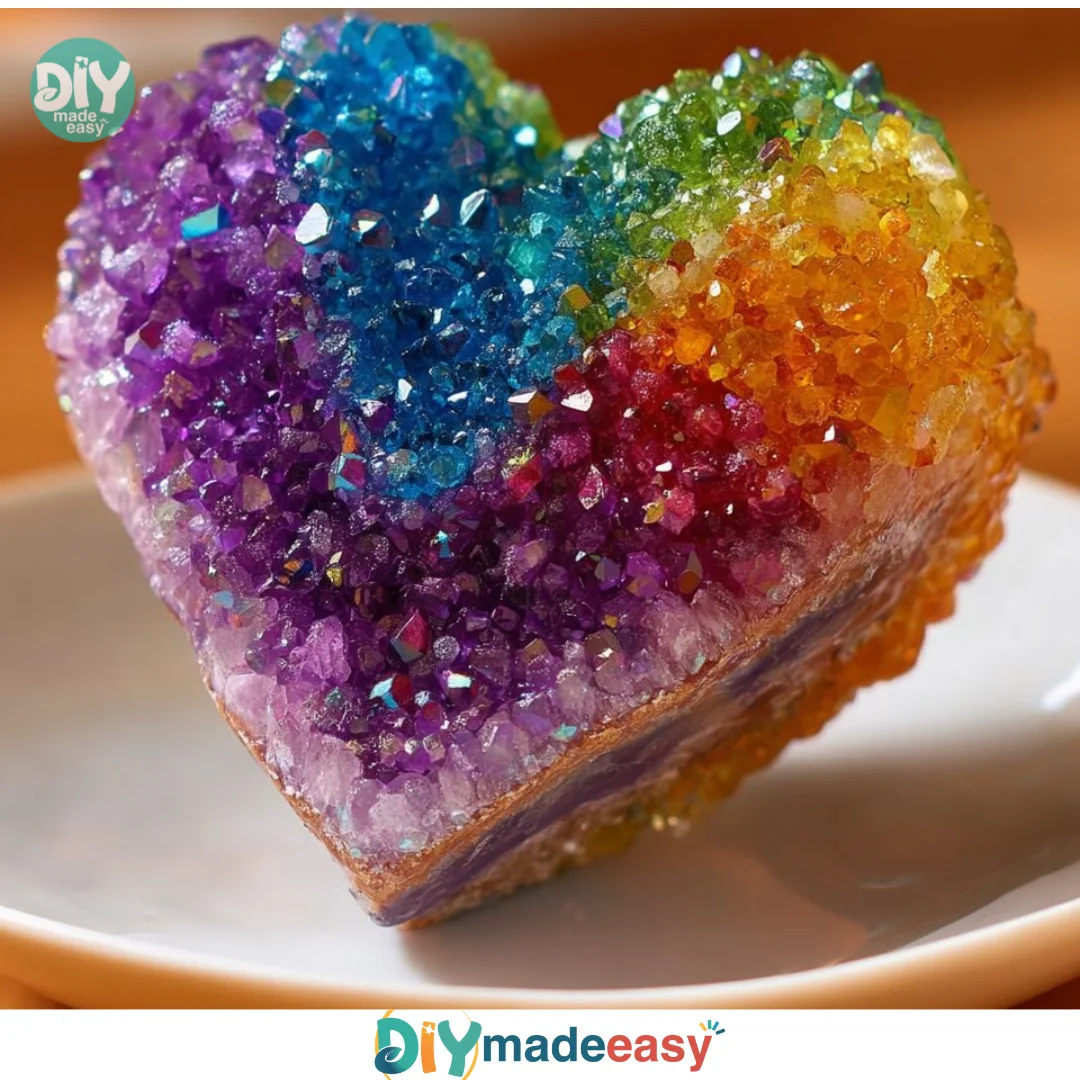
You practice simple science ideas while you build. Crystals form because a solution holds more dissolved material when warm, and as it cools the material comes out of solution and builds a pattern. That pattern looks like tiny repeating faces and edges because molecules like to stack in ordered ways.
Kids work on fine motor skills during stirring, straining, and placing the seed crystal. They learn cause and effect as they see how cooler solution or a slow evaporation rate changes crystal size. You also get a chance to talk about patience and observation checking growth without disturbing the work.
Troubleshooting Common Issues
If crystals stay small or powdery, the solution may not have been saturated enough. Gently reheat and add a little more sugar or salt until no more dissolves.
If the heart looks cloudy, dust or undissolved bits likely fell in. Use the strainer next time, and keep the mold covered while it sets.
If the crystal seed tilts or floats, the solution may be too hot or you may have poured too quickly. Next time, let the solution cool for a few minutes before pouring and use tweezers to steady the seed while you pour.
If crystals stop growing after a short time, the room could be too dry or too drafty. Move the mold to a quieter spot with steady room temperature and leave it covered loosely.
Easy Variations to Try
Try split-color hearts by pouring two slightly different colored solutions side by side, then letting them meet in the center. The seam creates a pretty color blend as crystals grow.
Use Epsom salts for a feathery, sparkly texture instead of sugar. The crystals come out with a different look and feel, often more jagged and dramatic.
Make tiny heart charms in small jars and attach a beaded chain for gifts. Kids enjoy choosing bead patterns and matching colors.
Seasonal twist: add tiny dried flower petals pressed flat into the mold before pouring. The petals will sit inside the crystal as it forms and make a gentle, natural look.
Storing or Reusing This Project
To keep a finished heart, store it in a small box or on a shelf away from direct sun and moisture. Crystal pieces prefer dry air to stay stable; high humidity can soften the crystal over time.
You can reuse an unused heart-shaped jar or mold after you dissolve and wash out any leftover crystals. Soak the mold in warm water, rinse well, and wipe clean. If residues stick, reheat a small amount of water and vinegar in the mold for a gentle clean, then rinse.
Store leftover materials in labeled jars so you can try the project again without hunting for supplies. A simple label with the date and ingredient helps you remember what worked.
FAQs About Rainbow Crystal Heart
Will this make a big mess in the kitchen? I do this on a small tray or on a folded towel and wipe up as I go. Warm solutions can drip, but a quick rinse or warm water wipe removes most marks. Kids enjoy the clean-up as part of the job and learn to keep a tidy workspace.
Is this safe for younger kids to help with? Young kids can stir, choose colors, and hold tweezers while an adult handles heating and pouring. Watch closely around hot pans and warm liquid. If you worry about hot spills, let the solution cool a little before letting small hands help.
Can I use table salt instead of sugar or Epsom salts? Table salt works but gives a different crystal look and may take longer to form tidy faces. Sugar and Epsom salts are beginner-friendly and predictably pretty. If you try salt, expect denser, less sparkling crystals.
What if my heart doesn’t look like the pictures? That is okay and normal. Crystals grow differently by small changes in temperature, how saturated the solution is, and tiny drafts. The heart will still feel like a little science experiment and a handmade keepsake, even if it looks unique.
How long will the crystals last? With gentle handling, a dried crystal heart can keep its shape for months or longer. Store it in a dry spot and avoid humid rooms. If bits flake off, you can keep the heart as a display piece rather than a toy.
A Final Helpful Note
Be patient with the wait part it is the heart of this project. The active steps are short and simple, but the magical change takes time. Try to make this a low-pressure activity: set it out, check gently, and let the crystals surprise you.
Encourage kids to take notes or make a quick sketch each day to watch growth. That slow record becomes a proud little timeline you can show friends and family.
If a step feels fiddly, slow down and take a sip of tea or a quick break. The calm pace helps everyone enjoy the process more than rushing to a perfect result.
Conclusion
If you want a finished hanging piece and prefer ready-made hanging hardware, this rainbow crystal suncatcher with a beaded chain is a lovely match for a handmade heart: Rainbow Crystal Heart Suncatcher With Beaded Chain. If you like the look of small rainbow hearts as jewelry inspiration, these stud earrings show a compact, polished version you can admire while you work: Rainbow Crystal Heart Stud Earrings.
You tried something small and creative. You learned a bit of kitchen science and made a keepsake. That is exactly the kind of simple, real result we aim for here.
PrintRainbow Crystal Heart

A fun and simple project that transforms sugar and water into beautiful crystal hearts, perfect for kids and a great learning experience.
- Prep Time: 20 minutes
- Cook Time: 30 minutes
- Total Time: 3 days
- Yield: 1 heart
- Category: Craft
- Method: Crafting
- Cuisine: N/A
- Diet: N/A
Ingredients
- Granulated sugar or Epsom salts
- Warm water
- Food coloring or liquid watercolor (optional)
- Heart-shaped glass mold or small heart-shaped jar
- Clear glass crystal or prism (optional)
- Small saucepan
- Wooden spoon or heat-safe stirring stick
- Fine mesh strainer (optional)
- Tweezers or chopsticks
- Cloth or paper towels
- Small dish or plate
- Labels and pencil (optional)
Instructions
- Clean your heart mold and glass pieces with warm water and a soft cloth.
- Heat water in a saucepan until it shimmers.
- Stir in your chosen crystal ingredient until it dissolves completely.
- Optionally add food coloring and stir gently to disperse.
- Strain the solution into a glass measuring cup if there are any undissolved bits.
- Place a clear prism or crystal seed into the center of the heart mold.
- Pour the warm solution into the heart mold, filling to the brim.
- Cover the mold loosely and leave it undisturbed at room temperature.
- Wait for crystals to form, checking only once a day.
- Unmold the heart gently and set it to air dry completely.
- Optionally add a beaded chain or wire loop for hanging.
Notes
Troubleshoot common issues like small or powdery crystals and cloudy hearts. Kids learn patience and fine motor skills throughout the process.
Nutrition
- Serving Size: 1 heart
- Calories: Unknown
- Sugar: Varies by ingredient used
- Sodium: 0mg
- Fat: 0g
- Saturated Fat: 0g
- Unsaturated Fat: 0g
- Trans Fat: 0g
- Carbohydrates: Varies by ingredient used
- Fiber: 0g
- Protein: 0g
- Cholesterol: 0mg