

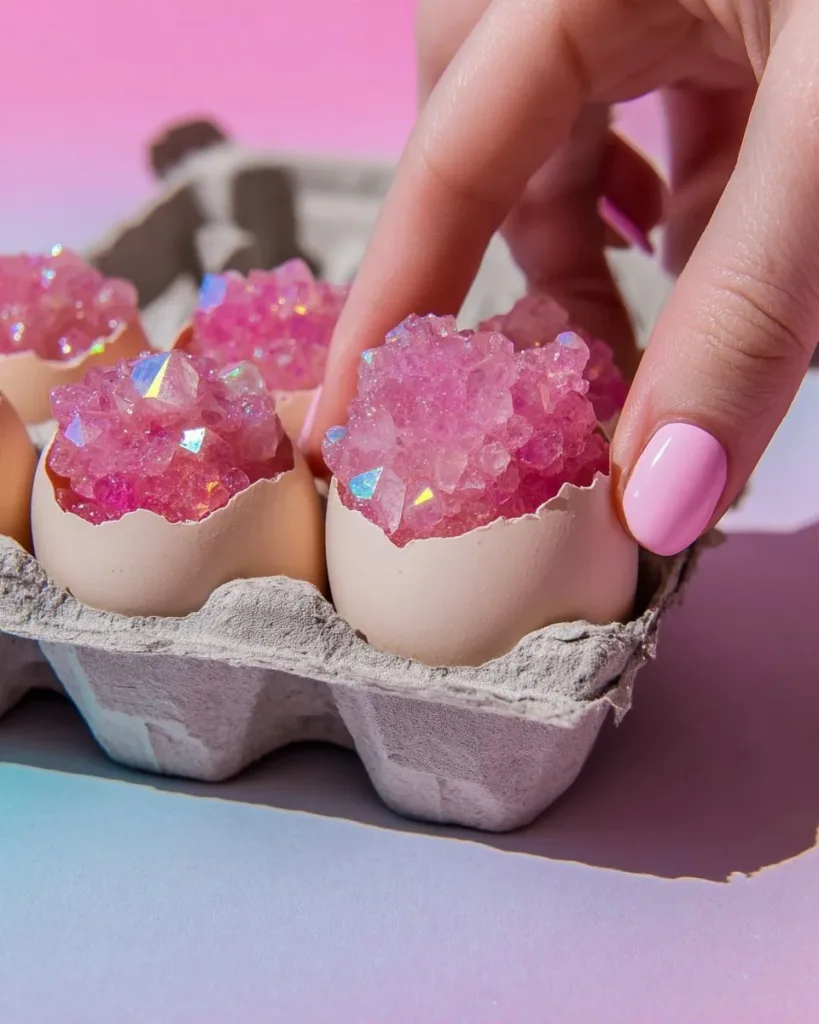
A busy afternoon, the kind when the kids say they need something to do right now and the kitchen is already half-cleaned from lunch, makes a perfect moment for Pink Eggshell Crystal Geodes. I remember one such day when a sudden rainstorm canceled our park plans and my daughter wanted something sparkly and quick. With eggshells from breakfast and a few pantry staples, we turned a small counter space into a gentle, low-mess project that felt special and doable. Pink Eggshell Crystal Geodes bring a little kitchen science and a crafty reveal together, and they work well when you have limited time but want a real, hands-on surprise.
Why This Pink Eggshell Crystal Geodes Works So Well
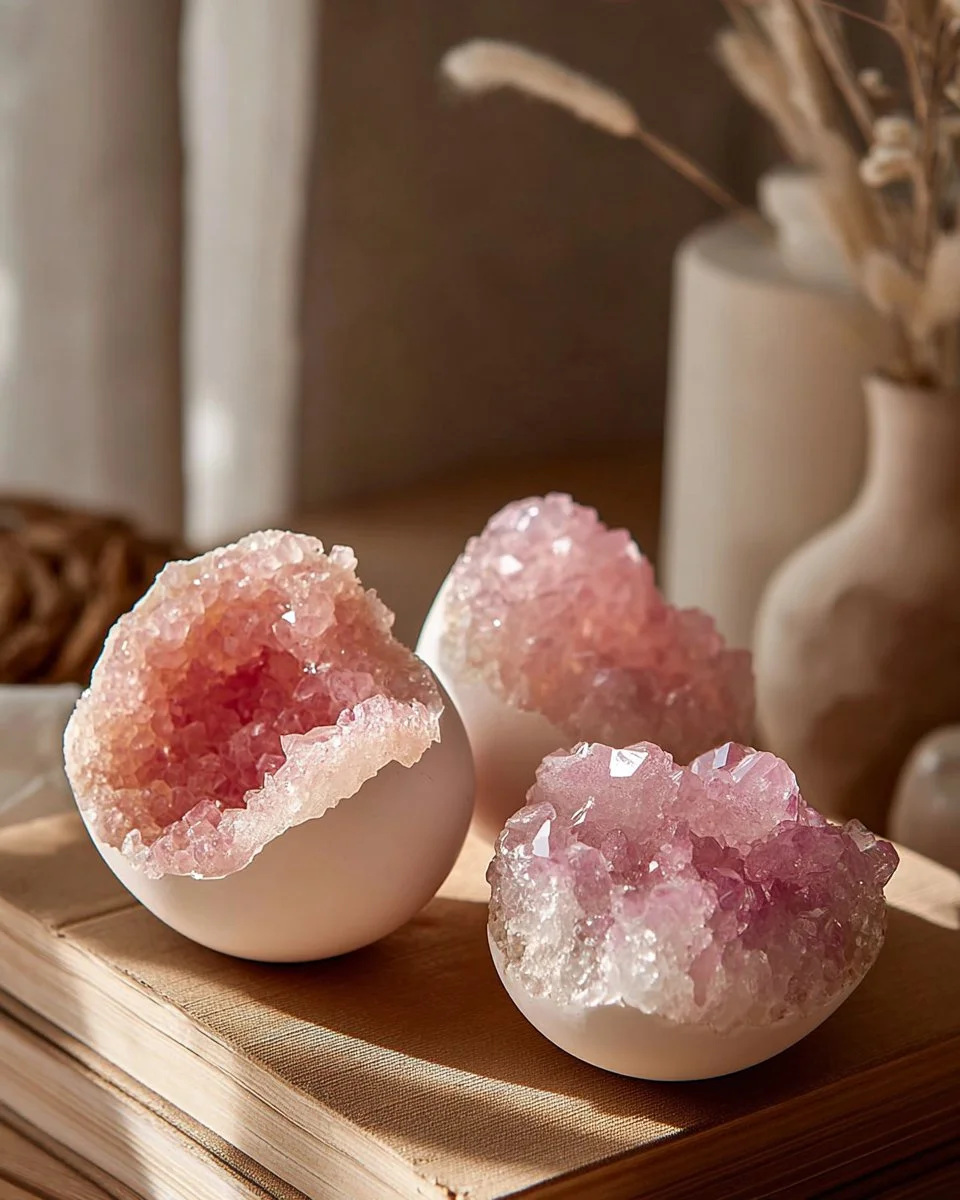
This project stays low-prep because most materials live in your kitchen or junk drawer already. You do not need fancy tools or long setup. The shell halves act as tiny bowls, so you do not need molds or trays.
It stays approachable because the steps use clear, repeatable actions: warm water, dissolve, color, fill, and wait. That sequence gives visible clues at every stage, which keeps kids interested and adults relaxed.
It stays reliable because crystal formation follows simple solubility and evaporation rules. Warm water holds more dissolved material, and as the liquid cools and evaporates, crystals form predictably. When you follow the basic timing and keep the shells level, you get consistent results on the first try.
This fits real-life schedules. You spend about 20 to 30 minutes setting up, then you check in over a few days while the crystals grow. You can leave the shells undisturbed in a quiet corner and check progress in short bursts.
A Quick Look Before You Begin
How This DIY Comes Together
You will spend a short, focused time preparing shells and your pink solution, then let the shells sit while crystals form. Plan for about 20 to 30 minutes of active work and three to five days of hands-off growing time.
Setup needs a small clear space that is level and out of drafts. The mess level stays low if you use paper towels and a nesting cotton bed for the shells. An adult should handle the warm water step and the dissolved crystal mix.
Children can do rinsing, coloring, and filling with a dropper once the warm solution cools slightly. Expect hands-on moments like wiping spills, stirring to clarity, and watching tiny sparkles begin to appear. Those small moments make the project feel like a true discovery.
Materials You’ll Need
Simple Supplies From Home
Clean eggshell halves, well rinsed and fully dry common household item; save shells from breakfast.
Pink food coloring or powdered pigment common kitchen dye; powdered pigment can be stronger.
White glue or diluted clear glue school glue works; thin with a little water if needed.
Table salt, sugar, Epsom salt, or borax choose one crystal material; borax makes larger crystals but use with care.
Warm water from the tap; have a cup ready.
Small plastic cups or a tray for mixing solution easy to clean; reuseable.
Cotton wool or soft nesting material makes a gentle bed for shells and keeps them level.
A pipette, dropper, or small spoon helps with careful filling and topping up.
Tweezers or small forceps useful for lifting delicate crystals out later.
A shallow container to hold shells keeps them together and reduces spills.
Paper towels and a soft brush for cleanup and gentle brushing of shells.
Protective gloves and old towels (optional) handy if you prefer less mess when stirring or pouring.
Discover Easy Kids Activities
Looking for simple, fun ideas for kids? Explore our Low Prep Kids Activities and find quick projects that spark creativity without long prep time.
STEP-BY-STEP DIRECTIONS
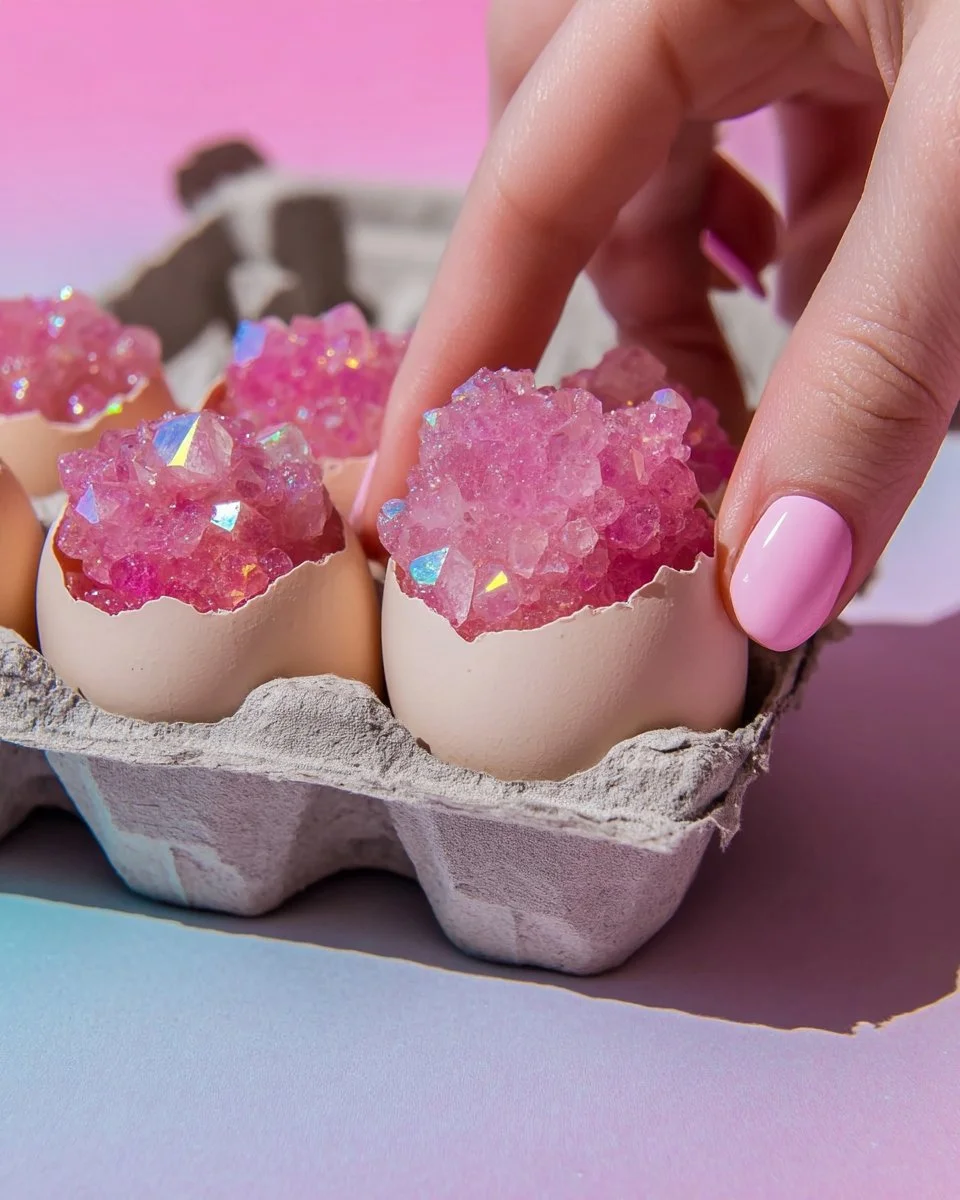
- Prepare your shells by breaking them into halves, rinsing, and drying them fully.
Handle shells gently. Rinse under cool water and set out on a paper towel until they feel dry and not greasy. - Place the clean eggshell halves in a soft nest of cotton.
Make a shallow bed of cotton wool in your tray or shallow container so each shell sits snug and level. - Brush a light layer of diluted clear glue inside each shell.
Thin a little clear glue with water if needed and use a soft brush. A thin coating helps crystals stick to the shell as they grow. - Warm one cup of water and dissolve two to three tablespoons of your chosen crystal material. Stir until warm and clear.
Heat water until comfortably warm, not boiling. Add the crystal material slowly and stir until the solution looks clear with no grains left. - Add a few drops of pink food coloring or pigment to the solution and stir.
Start with two drops and add more if needed. Stir until the color looks evenly mixed and the solution still looks clear. - Fill each shell with the warm solution using a dropper or small spoon.
Work gently so you do not spill. Fill shells about three quarters full to give room for crystals to grow upward. - Nest the shells where they can sit level, avoiding drafts.
Place the shallow container in a calm spot on a level shelf or counter. Avoid windows, vents, or fans that blow gently across the shells. - Check for crystal formation every hour for the first day, and observe the growth process.
Look for tiny sparkles along the surface and edges. The first fuzzy crystals often show at the shell rim or on the glue layer. - Top up with solution if needed, ensuring they are adequately hydrated.
If the liquid level drops below the crystal field, add a little more solution with a pipette. Keep the shells moist but not overflowing. - Allow three to five days for crystals to mature.
Be patient. Crystals deepen in color and size over several days. Leave them alone as much as possible during this time. - Gently remove and let the crystals dry overnight.
Use tweezers to lift small pieces or lift the shells out and set them on paper towels. Let them air dry so crystals harden and shine. - Clean up responsibly and store materials for future projects.
Rinse cups, wipe the tray, fold up used paper towels, and keep leftover solution sealed in a labeled container if you plan to reuse it.
The Learning Behind This DIY
What Kids Practice While Making This
This activity brings a bit of simple science to an easy craft. Kids see cause and effect as the warm, colored solution cools and the dissolved material comes out of solution to form crystals. They learn that temperature and evaporation change how solids and liquids behave.
Small hands practice gentle stirring, careful pouring, and using a dropper. Those motions build fine motor skills and hand-eye coordination. Tweezers teach pinch control and patience, and checking for growth encourages observation and note-taking.
You can describe why glue helps: the glue gives tiny anchors so crystals have a starting point to latch on. When you explain that warm water holds more dissolved material, you give a clear reason why we warm the water first. Keep explanations simple and tied to what you see.
Troubleshooting Common Issues
If Something Doesn’t Go as Planned
If crystals do not appear the first day, check the solution clarity. If you still see undissolved grains, warm and stir again until clear. If the room is very humid or cold, growth might slow; move the shells to a slightly warmer, drier spot.
If crystals form only on the surface and not inside the shell, you may have filled too little solution. Gently top up with warm solution and allow more time. If crystals look dusty or dull, they might be powdery salt; try a different crystal material next time for clearer, more defined crystals.
If color looks weak, add an extra drop of pigment to the solution and stir. If you see bubbles in the solution when filling shells, let the liquid sit a minute so bubbles rise and pop before you add it; bubbles can interfere with even crystal formation.
If a shell tips or spills, stop and steady the nest. Wipe up spills promptly with paper towels. A little spill is normal; use it as a chance to show kids how to clean responsibly and reset.
Easy Variations to Try
Simple Ways to Change It Up
Try different crystal materials to see varied crystal shapes and sizes. Epsom salt and borax form different textures, so experimenting changes the look without changing the process.
Use a stronger shade of pigment for deeper pink geodes. Powdered pigment gives bright color with less liquid added, while food coloring stays softer and more translucent.
Make a small series: prepare shells with varying solution strengths so kids watch how concentration affects crystal growth speed and size. Label each shell so you can compare after three to five days.
Seasonal twist: add tiny decorative flags or write a short note on a small card and tuck it beside a finished geode as a gift. Keep it light and simple so you keep the low-prep advantage.
Making This Work for Different Ages
Younger children can rinse shells, place cotton nests, and help drop color. Older kids can mix warm solutions, measure the crystal material, and monitor growth with a small magnifying glass.
Storing or Reusing This Project
What to Do With It After
You can keep dried geodes as small display pieces in a glass jar or on a shelf. Handle them gently; crystals can chip if dropped. For seasonal decor, nest them in a small bowl with sand to steady them.
Leftover solution can sit sealed in a cup or bottle for a short time and reused once or twice. Clearly label the container so you do not reuse a contaminated mix. If you used borax, store it away from pets and small children.
Clean shells and tools gently. Soak plastic cups and droppers in warm water and soap, rinse, and dry. Cotton and paper towels go in compost or trash. Keep your workspace tidy so the project feels finished and not like a lingering mess.
FAQs About Pink Eggshell Crystal Geodes
Will this make a big mess on my counter?
I get this question a lot. The project can stay tidy if you set out paper towels and work over a tray. Expect a little damp rim or a drop or two from filling shells. That is normal and easy to wipe up. If a spill happens, blot it with paper towels and wash the area. Using a cotton nest and a shallow container keeps most of the work contained.
Is this safe for young kids?
Yes with supervision. The materials are common household items, but warm water and concentrated powders need an adult hand. Let kids do rinsing, coloring, and filling with a dropper while an adult warms and dissolves the crystal material. If you use borax, keep it away from very young children and pets and wash hands after handling.
What if the crystals are tiny or flaky?
Tiny or flaky crystals often mean the solution was not saturated enough or the room stayed too humid. Next time, dissolve a bit more crystal material until the solution looks very slightly cloudy before you stop; that indicates saturation. Moving the shells to a drier, steady spot also helps crystals grow fuller.
Can I change the color or make multi-colored geodes?
Yes. You can try different pigments, and with care, you can add a small drop of a second color near the edge once initial crystals form. Work slowly and expect soft blends rather than sharp stripes. Powder pigment gives brighter, more solid color; food coloring keeps tones softer.
A Final Helpful Note
One Last Tip Before You Go
Enjoy the simple rhythm of this project: a quick prep, a wait, and a small reveal. If something does not look perfect the first time, see it as part of learning. You get real, different results each time, and that variety is the fun of making. Keep materials together in a small box if you want to repeat the project easily, and celebrate the small moments when kids notice the first crystals glinting in the light.
Conclusion
If you want a clear step-by-step refresher or a slightly different take on the same idea, this guide for how to make a crystal geode is a helpful companion: How to Make a Crystal Geode – Parenting Chaos. For a straightforward, science-focused walkthrough using eggshells, this step-by-step experiment page explains the chemistry in friendly terms: How to Make Crystal Eggshell Geode Chemistry Science Experiment.
Happy making. Keep it easy, keep it safe, and enjoy the sparkle.
PrintPink Eggshell Crystal Geodes
Create sparkling pink crystal geodes using eggshells and common kitchen materials. A fun hands-on science project for kids!
- Prep Time: 30 minutes
- Cook Time: 0 minutes
- Total Time: 4320 minutes
- Yield: 4 servings
- Category: Craft
- Method: Crafting
- Cuisine: N/A
- Diet: N/A
Ingredients
- Clean eggshell halves, well rinsed and fully dry
- Pink food coloring or powdered pigment
- White glue or diluted clear glue
- Table salt, sugar, Epsom salt, or borax
- Warm water
- Small plastic cups or a tray for mixing solution
- Cotton wool or soft nesting material
- A pipette, dropper, or small spoon
- Tweezers or small forceps
- A shallow container to hold shells
- Paper towels and a soft brush
- Protective gloves and old towels (optional)
Instructions
- Prepare your shells by breaking them into halves, rinsing, and drying them fully.
- Place the clean eggshell halves in a soft nest of cotton.
- Brush a light layer of diluted clear glue inside each shell.
- Warm one cup of water and dissolve two to three tablespoons of your chosen crystal material.
- Add a few drops of pink food coloring or pigment to the solution and stir.
- Fill each shell with the warm solution using a dropper or small spoon.
- Nest the shells where they can sit level, avoiding drafts.
- Check for crystal formation every hour for the first day.
- Top up with solution if needed, ensuring they are adequately hydrated.
- Allow three to five days for crystals to mature.
- Gently remove and let the crystals dry overnight.
- Clean up responsibly and store materials for future projects.
Notes
This project combines simple science with craft, providing hands-on learning for kids while creating beautiful crystal geodes.
Nutrition
- Serving Size: 1 geode
- Calories: 0
- Sugar: 0g
- Sodium: 0mg
- Fat: 0g
- Saturated Fat: 0g
- Unsaturated Fat: 0g
- Trans Fat: 0g
- Carbohydrates: 0g
- Fiber: 0g
- Protein: 0g
- Cholesterol: 0mg