

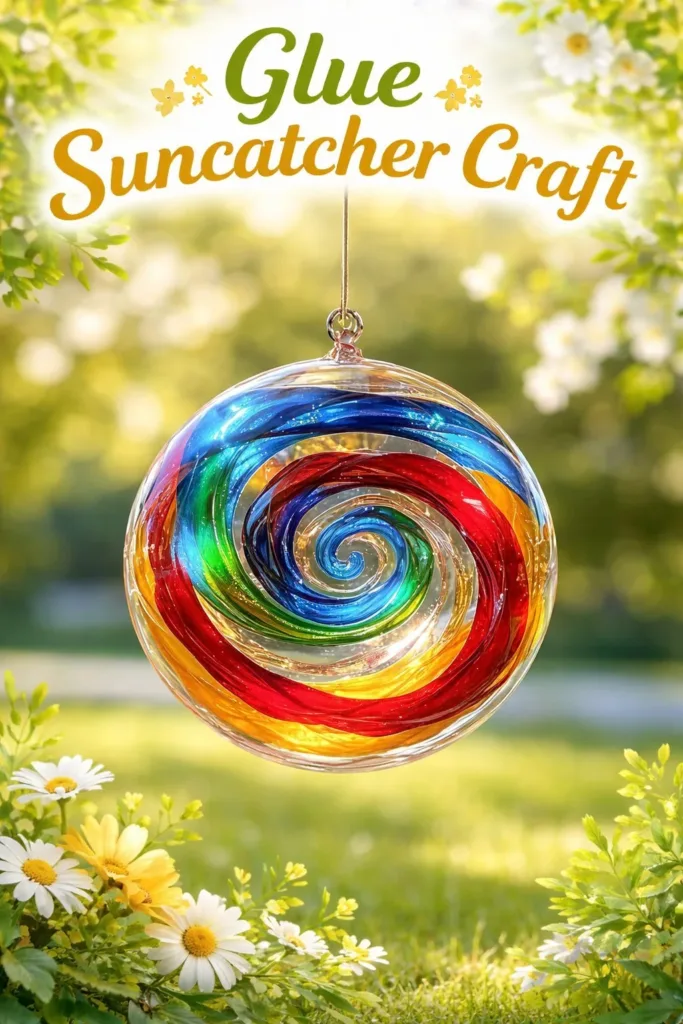
I pulled the kitchen table free on a rainy afternoon when my kids begged to make something “right now,” and the Glue Suncatcher Craft felt like the perfect answer. We cleared a small spot, smoothed out a sheet of wax paper, and set a few silicone molds on top. Ten minutes later we had bright blobs of glue that already caught their attention, and by the next morning we had sun-catching shapes that made the windows feel friendlier. If you want a quick, low-stress craft that still looks special, this one fits the bill and works well alongside other easy projects like our crafts for kids and fun projects for rainy days and short attention spans.
Why You’ll Love Making Glue Suncatcher Craft
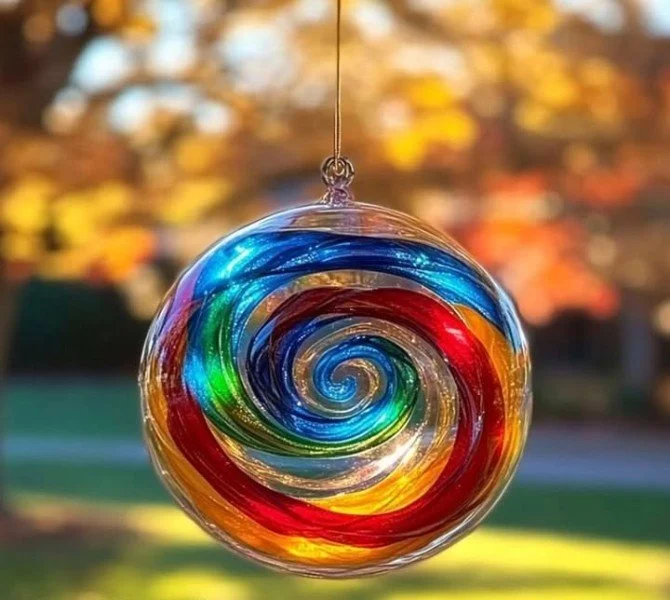
This project keeps prep short and payoff high. You only need clear white school glue and a few small extras, so you can set up in under five minutes and start mixing colors. The materials live in most homes, which means you do not have to make a special trip to the store on a busy afternoon.
It feels approachable because the steps happen slowly. Pouring, dotting color, and pressing tiny bits into glue all move at kid pace. The glue gives you forgiving timing. It skins over and then cures, so you can step away and not worry about instant perfection.
It also stays reliable for different ages. Little hands practice careful drops and placements, and older kids can experiment with swirl patterns and tiny inclusions. The finished suncatchers look satisfying in the window, which makes the whole family proud without a long cleanup.
A Quick Look Before You Begin
Set aside about 10 to 20 minutes for the active part of the craft and plan on leaving pieces to dry overnight. The setup fits on a single table or counter and creates only moderate mess, mostly glue drips and a few tiny bits of tissue or glitter.
You will want adult help for the squeeze bottle or nozzle step and for attaching eyelets if you use them. Young children do well with the pouring, color drops, and pressing bits into the glue while an adult manages the final trimming and hanging hardware.
Cleanup stays simple. A shallow dish with warm soapy water, paper towels, and a drying tray handle the glue on hands and tools. The glue rinses off while still wet, which keeps the overall job quick and manageable.
Materials You’ll Need
Clear white school glue
common household glue that dries clear and flexible
Food coloring or liquid watercolors
small amounts go a long way; liquid watercolors tint more easily
Plastic lids or silicone molds
silicone molds release easier; plastic lids work in a pinch
Wax paper or a nonstick mat
protects the table and makes cleanup simple
Toothpicks or a sewing needle
for swirling color and shaping small details
Small pieces of tissue paper, glitter, or dried flower bits (optional)
adds texture and pretty catches of light
Fine-tip squeeze bottle or well-fitting glue nozzle
helps control glue placement
Thin fishing line or ribbon and small eyelet hooks
for hanging finished suncatchers
Shallow dish with warm water and mild soap for cleanup
for rinsing glue from tools and hands
Paper towels and a small tray for drying
for quick cleanup and to keep pieces safe while curing
STEP-BY-STEP DIRECTIONS
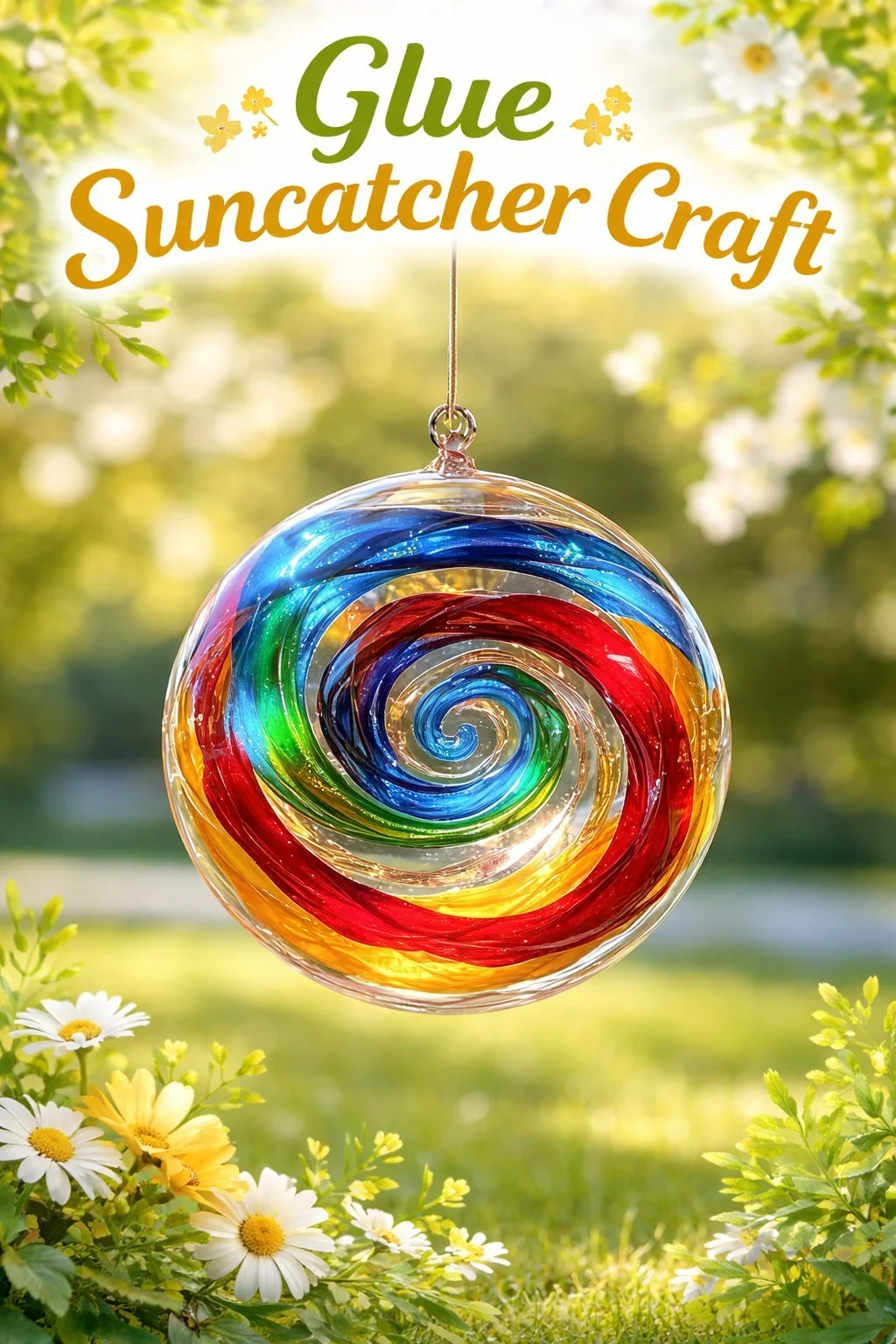
- Prepare your surface and tools by laying wax paper or a nonstick mat on a flat table and placing your molds on top.
Keep everything within reach so kids do not carry glue across the room.
Have the shallow dish of soapy water ready for quick rinses and paper towels for spills. - Pour a base layer of clear glue into the center of a mold, aiming for a thickness that feels sturdy.
I usually fill to about a quarter inch for small shapes and a bit more for larger ones.
The glue should sit comfortably without pooling over the edges. - Add color by dropping tiny amounts of food coloring into the glue and swirl gently with a toothpick.
A single drop goes a long way; start small and add more if you want deeper color.
Swirl slowly so the color threads through the glue instead of making bubbles. - If desired, press small inclusions into the glue for added texture.
Set tissue scraps, glitter, or dried flower bits gently on the surface with the toothpick.
Press just enough to set them in place without sinking them to the bottom. - Shape the edges and create a hanging point with the toothpick.
Run the toothpick around edges to smooth or pinch them into a scallop.
Make a small loop or a shallow divot at the top to guide where you will attach the hanging hardware later. - Let the glue skin over naturally in a warm spot, then cure fully overnight.
Place your tray somewhere out of the way and out of direct drafts so the glue forms a smooth skin.
Check that pieces feel firm to the touch before moving them the next day. - Remove from the mold and trim any delicate edges if needed.
Work gently when popping silicone molds and lift slowly from plastic lids.
Trim thin drips or wispy bits with small scissors for a cleaner finish. - Attach hanging hardware, like fishing line or eyelets, for display.
Screw in tiny eyelets at the prepared hanging point or tie thin fishing line through a loop.
If you choose ribbon, knot it tight and trim the ends. - Hang near a window to enjoy the changing light effects.
Rotate the suncatchers to catch morning and afternoon sun for different colors.
If one piece feels slightly soft, give it an extra day before hanging to avoid stretching.
During this project I often mention a few extras we picked up from experimenting in a similar light activity in the house, and you can read more about those ideas in our playful rainbow light show guide at creative science and craft projects.
What Kids Practice While Making This
Kids learn a lot without a classroom feel. They practice fine motor control as they squeeze glue, drop color, and press tiny bits into place. Those small motions teach hand strength and finger precision.
They also see cause and effect in real time. A single food coloring drop spreads slowly through the glue, and if they swirl too fast, they get bubbles. That feedback is direct and low pressure, which helps them plan and adjust.
When children wait for the glue to skin over and then check it the next day, they practice patience and delayed reward. That calm wait time builds confidence in completing projects that need a little time to look their best.
Finally, kids get gentle problem solving. If a piece sticks to the mold, they figure out how to loosen it. If colors mix into brown, they learn to start again with less color. These are small wins that add up.
Troubleshooting Common Issues
If the glue makes lots of bubbles, it often means you swirled too hard or added the color with too big a drop.
Try tapping the mold gently on the table to bring bubbles to the surface, then skim them with a toothpick.
A light touch when swirling keeps the finish clearer.
If a piece stays tacky after overnight, it probably needed more thickness or a warmer spot to cure.
Move it to a slightly warmer, dry area and give it an extra 12 to 24 hours.
Thicker pieces cure more reliably, and patience here pays off.
If inclusions sink or clump, press them in gently right after adding them and then let the glue sit undisturbed.
Tissue paper absorbs glue and can slightly change color as it dries, which looks nice but can make edges uneven.
Trim any stray fibers once fully dry.
If a mold sticks, silicone usually pops free but plastic lids may need a slow peel.
Flex the mold or lid and press gently from the back to release.
If all else fails, let the piece sit a little longer; continued curing often makes removal easier.
Easy Variations to Try
Try a limited palette of two colors for a clean, modern look.
Use all cool tones like blues and greens or warm tones like oranges and pinks to match a room.
Make tiny mosaic-style suncatchers by filling several small lids and arranging them together on the window.
You can group shapes in a cluster and hang them from one ribbon for a mobile effect.
Press small pressed flower bits or leaf fragments into the glue for a nature-themed piece.
Keep pieces small and flat so they sit nicely in the glue without creating bulk.
Create seasonal shapes like hearts, stars, or simple flowers by using themed silicone molds.
Rotating shapes for holidays keeps the craft fresh and lets kids look forward to new versions.
If you want a sparkle effect, use a tiny pinch of glitter mixed in with the glue right away.
Too much glitter can hide color, so use it sparingly for a subtle shimmer.
For another take on clear, light-catching projects, see our crystal heart craft for design ideas and inspiration at crystal heart craft.
Storing or Reusing This Project
Store finished suncatchers flat until they fully cure to avoid warping.
A small tray or shallow box works well and keeps dust off the pieces as they finish.
If you plan to change the display, remove eyelets gently and reuse them on new pieces.
Fishing line or ribbon can be reused many times as long as you keep it dry and knot-free.
Any leftover glue stays usable if you keep the bottle tightly closed.
Squeeze bottles and nozzles rinse clean in warm soapy water while glue remains wet and can be reused for other crafts.
Keep small adornments like dried flower bits and tissue scraps in a labeled tub for the next project.
That organization makes setup faster next time and reduces waste.
FAQs About Glue Suncatcher Craft
Will this make a huge mess in my kitchen?
It can get a little sticky if kids move around with open glue, but the mess stays small with a simple setup. Lay wax paper down, keep a shallow soapy dish and paper towels nearby, and remind children to work in their spot. If glue gets on hands, it rinses off quickly with warm soap and a little scrubbing. I have done this many times and find that a single small tray and quick rinses keep cleanup to ten minutes or less.
Is this safe for young children to do?
This craft uses school glue and common art supplies, so it ranks safe for children with supervision. Little ones need help with squeeze bottles and any small eyelet hardware. Watch for small bits like glitter or tiny dried flowers around children who are still mouthing objects. In my experience, clear instructions and an adult nearby prevent the usual mishaps.
Can I substitute something for food coloring?
Liquid watercolors or concentrated food coloring work best because they mix smoothly. If you only have powdered food coloring, dissolve a tiny pinch in a little water first so it wets the glue evenly. I prefer tiny drops of liquid color because you control the shade better and avoid adding too much water to the glue.
What if my suncatcher turns out cloudy or uneven?
Cloudiness often means air trapped in the glue or too much color concentrated in one spot. Gently swirling and tapping the mold before it skins can reduce bubbles. If a piece looks uneven after removing it from the mold, trim the edges and enjoy the handmade look. Nothing here needs to be perfect to look lovely in the window.
How long will these last in a sunny window?
They hold up well for months if they dry fully and you avoid direct, extreme heat. Over time, constant sun can fade some pigments, and pieces that hang where they brush against curtains might get scuffed. I rotate pieces between windows to refresh the display and keep favorites out of direct midday sun for longer life.
A Final Helpful Note
Take your time on the first piece and treat it like a test run. That first try shows how much color to use, how thick to pour, and how your molds release most cleanly. Keep expectations warm and flexible. Small flaws look creative in a suncatcher and teach kids how to adjust next time.
Stay calm about spills or uneven spots. A damp paper towel and a shallow dish of soapy water solve most glue-related troubles quickly, and having children help with rinsing makes cleanup part of the activity. Remember that this craft works best when you enjoy the process as much as the results.
Conclusion
If you want a few more visual examples and variations to inspire your session, check out this helpful gallery at Colorful DIY Glue Suncatcher Craft – Mombrite for easy-to-follow photos and layout ideas. For tips that line up with the glue and technique we use here, the maker notes at Elmer’s Glue Sun Catcher give clear advice on glue behavior and drying so you can plan your next batch with confidence.
PrintGlue Suncatcher Craft
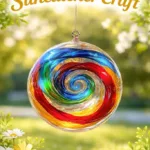
An easy and fun craft that allows kids to create their own beautiful suncatchers using glue and colors.
- Prep Time: 10 minutes
- Cook Time: 0 minutes
- Total Time: 1440 minutes
- Yield: 4 suncatchers
- Category: Craft
- Method: Crafting
- Cuisine: N/A
- Diet: N/A
Ingredients
- Clear white school glue
- Food coloring or liquid watercolors
- Plastic lids or silicone molds
- Wax paper or a nonstick mat
- Toothpicks or a sewing needle
- Small pieces of tissue paper, glitter, or dried flower bits (optional)
- Fine-tip squeeze bottle or well-fitting glue nozzle
- Thin fishing line or ribbon and small eyelet hooks for hanging
- Shallow dish with warm water and mild soap for cleanup
- Paper towels and a small tray for drying
Instructions
- Prepare your surface by laying wax paper on a flat table and placing your molds on top.
- Pour a base layer of clear glue into the center of a mold, aiming for a thickness of about a quarter inch.
- Add color by dropping tiny amounts of food coloring into the glue and swirl gently with a toothpick.
- If desired, press small inclusions into the glue for added texture.
- Shape the edges and create a hanging point with a toothpick.
- Let the glue skin over naturally and cure fully overnight in a warm place.
- Remove from the mold and trim any delicate edges if needed.
- Attach hanging hardware for display.
- Hang near a window to enjoy the changing light effects.
Notes
Kids will develop fine motor skills and learn about cause and effect while making these suncatchers. Supervision is recommended for younger children.
Nutrition
- Serving Size: 1 suncatcher
- Calories: 0
- Sugar: 0g
- Sodium: 0mg
- Fat: 0g
- Saturated Fat: 0g
- Unsaturated Fat: 0g
- Trans Fat: 0g
- Carbohydrates: 0g
- Fiber: 0g
- Protein: 0g
- Cholesterol: 0mg