

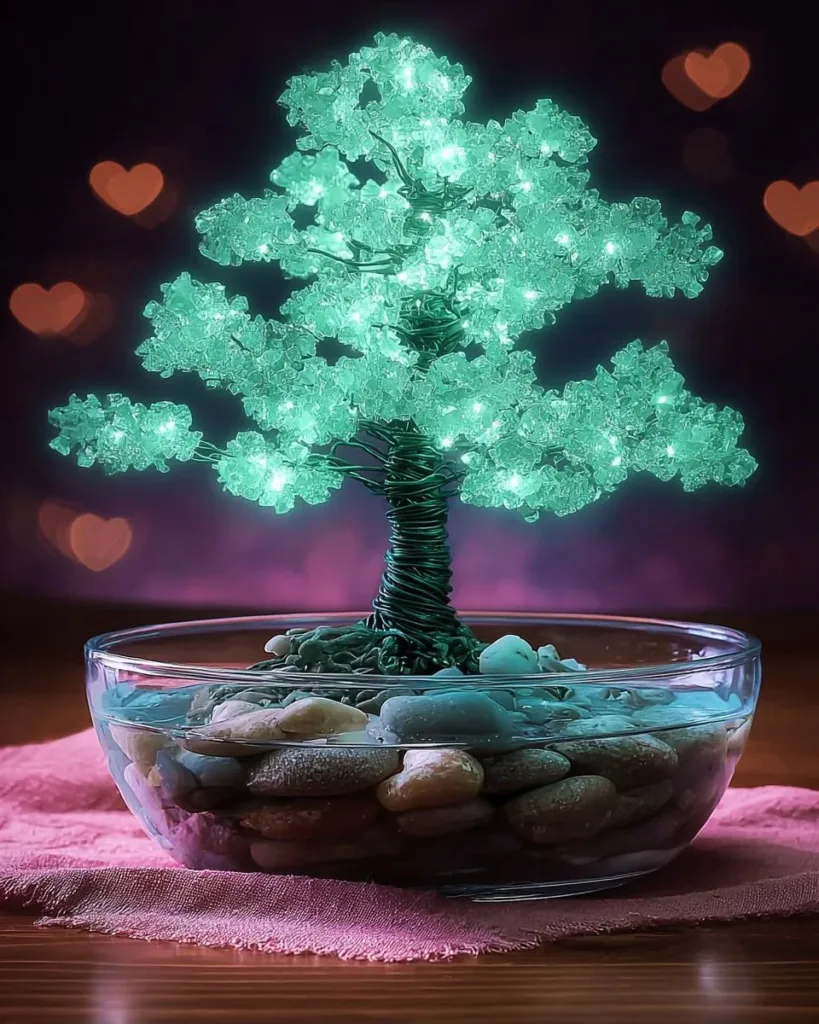
I was setting up a quick craft corner on a busy Saturday afternoon when my youngest announced she wanted something glowing to keep at her bedside right now. I cleared a small patch of the kitchen table, pulled out a few jars and wire, and we started a Glow-in-the-Dark Crystal Tree that came together faster than I expected. It felt calm and hands-on, perfect for a last-minute activity that still made a neat keepsake. If you want a simple project that uses things you can find easily and gives a little nightlight magic, this project fits the bill and if you like glow experiments, you might also enjoy our glow-in-the-dark moon rocks recipe for a related, low-mess activity.
Why This Glow-in-the-Dark Crystal Tree Works So Well
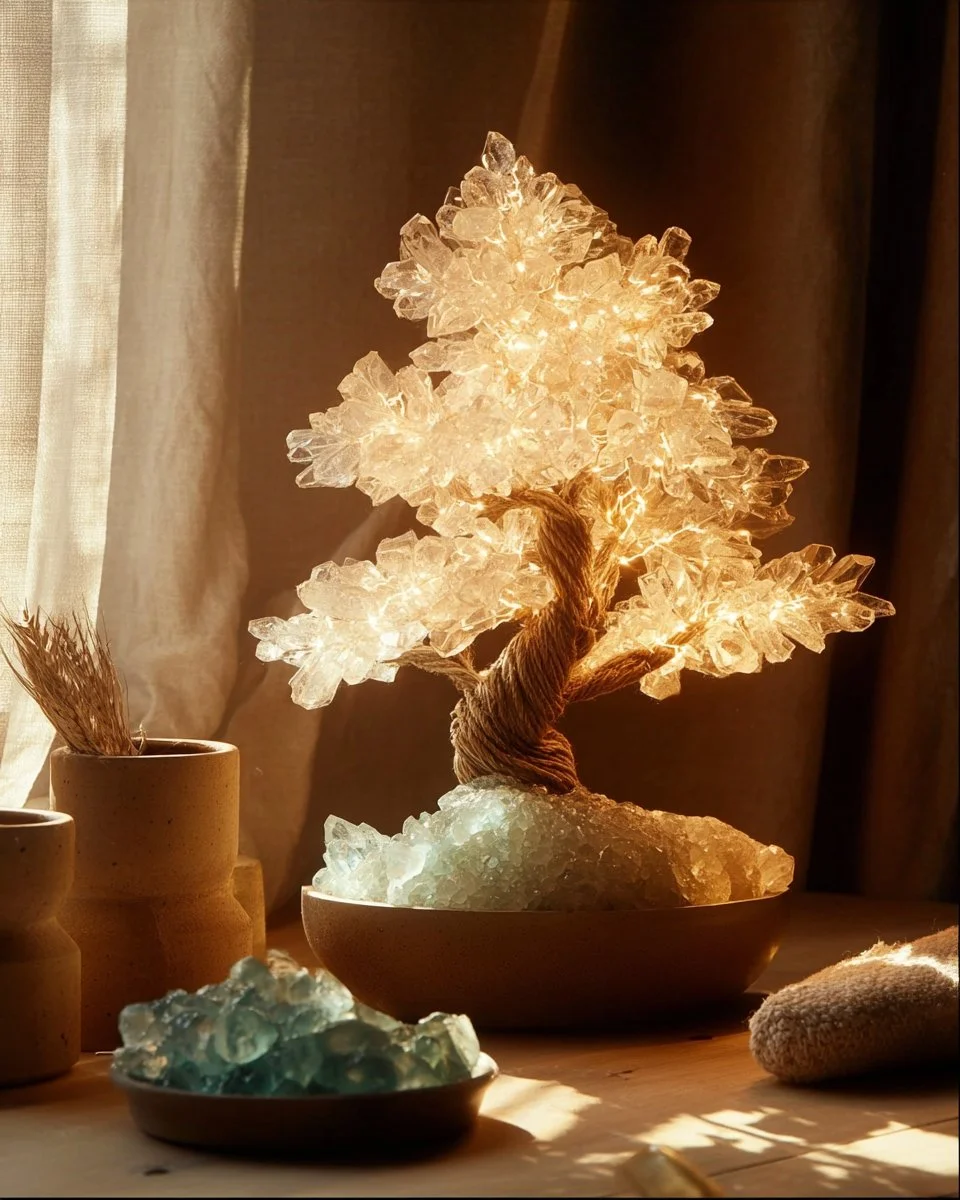
This project uses a small set of straightforward materials and steps that fit into a busy afternoon. The wire armature gives you structure quickly, and clay or epoxy putty lets you lock everything in place without complicated tools. You can work small one tree per child or one tree per shelf so the project never feels overwhelming.
It stays approachable because you control the mess and the pace. You can build the trunk and branches in ten minutes, then slow down to place crystals and beads. The glow pigment or glow beads add a big visual payoff with a little effort. For families, that makes this a win: short adult time, long kid engagement, and a finished piece that actually works in low light.
A Quick Look Before You Begin
This project takes about 40 minutes of hands-on time plus at least 24 hours to cure, depending on your adhesives. Setup needs only a small covered table, a soft mat, and an open window if you use resin. Expect a little scattering of tiny beads and some sticky fingers when you glue on crystals; that is normal and easy to manage.
You will want adult supervision for measuring and mixing resin or epoxy putty. If kids do the bead placement, they will get a lot of fine-motor practice, and the work moves at a calm pace. Keep a small tray nearby for loose beads so cleanup stays quick.
Materials You’ll Need
Thin craft wire (18 to 22 gauge), about 3 to 6 feet total
common, easy to bend but sturdy enough to hold shape
Small base (wood disc, stone, or jar lid)
simple base gives stability and personality
Air-dry clay or epoxy putty for the trunk and base
air-dry clay is kid-friendly; epoxy putty is firmer and faster-setting
Clear resin or a thick PVA glue that dries clear
resin gives glassy shine; PVA glue is budget-friendly and safer for kids
Glow-in-the-dark pigment powder or pre-made glow beads (optional)
pigment gives a stronger glow; glow beads skip mixing
Small glass beads, quartz chips, or salt crystals
choose what you have on hand; small sizes fit well on branches
Tweezers and round-nose pliers
tweezers for placement, pliers for shaping wire
Small paintbrush for glue and pigment work
helps apply thin layers of adhesive neatly
Sandpaper (fine grit)
for smoothing rough edges on the base or trunk
Small tray or silicone mat
keeps beads corralled and protects your table
Disposable mixing cups and stirring sticks
single-use cups make cleanup simple
Protective gloves and well-ventilated space
gloves for resin and putty; open a window for fumes
A desk lamp or sunlight for charging glow pigment
a bright lamp works well when outdoor sun is not available
Step-by-Step Directions
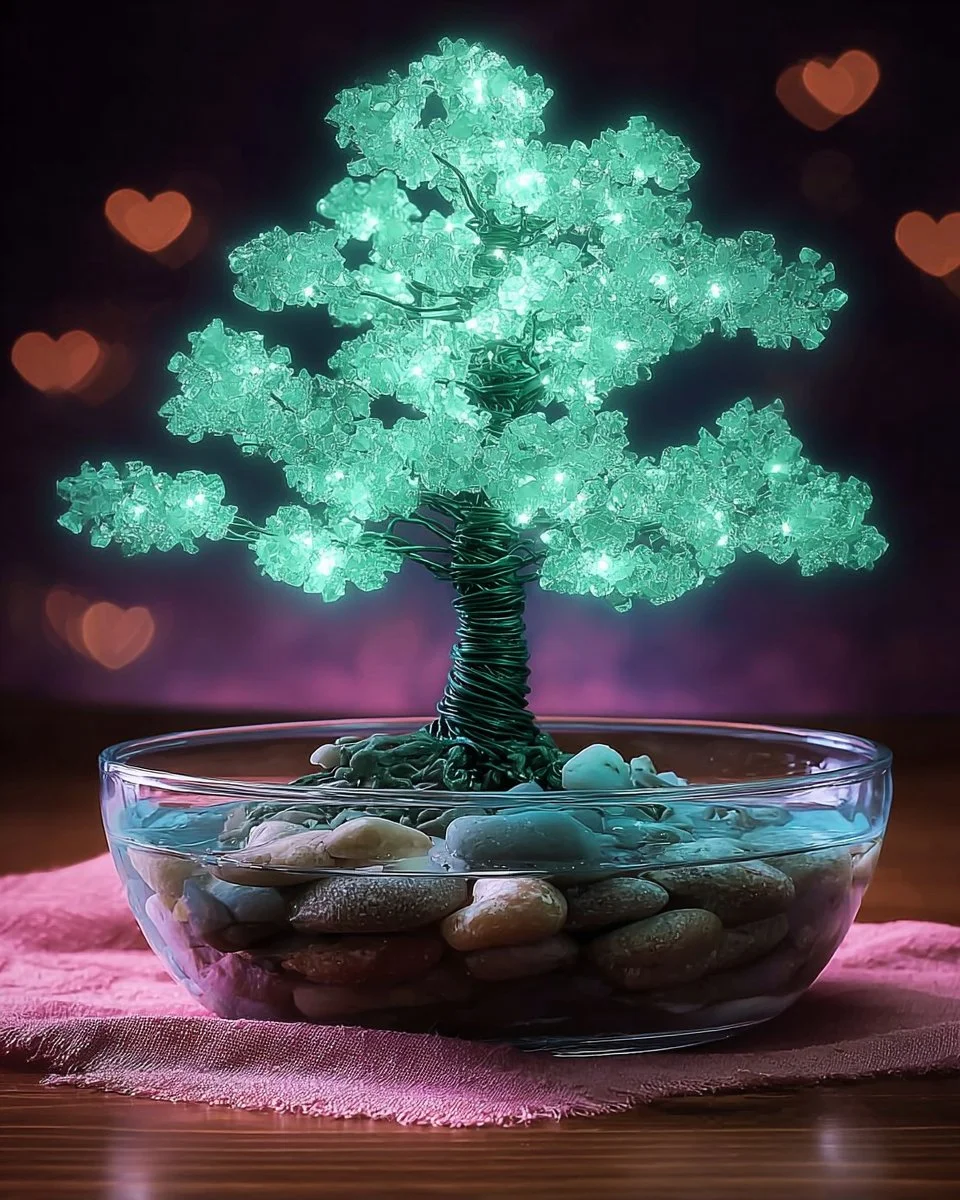
- Gather your workspace and materials. Lay a soft cloth or silicone mat.
Put on gloves if using resin and open a window for fresh air.
Organize beads and tools on a tray so you can reach everything without scrambling. - Form the wire armature by twisting several wires together for the trunk.
Separate the top into branches by spreading and bending the ends.
Use round-nose pliers to curl branch tips a bit so beads sit on them more easily. - Secure the trunk to the base by pressing the twisted end into clay or epoxy putty.
Smooth the clay or putty around the wire base so it looks like a trunk meeting the ground.
Set the piece aside on a flat surface until the clay or putty firms up and holds the tree upright. - Build branch texture with clay or putty by applying small ropes along each branch.
Smooth these ropes with your fingertips to suggest bark and to hide bare wire.
Feel for any sharp wire ends and cover them fully so fingers stay safe. - Prepare your adhesive or resin and mix carefully.
Follow the product directions for ratios and stirring time, and mix slowly to reduce bubbles.
If using PVA glue, have it in a shallow dish for easier brush application. - Add glow pigment to a small portion of resin if using and mix until evenly distributed.
Start with a little pigment so the resin stays pourable and adjust as needed.
Wear gloves and avoid breathing pigment dust; work in a ventilated area. - Apply adhesive where you want crystals using a toothpick or small brush.
Work in small sections so the glue stays tacky when you place beads.
Look for a clear, slightly shiny wet surface as the cue to add your crystals. - Place beads or crystals with tweezers, enjoying the tactile rhythm.
Press each bead gently into the adhesive so it nests against the branch.
If a bead shifts, lift it and reapply a small dot of glue and try again. - Coat with a thin gloss layer once beads are set.
Brush a light layer of clear resin or PVA glue over groups of beads for shine and extra hold.
Avoid heavy puddles; thin coats dry clearer and faster. - Charge the glow parts under lamp light for 15 to 60 minutes, then dim the room to watch the glow.
A strong desk lamp gives a quick charge; natural sunlight charges pigment well too.
You will notice the glow is brighter after longer charging and repeats well after recharging. - Let everything cure fully for at least 24 hours.
Place the tree somewhere dust-free and level while the glue or resin sets.
Resin often needs more time to reach full hardness; check the product label. - Do a final check and smooth edges if needed with fine sandpaper.
Sand any rough base edges and remove stray glue strings carefully.
Wipe the base with a soft cloth and enjoy your finished crystal tree.
The Simple Science or Skills at Work
This project quietly teaches cause and effect. You will see how light stores in glow pigment and then releases measurable light in darkness. Mixing resin proves how ratios and gentle stirring reduce bubbles. When beads sit on a slightly tacky glue, they stick; if the glue dries too fast, they slide off. Those are simple, hands-on lessons.
Fine motor skills get a lot of practice here. Picking up tiny beads with tweezers, twisting thin wire, and smoothing thin ropes of putty sharpen coordination. For young children, the sensory parts matter too: the feel of cool clay, the soft resistance when twisting wire, and the satisfying click of a bead being pressed into place.
Troubleshooting Common Issues
If beads fall off, it usually means the glue dab was too small or the surface was dusty.
Add a touch more adhesive and press firmly; give it more curing time before testing the hold.
If the wire armature leans or sinks into the base, the putty probably stayed too soft.
Remove the tree, add more putty, re-seat the wire, and let it firm on a level surface.
If resin bubbles form over beads, you mixed too fast or poured too quickly.
Next time stir slowly, let the mix sit a minute to release bubbles, and work in thinner layers.
If the glow pigment looks weak, it may not have charged long enough or you used too little pigment.
Charge longer under a bright lamp for up to an hour, or blend a bit more pigment into the resin portion you plan to coat.
Easy Variations to Try
Try glow beads only on the tips of branches for a subtle, starry look.
Place small clusters of quartz chips near the trunk to mimic grown crystals.
Use salt crystals instead of glass beads for a frosted, natural style.
Salt can be more brittle, so seal it with a thin gloss layer to protect it.
Make a tiny grove of mini trees on one base for a miniature landscape.
Scale down the wire and beads and arrange them like a small forest scene.
Add color by mixing a tiny drop of acrylic paint into the top coat for a stained-glass effect.
Keep paint minimal so it does not block the glow pigment or make the resin cloudy.
Storing or Reusing This Project
Store finished trees in a dust-free cabinet or display them on a small shelf away from direct sun.
Direct sunlight over long periods can fade some glow pigments and make plastics brittle.
Keep leftover beads and wire in small resealable bags for another project.
You can reuse unused resin only if it stays unmixed; mixed resin cures and cannot be reused.
Clean brushes and mixing cups right away with the recommended cleaner for your adhesive.
For PVA glue, warm soapy water works; for resin, use the solvent suggested on the product label in a ventilated area.
If you need to recycle parts, remove loose beads and sort by material.
Metal wire can often go to metal recycling, while leftover clay or cured epoxy goes to trash unless your local program accepts craft materials.
FAQs About Glow-in-the-Dark Crystal Tree
How messy is this and how much cleanup should I expect?
This project is moderate on mess. You will have small beads and a little clay dust. Use a tray and a mat to keep beads contained and wipe surfaces with a damp cloth afterward. If you use resin, expect sticky spots until it cures and keep cleaning supplies handy.
Is this safe for younger kids and what age should I watch closely?
Small beads are a choking risk, so supervise children under 6 closely and consider doing the bead placement yourself. Adults should handle resin and epoxy putty. Kids can shape clay and choose beads while a grown-up measures and mixes adhesives.
Can I substitute materials if I do not have glow pigment?
Yes. Pre-made glow beads work well and avoid mixing powders. If you only have clear PVA glue, it will still give good shine but the glow will come from glow beads rather than pigment.
Will my tree glow brightly like battery lights?
It will not glow endlessly or as brightly as a battery-powered light, but it will give a soothing glow after a good charge. Expect a range from soft to medium glow depending on pigment and charge time. It looks charming in a dim room rather than competing with strong lights.
How long does the finished tree last and can I refresh the glow?
The physical tree lasts a long time if you do not drop it or expose it to harsh sunlight. The glow will recharge repeatedly by brief exposure to a lamp or daylight. Over years, some pigments may fade, but you can refresh the look by adding a new thin gloss layer mixed with fresh pigment.
A Final Helpful Note
Trust the rhythm of the build. Take your time shaping the trunk and wait for the putty to firm before adding lots of beads. If something feels off, step back and let it set; most fixes work better after the adhesive has cured a bit. Celebrate the small wins a neat curl of wire, a bead placed just so and know that the glow will reward your patience in low light. You can make this project fit any afternoon, and each tree will have a little personality that feels worth the quiet work.
Conclusion
If you like the look of a crafted crystal tree with glow elements, it pairs well with other glow projects and decorative crafts you might explore. For inspiration that blends crystals and dreamcatcher styling, browse the SOYUZU Orange Dream Catcher With Crystal Tree Of Life & Glow product page for ideas on presentation and color mixing: SOYUZU Orange Dream Catcher With Crystal Tree Of Life & Glow Beads. If you want to extend this activity into a learning moment about how crystals form, consider the National Geographic Jumbo Crystal Growing Kit for a hands-on science follow-up: National Geographic Jumbo Crystal Growing Kit.
PrintGlow-in-the-Dark Crystal Tree
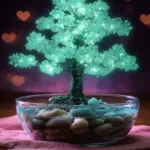
A simple and creative craft project for kids to make their own glowing crystal tree keepsakes.
- Prep Time: 10 minutes
- Cook Time: 30 minutes
- Total Time: 40 minutes, plus 24 hours curing
- Yield: 1 crystal tree
- Category: Craft
- Method: Crafting
- Cuisine: N/A
- Diet: N/A
Ingredients
- Thin craft wire (18 to 22 gauge), about 3 to 6 feet
- Small base (wood disc, stone, or jar lid)
- Air-dry clay or epoxy putty for the trunk and base
- Clear resin or thick PVA glue that dries clear
- Glow-in-the-dark pigment powder or pre-made glow beads (optional)
- Small glass beads, quartz chips, or salt crystals
- Tweezers and round-nose pliers
- Small paintbrush
- Sandpaper (fine grit)
- Small tray or silicone mat
- Disposable mixing cups and stirring sticks
- Protective gloves
- A desk lamp or sunlight for charging glow pigment
Instructions
- Gather your workspace and materials. Lay a soft cloth or silicone mat.
- Put on gloves if using resin and open a window for fresh air.
- Organize beads and tools on a tray.
- Form the wire armature by twisting several wires together for the trunk.
- Separate the top into branches by spreading and bending the ends.
- Securing the trunk to the base using clay or epoxy putty.
- Build branch texture with clay or putty by applying small ropes along each branch.
- Prepare your adhesive or resin and mix carefully.
- Add glow pigment to resin and mix until evenly distributed.
- Apply adhesive where you want crystals using a toothpick or brush.
- Place beads or crystals with tweezers.
- Coat with a thin gloss layer once beads are set.
- Charge the glow parts under lamp light for 15 to 60 minutes.
- Let everything cure fully for at least 24 hours.
- Do a final check and smooth edges if needed with fine sandpaper.
Notes
Make sure to supervise children when using resin and handle small beads carefully to avoid choking hazards.
Nutrition
- Serving Size: 1 finished tree
- Calories: N/A
- Sugar: N/A
- Sodium: N/A
- Fat: N/A
- Saturated Fat: N/A
- Unsaturated Fat: N/A
- Trans Fat: N/A
- Carbohydrates: N/A
- Fiber: N/A
- Protein: N/A
- Cholesterol: N/A