

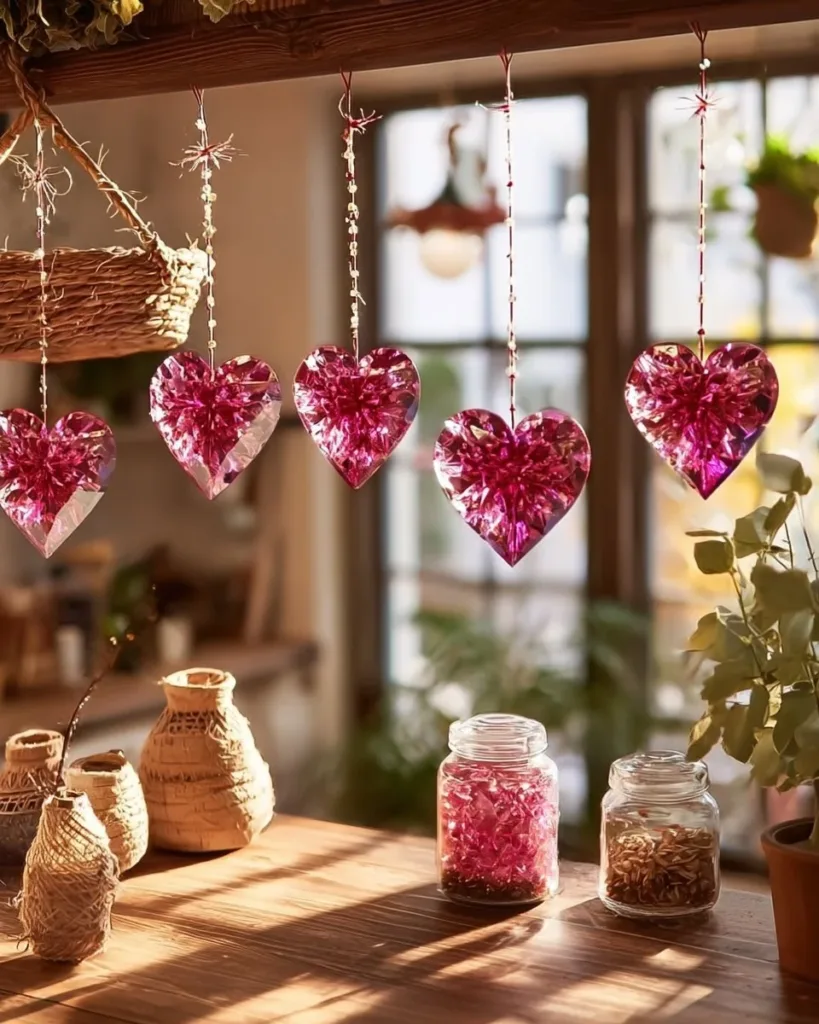
A late afternoon stretches thin and someone calls out that they want to make something now. The kitchen counters already host a juice spill and a homework book, but you can clear a small corner and set up a calm, doable project that feels special.
That is where Crystal Heart fits in: a short, kitchen-table craft that uses water, a simple crystal ingredient, and a heart-shaped jar or mold. It gives kids a focused task, offers a satisfying visible result in a day or two, and fits into a busy schedule. If you like projects that feel warm and low-stress, this one pairs well with other quick heart crafts like our build heart stem challenge, which uses simple materials and big imagination.
Why You’ll Love Making Crystal Heart
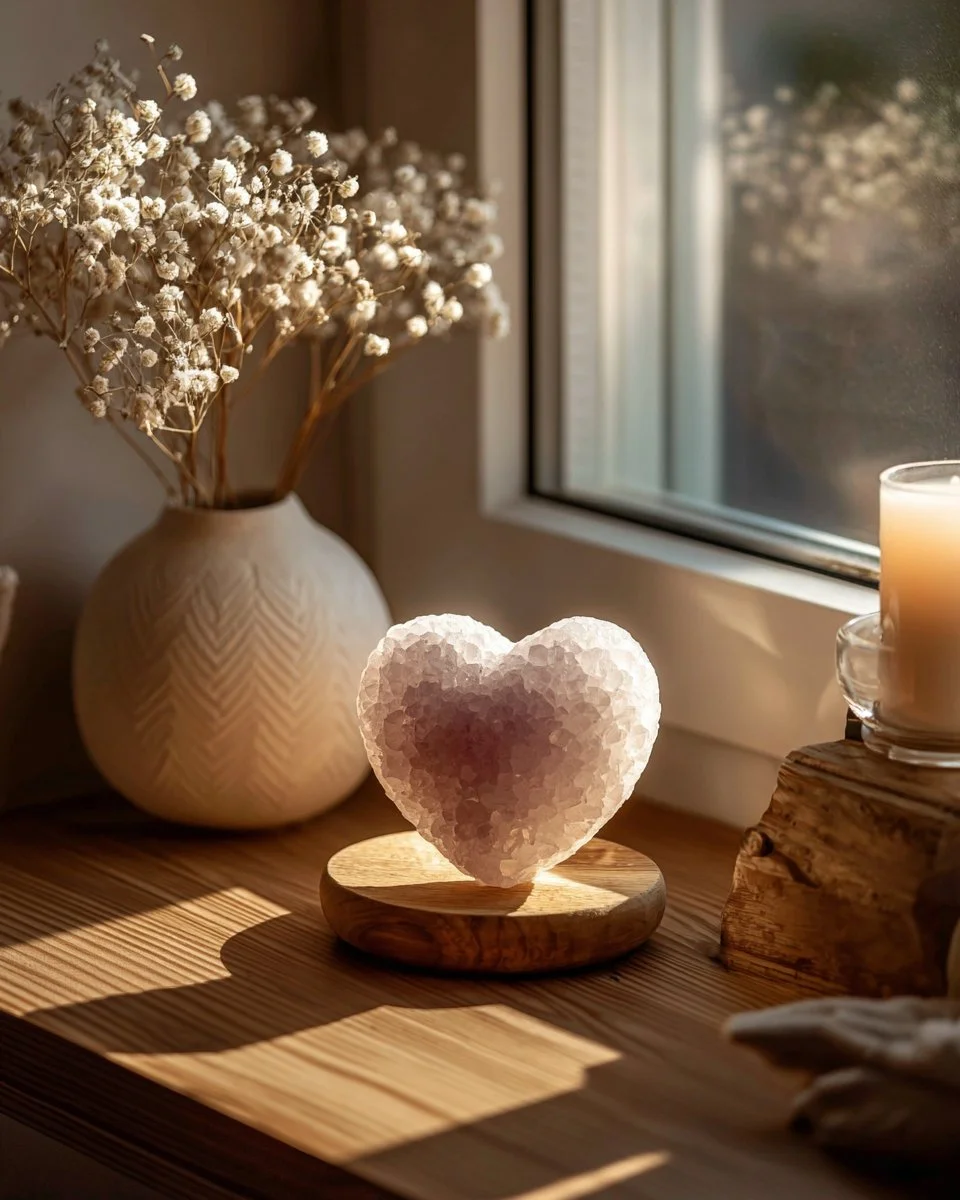
This project works because it keeps things small and steady. You warm water gently, stir in a crystal-forming ingredient, pour carefully, and then wait. That small list of actions makes it easy to fit into a short window between errands or after school. The materials are things you might already have at home, so there is no extra run to a specialty store.
It stays approachable because you do most of the hands-on steps up front. After pouring the solution, the activity becomes quiet watching and gentle checking. That calm phase lets kids practice patience and gives adults a chance to tidy up other things. You will see real, visible growth in a short time when conditions are steady. The payoff is a clear, charming Crystal Heart that looks thoughtful and handmade, with no mess that takes hours to clean.
A Quick Look Before You Begin
How This DIY Comes Together
Set aside about 20 to 30 minutes for the prep and pouring. After that, you will check without touching at 12 to 24 hours, then again once a day for the next few days. Plan to use a small tray or plate under your mold to catch any spills and make cleanup easy.
The setup sits on a kitchen counter or a quiet shelf. Expect a low mess level if you measure and pour carefully. Young children will benefit from an adult to handle the warm water and the pouring. Older kids can do more on their own with supervision. Most of the time you will not need special tools, and most can happen during a relaxed part of the day.
Materials You’ll Need
Simple Supplies From Home
Clear glass mold or shallow jar (heart-shaped tin or small glass bowl)
Common household item that shows the crystals well.
Water (plain and at room temperature)
Plain water works fine; warm gently for better dissolving.
Crystal-forming ingredient such as table salt, sugar, or borax
Pick one you have on hand. Borax gives faster, larger crystals but use with care.
Measuring spoon and clear measuring cup
Small, accurate amounts keep results consistent.
Stirring spoon (metal or wooden)
Use what you have; a metal spoon feels sturdy for stirring.
Thin string or fine wire (optional)
Optional for suspending a seed crystal or shaping the heart.
Paper heart template (optional)
Optional for shaping a paper heart to sit inside or under the mold.
Small tray or plate
Catches drips and makes moving the mold simple.
Tweezers or a straw
Helps lift delicate crystals without smudging them.
Soft cloth
For gentle drying and polishing the finished piece.
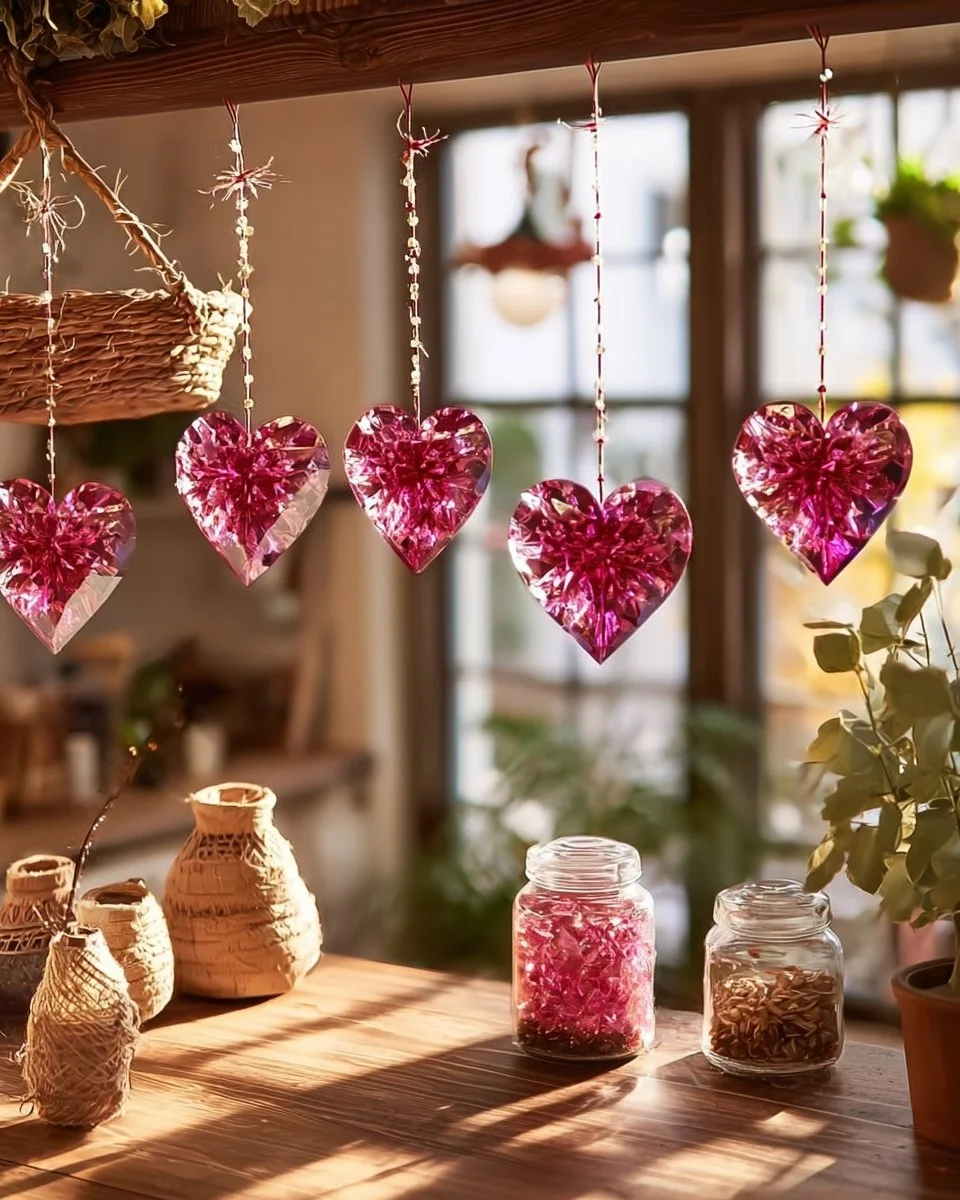
If you enjoy turning crystal crafts into a small display, this project pairs nicely with other heart designs like our no-curl swirled heart suncatchers for a seasonal tabletop or window decoration.
STEP-BY-STEP DIRECTIONS
- Warm the water gently and measure the amount you need.
Use warm, not hot, water so it feels safe to handle.
Measure carefully into a clear measuring cup. - Add the crystal-forming ingredient slowly while stirring until some grains are undissolved at the bottom.
Stir in small spoonfuls and watch the solution clear as it dissolves.
Stop when a few grains stay at the bottom to show saturation. - Prepare your mold or jar and set the paper heart if you use one.
Place the heart-shaped mold on a small tray or plate.
Lay a paper heart template under a clear mold or inside a tin for a guide. - Pour the solution into the mold with calm, steady hands.
Pour slowly to avoid splashes or bubbles on the surface.
Aim for a steady, even fill and set the mold on a still surface. - Suspend a small seed crystal or leave the surface undisturbed for growth.
Tie a tiny crystal on thin string or simply let the solution sit.
A seed gives a cluster to grow around, but surface growth works too. - Find a still, slightly warm spot and cover it lightly.
Avoid drafty windows or places with sudden temperature changes.
Cover with a light cloth or loosely with a lid to keep dust out. - Check without touching after 12 to 24 hours, then again every 24 hours.
Look closely but do not disturb the surface or scrape edges.
You will see tiny crystals form first, then larger ones over days. - When crystals reach the size you like, lift them carefully.
Use tweezers or a straw to lift the crystal heart gently out of the solution.
Move slowly to reduce breakage and support the piece under its weight. - Clean edges and add final touches like ribbon or a soft backing.
Rinse lightly if needed and pat dry with a soft cloth.
Glue a ribbon loop or attach a soft felt backing for a display. - Sit with your finished Crystal Heart for a few minutes and appreciate it.
Take time to notice the sparkle and the shapes of the crystals.
This quiet moment rewards the patient slow watch. - Enjoy and share the moment with family.
Talk about what grew and what surprised you.
Place the heart where it can catch light or give it as a small gift.
The Simple Science or Skills at Work
What Kids Practice While Making This
This craft demonstrates a simple idea: when a liquid holds more dissolved material than it can keep, that material forms into crystals as the liquid cools and evaporates. You will see salt or sugar molecules line up and make tiny facets. That is why some ingredients give chunkier crystals than others.
Children practice fine motor skills when they measure, stir, and pour. They learn steady control while suspending a seed crystal. They also experience cause and effect by watching how small changes in stirring, temperature, or time change the result. Keep explanations short and concrete. Say something like: the water could not hold all the sugar or salt, so it built tiny pieces on itself.
If Something Doesn’t Go as Planned
Troubleshooting Common Issues
If you see little or no crystals after the first day, it usually means the solution is not saturated enough. Warm the water a bit more next time and add more of your crystal ingredient until a few grains stay undissolved at the bottom. That gives the solution the right push to start growing.
If crystals form only at the edges and not across the heart, the surface may have had a draft or temperature change. Move the mold to a more still spot and cover it lightly. Slight warmth encourages even growth. If you accidentally jostle the mold, stop checking so often. Crystals grow best when left alone.
If the crystals look cloudy or have bubbles, those bubbles likely formed during pouring. Pour more slowly and avoid splashing the solution. If cloudiness remains, gently lift the piece and rinse with a small amount of clean water, then dry carefully. Small surface blemishes happen and do not ruin the overall charm.
If a crystal breaks while lifting, use tweezers or a straw next time and support the crystal from below. You can also glue broken pieces back together with a small dab of clear craft glue and hide seams with a ribbon or soft backing.
Easy Variations to Try
Simple Ways to Change It Up
Try a mixed ingredient heart. Stir in a small amount of table salt into a sugar solution to change the crystal texture. This is experimental and may yield interesting, uneven crystals.
Use a suspended shape. Tie a tiny paper heart to thin string and float it in the solution. The paper will not become part of the final crystal structure, but it guides where crystals begin to form.
Make a fuzzy heart by using a seed crystal. Tie a coarse grain or a small chunk of the ingredient to a string so crystals grow outward from that point. This tends to make denser clusters and a more dramatic shape.
Seasonal display. Attach a ribbon and hang the crystal heart in a window for winter light. Keep in mind that direct sun and heat can change the crystal over time, so choose a spot that gets soft light.
Age-appropriate changes. For younger kids, do the measuring and pouring while they watch and help with rinsing and decorating. Older kids can manage the whole process and experiment with different crystal ingredients.
What to Do With It After
Storing or Reusing This Project
If you want to keep the crystal heart, store it in a cool, dry place. Avoid damp basements and areas that heat up, because humidity and heat can slowly dissolve or alter the crystals. Place the heart on a soft cloth or in a small box lined with tissue for safe keeping.
If the crystals crumble or get dusty, you can clean edges gently with a soft brush and dry completely. Do not soak the piece once it is finished. A quick gentle rinse and air dry works best for stubborn residues.
Reuse leftover solution by letting it cool and then pouring back into a jar for experiment. Over time, the solution will become weaker as crystals form, so it will not be as effective for a new project. If you want to make more hearts, mix a fresh solution.
Save tools and trays for future projects. Rinse measuring cups and spoons right away to avoid a sticky residue if you used sugar. Salt and borax rinse off easily but drying them quickly keeps them from leaving marks on counters.
FAQs About Crystal Heart
Will this make a big mess?
I worry about cleanup. It rarely makes a big mess if you measure and pour slowly. Use a tray or plate under the mold to catch drips. Wipe spills right away with a damp cloth and rinse tools immediately. If sugar or salt dries on the counter it takes a quick scrub, but you will usually find cleanup is short and simple.
Is this safe for young kids to do?
It is fine for kids with supervision. An adult should handle the warm water and the pouring steps. If you use borax, keep it out of reach of very young children and wash hands after handling. Use simple language about safety, and say that some ingredients are for stirring only, not tasting.
Can I use any crystal ingredient I have?
Table salt, sugar, and borax all work, but they give different looks and speeds. Sugar gives pretty, tiny crystals and can be sticky. Salt crystals are chunkier and straightforward. Borax makes large, sparkly crystals faster but needs a bit more care. Be honest about limits: you might not get perfect symmetry, but you will get something lovely most of the time.
How long will it take to see results?
You will see tiny crystals inside the first 12 to 24 hours. Bigger, fuller crystals grow over the next few days. Check once a day without touching. If growth stalls, a small adjustment in temperature or saturation usually fixes it.
Can I save the mold and make another one?
Yes. Rinse and dry the mold, and mix a fresh solution. If crystals stick strongly, soak the mold briefly in warm water to loosen them, then scrub gently and dry fully before the next use.
One Last Tip Before You Go
A Final Helpful Note
Be flexible and gentle with expectations. The joy of Crystal Heart comes more from making and watching than from perfection. A slightly uneven crystal heart still feels handmade and special. Take photos of early stages and the finished piece so kids see the progress. If something breaks, treat it like a new step: repair with a ribbon or a patch of soft felt, and celebrate the fix.
Conclusion
If you want to compare a creative name or idea to other projects with similar charm, see this fan page for the name inspiration at Crystal Heart | Hollow Knight Wiki. For another take on the phrase and different craft concepts, explore a product listing at Crystal Heart – Up to Four Players – DriveThruRPG.
PrintCrystal Heart Craft

A delightful DIY project for making crystal hearts using simple household ingredients, suitable for kids and families.
- Prep Time: 30 minutes
- Cook Time: 0 minutes
- Total Time: 2 days
- Yield: 1 crystal heart per project
- Category: Craft
- Method: DIY
- Cuisine: N/A
- Diet: N/A
Ingredients
- Clear glass mold or heart-shaped jar
- Water (at room temperature, preferably warm)
- Crystal-forming ingredient (table salt, sugar, or borax)
- Measuring spoon and measuring cup
- Stirring spoon (metal or wooden)
- Thin string or fine wire (optional)
- Paper heart template (optional)
- Small tray or plate
- Tweezers or a straw
- Soft cloth
Instructions
- Warm the water gently and measure the needed amount.
- Add the crystal-forming ingredient slowly while stirring until some grains remain undissolved at the bottom.
- Prepare your mold and set the paper heart if using one.
- Pour the solution into the mold carefully.
- Suspend a small seed crystal or leave the surface undisturbed for natural growth.
- Find a still spot and cover lightly to avoid dust.
- Check without touching after 12 to 24 hours, then daily for progress.
- When crystals reach the desired size, lift them carefully using tweezers or a straw.
- Clean edges and add decorative touches if desired.
- Enjoy and share your finished crystal heart with family.
Notes
Supervision is recommended for young children, especially during the warm water handling and pouring steps.
Nutrition
- Serving Size: 1 craft
- Calories: 0
- Sugar: 0g
- Sodium: 0mg
- Fat: 0g
- Saturated Fat: 0g
- Unsaturated Fat: 0g
- Trans Fat: 0g
- Carbohydrates: 0g
- Fiber: 0g
- Protein: 0g
- Cholesterol: 0mg