
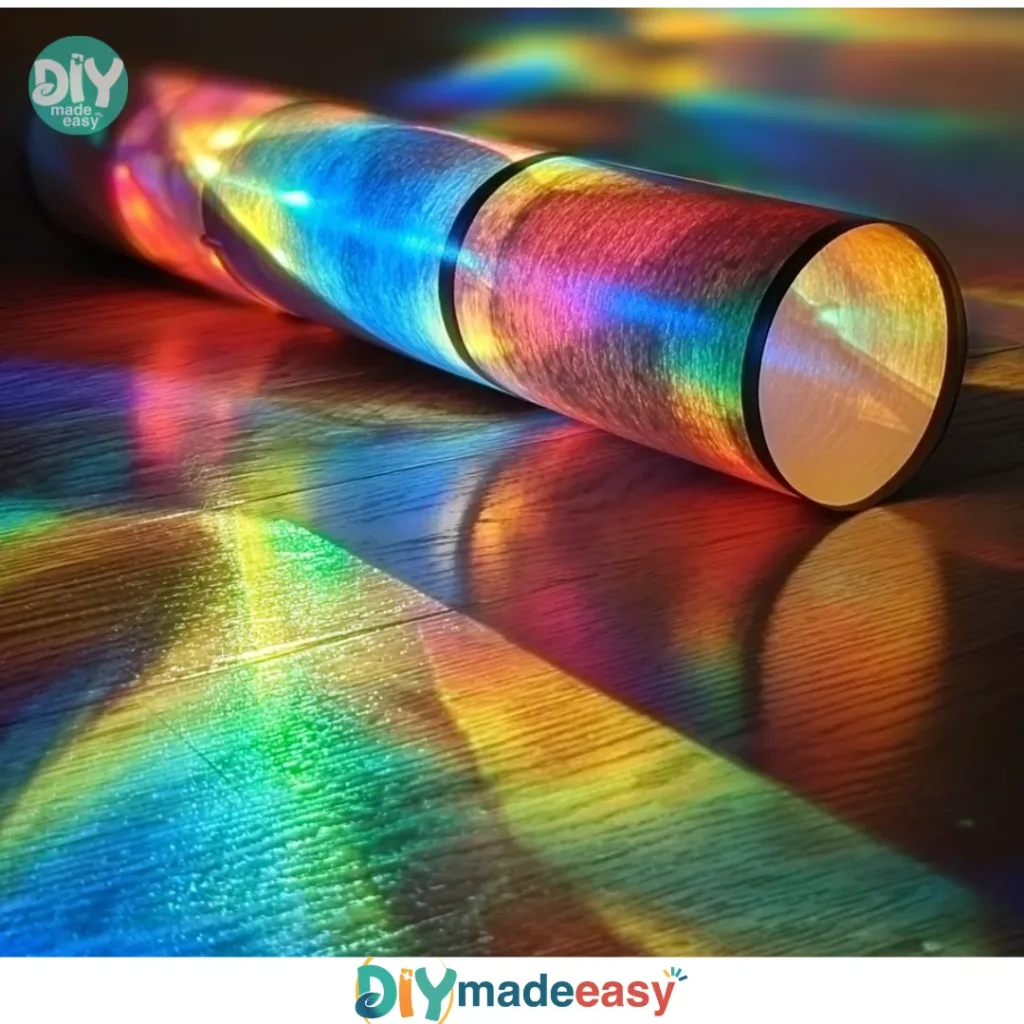
A busy afternoon, the kind when snacks are half eaten and a kid asks, “Can we make something now?”, makes a perfect moment for Creative Science Craft For Kids Rainbow Light Show. I have run this at home on days when plans fell through and the kitchen table looked like a staging area for a quick, small wonder. With just a clear cup, a tiny mirror or a spoon, a flashlight or a sunny window, and a CD if you have one, you can turn a few ordinary minutes into a slow, careful hunt for color. If you like visual, hands-on crafts, you might file this next to other projects like our creative crafts to try later for a calm afternoon of exploration.
Why This Creative Science Craft For Kids Rainbow Light Show Works So Well
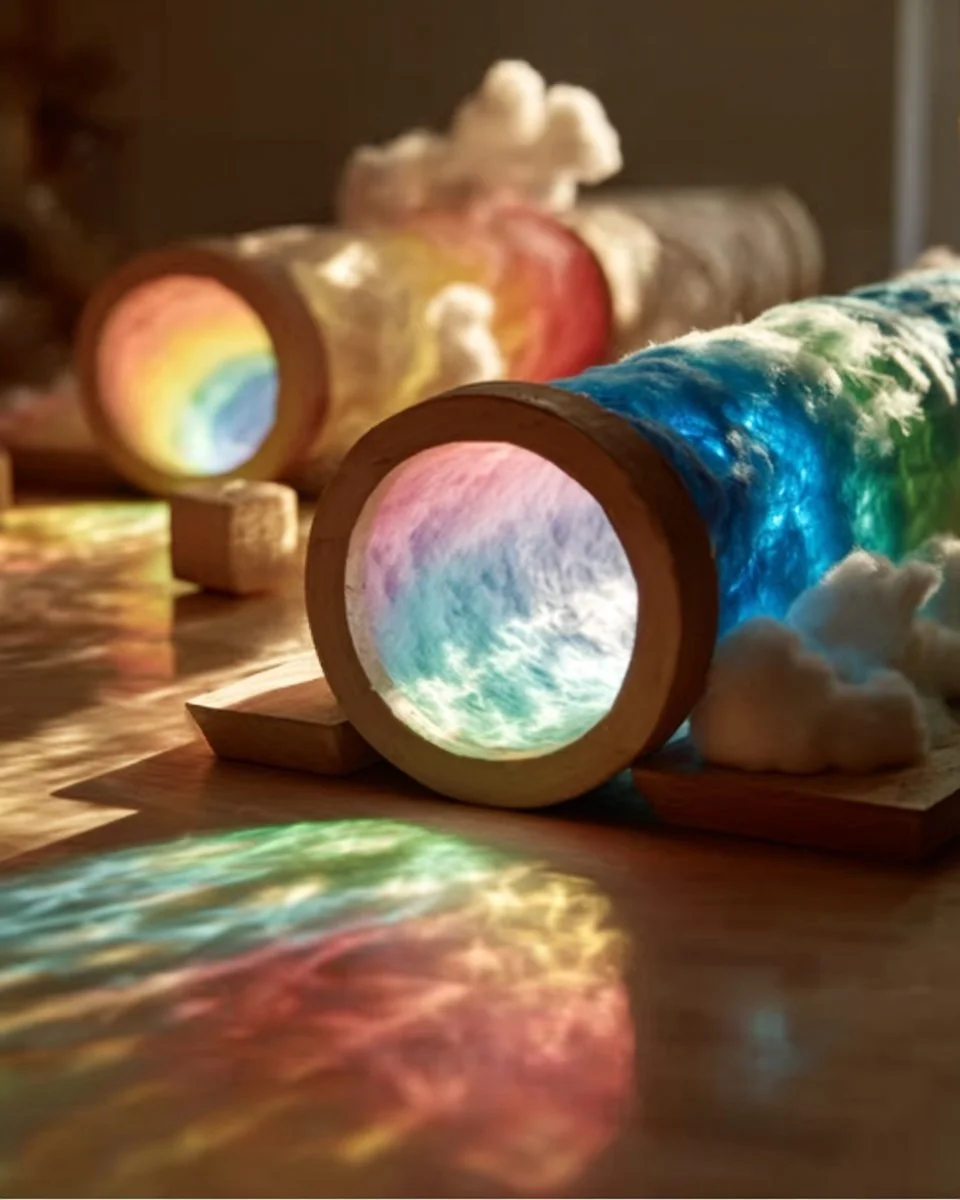
This activity uses things you already have. No special kits, no messy glue, no complicated setup. That makes it low-prep and easy to do between soccer practice and dinner.
It rewards small moments of patience. A gentle tilt of a mirror or a slow move of a flashlight gives an immediate change on the wall. Kids see cause and effect quickly and it keeps their curiosity going.
It fits a real-life schedule. You can start it in five minutes, leave it running while you fold laundry, and come back to explore more. The materials dry or store away easily, so it does not demand a long cleanup window.
It stays friendly for a range of ages. Little ones will love watching bright streaks of color. Older kids can try angles and distance and make careful observations. That makes it a reliable choice for mixed-age groups.
A Quick Look Before You Begin
This takes about 10 to 20 minutes for a simple session. If kids want to experiment more, add another 10 to 15 minutes.
Setup needs a small clear area. Pick a spot near a window or a tabletop with room to move a flashlight and a glass. Lay down a sheet of paper if you want a neat surface.
Mess stays low. You might spill a teaspoon of water or leave a wet mirror to dry. That is easy to handle. Have a towel handy for quick wipes.
Adult help depends on the child. Younger kids benefit from a hand steadying the cup and mirror. Older kids can take the lead. Either way, this is a calm activity you can watch and enjoy with them.
Materials You’ll Need
Glass or clear drinking cup
common household item, easy to find
Small mirror (or a flat metal spoon)
mirror works best, spoon is a good substitute
Flashlight or sunny window
either artificial light or natural sunlight will work
Compact disc (CD) or DVD
optional, good for extra color effects
White paper or light-colored wall
helps the colors show up clearly
Water
fill the glass about three quarters full
Optional: colored cellophane or thin plastic
for changing the light color
Optional: tape
to secure cellophane to the flashlight
Step-by-Step Directions
- Find a spot with a plain wall or lay out a sheet of white paper on a table.
Choose a wall with no bright patterns. A sheet of paper on a table makes the colors easy to see.
Make sure the area is steady and you have room to move the light. - Fill the glass about three quarters full with water.
Pour slowly so you do not spill.
Three quarters gives the mirror enough water depth to bend the light. - Place the small mirror inside the glass at a slight angle.
Let the mirror rest against the side so it leans a little.
If using a spoon, press the rounded side against the glass so it catches light. - Aim the flashlight or position the glass so sunlight hits the mirror through the water.
If you use a flashlight, hold it a short distance from the glass at first.
If you use a window, move the glass until a beam lands on the mirror. - Tilt the mirror gently until you see a faint strip of color.
Small movements make a big difference.
Stop when you see any hint of color on the wall or paper. - If using a CD, hold it near the light source and angle it toward the wall.
Move the CD slowly to find the bright bands of color.
You can use the CD alone or combine it with the mirror setup. - Experiment with distance and angle.
Step the flashlight farther from the glass and watch the band change.
Small changes in angle shift the colors across the wall. - Optionally, add colored cellophane to the flashlight to change the light.
Tape a layer of cellophane over the flashlight lens for a color wash.
Try one color at a time and notice how it blends with the rainbow. - Set aside materials to dry after use.
Empty the glass and lay the mirror or spoon on a towel.
Let CDs and cellophane air dry before storing them away.
The Simple Science or Skills at Work
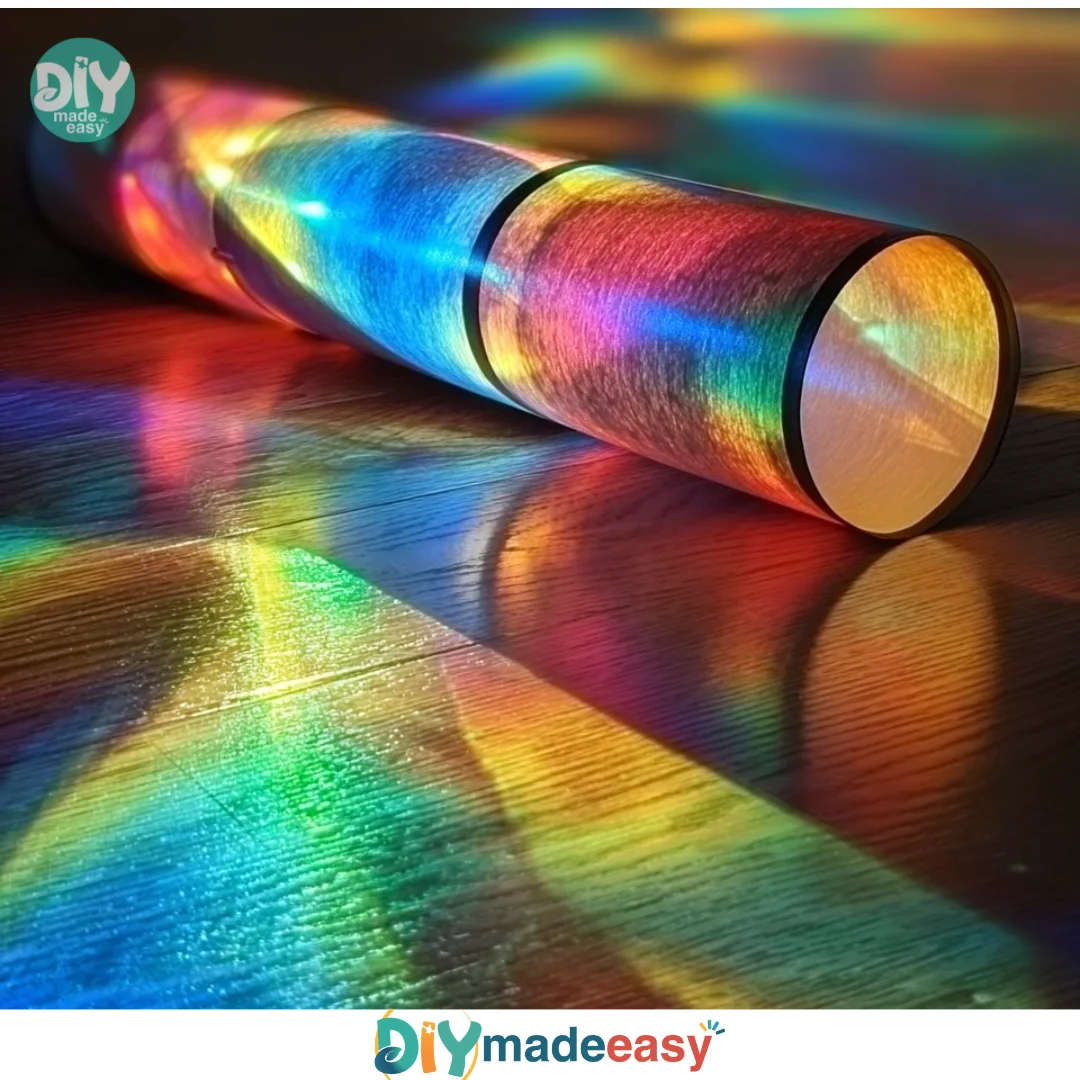
Kids practice careful observation and gentle handling. They learn to adjust an object slowly and watch a result change.
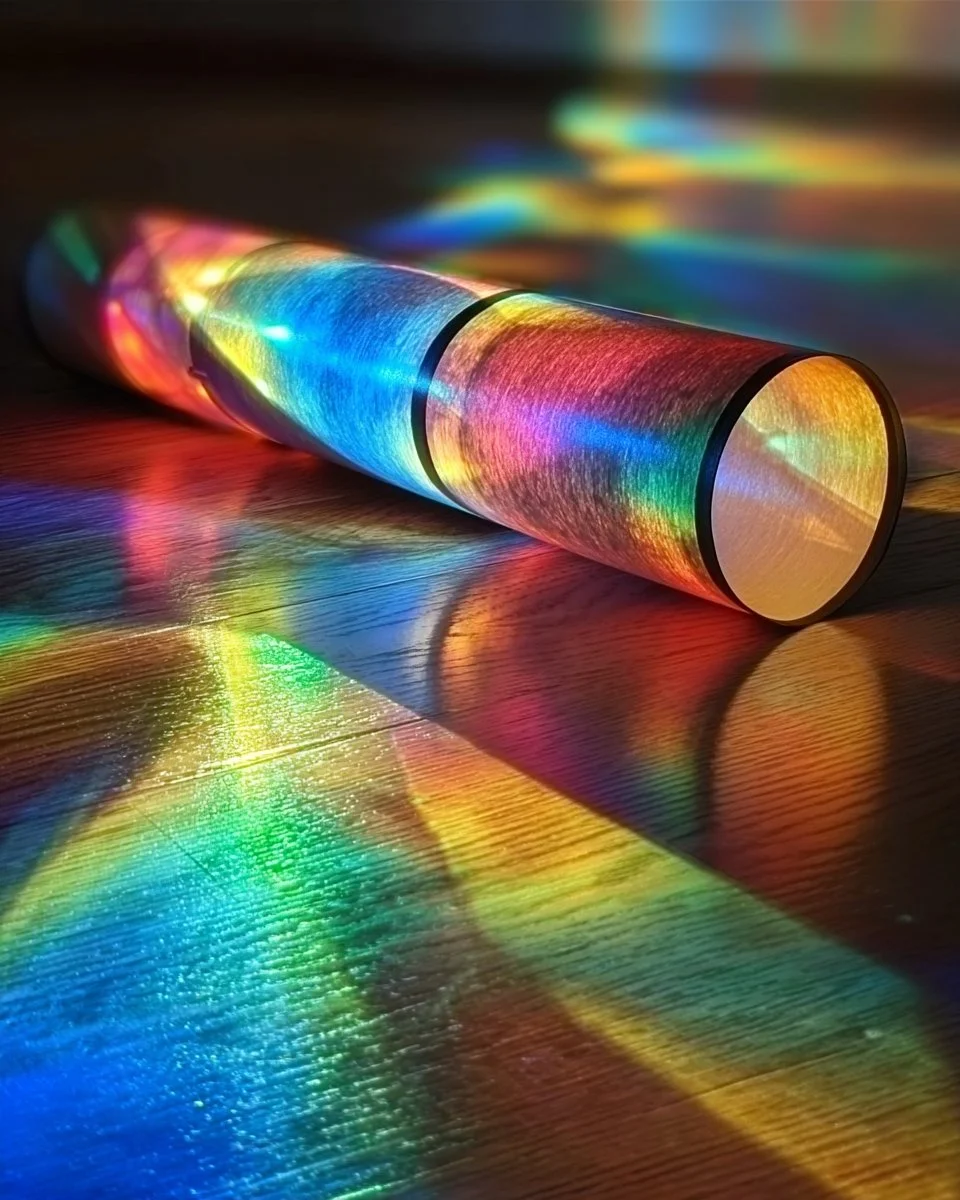
The light shows combine reflection and refraction. Light bounces off the mirror and bends through the water. That bending spreads white light into thin bands of color. You can call it a small rainbow and kids get the idea quickly.
A CD adds diffraction to the mix. The tiny grooves on the disc split the light into shimmering lines. That gives extra sparkle and makes the colors more ringed or spotty depending on the angle.
Beyond science, this activity builds fine motor skills. Tilting the mirror, moving the flashlight, and holding a CD steady all improve hand-eye coordination and control.
It also trains patience and focus. Finding the right angle takes calm trial and error, and kids learn to take slow steps instead of quick flails.
If you want to go further with the same hands-on approach, try our simple kitchen science ideas like a slow chemical reaction or a fizzy color burst, which use simple household supplies and steady observation to teach cause and effect. You can read a step-by-step example of a colorful follow-up in our fireworks rainbow sugar explosion post.
Troubleshooting Common Issues
If you do not see color, check the light source first. Move the flashlight closer or shift the glass toward the sunlight.
Make small angle changes and wait a beat. The color may appear faint and then grow stronger.
If the color looks washed out, use a whiter wall or brighter paper. Dark walls hide faint bands.
Sometimes room light fights the effect. Close curtains or switch off overhead lights for a clearer result.
If the mirror tilts and slides, press it gently against the inside of the glass or use a small piece of tape to hold it in place temporarily.
If you use tape, plan to peel it off and rinse the mirror so it stays clean.
If the CD gives only a tiny sparkle, try rotating it slowly while holding it at different distances from the light.
Keep your hand steady and look for thin colorful streaks rather than a full rainbow.
If little hands knock the setup over, keep a towel under the glass to catch spills and calm cleanup.
You will probably wipe a few drops. That is normal. A slow, patient cleanup teaches responsibility more than perfection.
If the flashlight batteries seem weak, switch them out or use a brighter phone flashlight. Brighter light makes the colors stronger.
Easy Variations to Try
Try using colored cellophane over the flashlight and layer two colors for a new effect.
Use only a red and a blue layer and see how the rainbow shifts. This teaches mixing light in a tactile way.
Move the glass to different windows at different times of day.
A morning sun beam gives a different brightness than late afternoon light. Let kids journal what changes.
Combine the mirror trick and the CD at once.
Have one child hold the CD while another tilts the mirror. This team approach builds cooperation and makes the show richer.
Use a paper cone or rolled cardboard to focus the flashlight beam.
This is gentle engineering for older kids. Keep the cone wide enough so the beam does not overheat the light.
Try the activity with a flashlight in a dark room for a dramatic display, and again in a bright room to show subtle differences.
Talking about the change deepens understanding and keeps curiosity alive.
Storing or Reusing This Project
Rinse and dry the mirror or spoon before putting it away.
A soft towel prevents streaks. Store the mirror flat so it does not warp.
Keep CDs in a case or wrapped in a soft cloth.
They scratch easily. Clean them with a soft cloth from the center outward if they get smudged.
Fold cellophane flat and store it with craft papers.
Tape can leave residue if stored on plastic, so peel it off before storing.
Reuse the glass for regular drinking afterward.
This activity uses no permanent alterations, so the cup can go back into regular use once it is clean.
If you plan to do this outside, bring a tray to contain spills and a small towel to dry the mirror.
That keeps the cleanup fast and keeps you ready for the next quick experiment.
Creative Science Craft For Kids Rainbow Light Show
A fun and educational light show activity using household items to explore colors and light.
- Prep Time: 5 minutes
- Cook Time: 20 minutes
- Total Time: 25 minutes
- Yield: 1 session
- Category: Craft
- Method: Hands-On Experimentation
- Cuisine: Educational
- Diet: N/A
Ingredients
- Glass or clear drinking cup
- Small mirror (or a flat metal spoon)
- Flashlight or sunny window
- Compact disc (CD) or DVD (optional)
- White paper or light-colored wall
- Water
- Colored cellophane or thin plastic (optional)
- Tape (optional)
Instructions
- Find a spot with a plain wall or lay out a sheet of white paper on a table.
- Fill the glass about three quarters full with water.
- Place the small mirror inside the glass at a slight angle.
- Aim the flashlight or position the glass so sunlight hits the mirror through the water.
- Tilt the mirror gently until you see a faint strip of color.
- If using a CD, hold it near the light source and angle it toward the wall.
- Experiment with distance and angle to see different effects.
- Optionally, add colored cellophane to the flashlight to change the light.
- Set aside materials to dry after use.
Notes
This craft is safe with supervision and encourages exploration of light and color. Great for kids of all ages.
Nutrition
- Serving Size: 1 session
- Calories: 0
- Sugar: 0g
- Sodium: 0mg
- Fat: 0g
- Saturated Fat: 0g
- Unsaturated Fat: 0g
- Trans Fat: 0g
- Carbohydrates: 0g
- Fiber: 0g
- Protein: 0g
- Cholesterol: 0mg
FAQs About Creative Science Craft For Kids Rainbow Light Show
Will this make a perfect rainbow every time?
No. Expect variations. Some days you will get a bright, clean band and other times you will only get a faint hint of color. Changes in light intensity, angle, and the condition of the mirror or CD affect the result. That uncertainty is part of the learning. If the color looks weak, try moving the light or cleaning the mirror.
Is this safe for little kids?
Yes, with common-sense supervision. The materials are household items. Keep small mirrors and CDs away from very young children who still put things in their mouths. Supervise near windows and handle glass carefully. If you worry about glass, use a sturdy clear plastic cup and a spoon instead of a mirror.
Can I substitute different items if I do not have a CD or mirror?
A flat metal spoon works as a mirror substitute, though the effect may be smaller. A shiny index card or piece of foil can help reflect light but will not split the light as cleanly. The best substitute depends on what you have; try a few safe options and see what surprises you.
How messy is the cleanup and how long will things need to dry?
Cleanup stays minimal. Expect a few drops of water and a quick wipe of the mirror. Allow the mirror or spoon to air dry completely before putting it back in a drawer. If you use cellophane and tape, remove tape residue and air the cellophane flat before stacking. The whole cleanup usually takes less than five minutes unless kids decide to experiment for a long stretch.
A Final Helpful Note
If a child gets frustrated, step back and turn it into a quiet challenge: who can find a slightly fainter color, who can hold the flashlight still the longest, or who can make the band travel from one side of the paper to the other. Small goals keep it playful and achievable.
This project grows naturally. Start it as a short, bright interrupt to a busy day and let curious kids expand it into a careful experiment. You do not need perfect results to make a strong memory.
Conclusion
For more ideas that stretch bright light into big learning, the Science Buddies list of rainbow projects offers a friendly range of experiments you can try next: 7 Rainbow Experiments for Science Class. If you want more playful STEAM craft inspiration that blends color and creativity, check out this collection of rainbow-themed projects: rainbow STEAM craft ideas.