

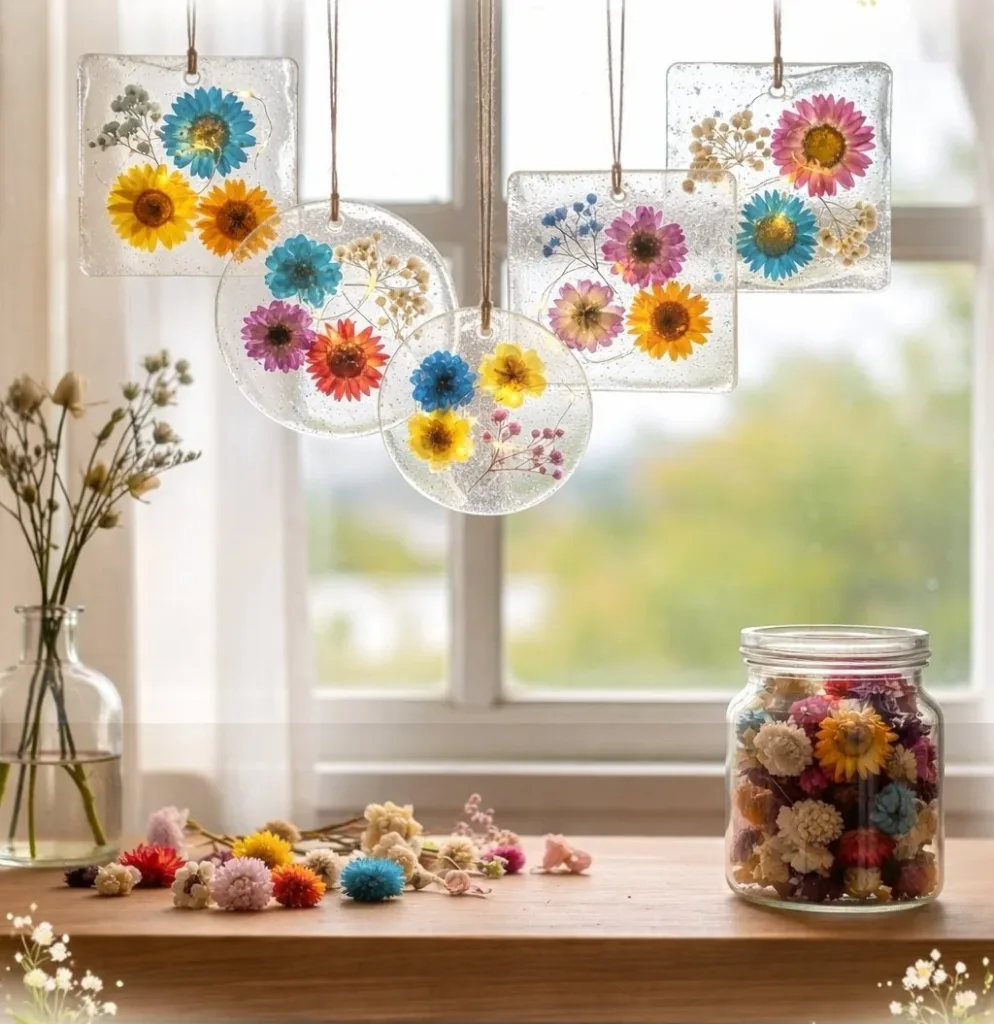
A busy afternoon turns into a calling for something quick, calm, and hands-on. The kids ask to make something pretty right now, the kitchen table still holds a half-finished snack, and you want a project that feels doable without a huge cleanup. DIY Bioplastic Suncatchers fit that moment perfectly. They use pantry-friendly gelatin, a little glycerin, and pressed petals or tissue paper to make thin, clear films that catch the light and make a simple home craft feel special. If you want a printable version to tuck into a weekend plan, see the detailed recipe page for a quick reference.
Why You’ll Love Making DIY Bioplastic Suncatchers

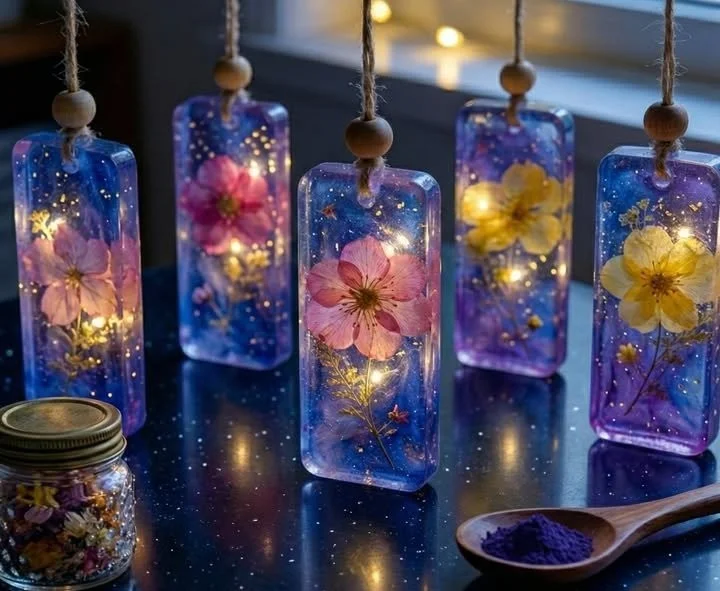
This project feels low-key from the start. You warm water, sprinkle in gelatin, and stir for a few minutes. That short, calm rhythm makes it easy to include kids without turning the kitchen into a storm zone.
The materials stay simple and familiar. Most items either come from the kitchen or a craft drawer. That lowers the pressure and makes it a reliable go-to when time is tight.
You see results fast. After you pour and press the botanicals, the suncatcher forms and then slowly dries. That mix of an immediate creative moment and a satisfying finished piece works well with real family schedules.
The whole process keeps mess small. You work in one shallow tray and the clear film peels off cleanly if you use parchment or a silicone mat. That means the project stays approachable even on a weekday afternoon where everyone needs to pitch in briefly.
A Quick Look Before You Begin
This activity takes small bursts of adult attention and gentle supervision. The hands-on steps before drying only take about 15 to 30 minutes of active time. Then you leave the tray to set and dry for up to two days.
Setup is compact. Clear a small area in the kitchen, line a tray, and lay out a few pressed flowers. You do not need a large workspace or special tools.
Mess stays minimal. Spills are unlikely if you pour carefully. Gelatin makes a sticky film while warm, so keep paper towels handy and expect a little wiping around the saucepan.
You can include kids easily. Older children work well on their own with supervision. Younger kids benefit from gentle help when the gelatin is hot and when arranging fragile petals. If you want a broader overview of how this project fits into other crafts, check the project overview at our simple suncatcher guide.
Materials You’ll Need
1 cup distilled or filtered water
1 cup distilled or filtered water, common household item, helps avoid mineral spots
2 tablespoons gelatin powder
2 tablespoons gelatin powder, pantry staple or plain unflavored gelatin
1 teaspoon glycerin (optional but recommended)
1 teaspoon glycerin (optional but recommended), helps flexibility and reduces brittleness
Dried flowers, thin leaves, small petals, or tissue paper
Dried flowers, thin leaves, small petals, or tissue paper, use pressed botanicals or lightweight tissue for best clarity
Fishing line or thin ribbon for hanging
Fishing line or thin ribbon for hanging, basic hobby or household item for a tidy display
Parchment paper or nonstick baking sheet (if not using silicone)
Parchment paper or nonstick baking sheet (if not using silicone), keeps the film from sticking and makes cleanup quick
STEP-BY-STEP DIRECTIONS
- Warm 1 cup of water in a small saucepan until hot but not boiling.
Sprinkle gelatin over the surface and let it bloom for a minute.
You will see the powder puff slightly and absorb water as it blooms. - Stir the mixture gently until gelatin fully dissolves.
Add glycerin and stir to blend.
Watch for a smooth texture with no grains. - Heat the mixture over low heat, stirring steadily until clear.
Keep the heat low so it does not boil.
A clear mixture means the gelatin dissolved correctly. - Line a shallow tray with a silicone mat or parchment paper.
Arrange pressed plant materials nearby.
Make sure petals lie flat and free of moisture. - Pour the gelatin mixture into the tray in a thin, even layer.
Aim for a film about the thickness of a sheet of plastic wrap.
Work steadily to keep the surface smooth. - Gently press botanicals into the liquid using tweezers.
Place them flat so they do not stick up.
Using tweezers keeps fingerprints and accidental smudges away. - Allow the tray to rest undisturbed until the surface feels tacky (about 1 hour).
Keep the tray level so decor does not shift.
A tacky surface means the film started setting. - Move the tray to a warm, dry spot to dry for 24-48 hours.
Avoid direct drafts or humid bathrooms.
Drying time varies with humidity and thickness. - Once firm, carefully peel the film from the tray.
Trim edges if necessary.
Handle the film gently; fresh pieces can be a little soft. - Poke a hole for hanging and attach fishing line or ribbon.
Punch near the edge so the design stays intact.
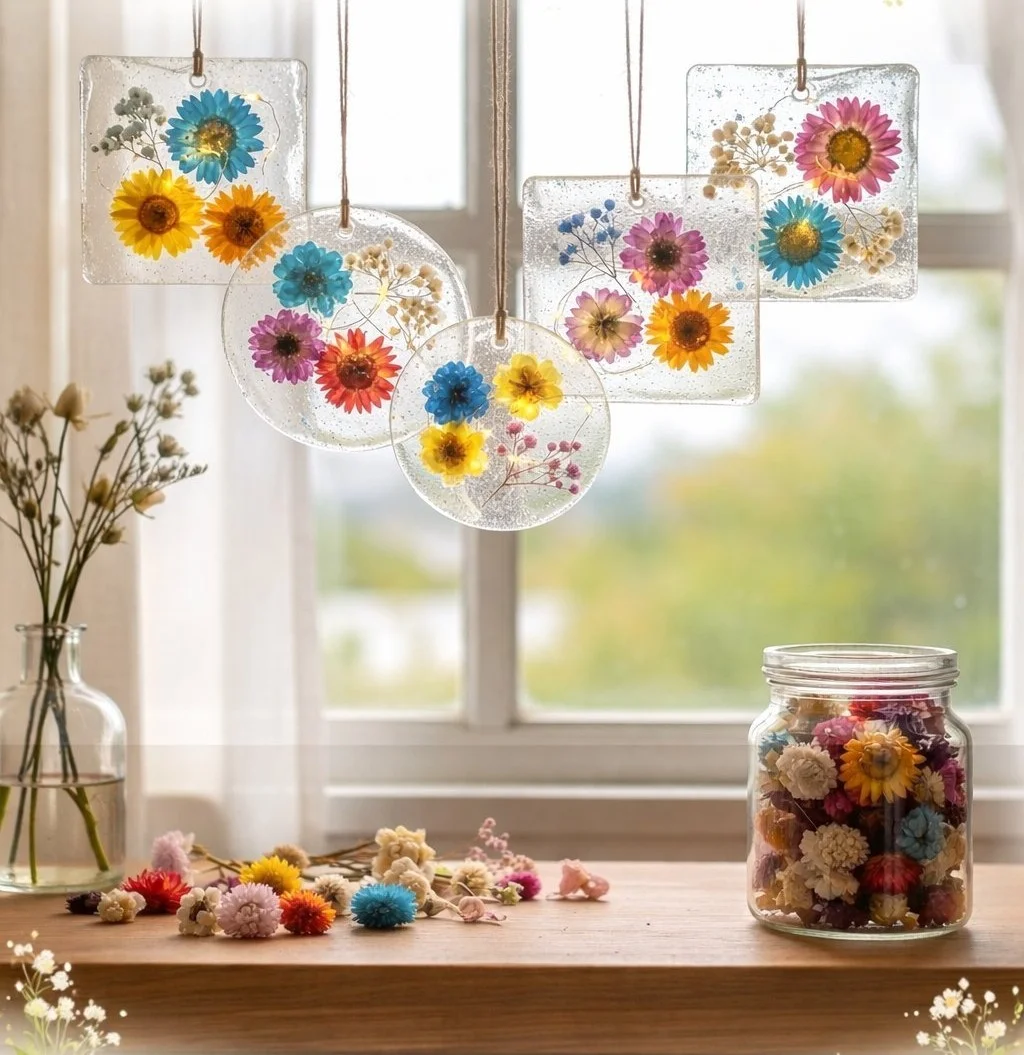
Hang in a sunny window and enjoy the glow.
The Simple Science or Skills at Work
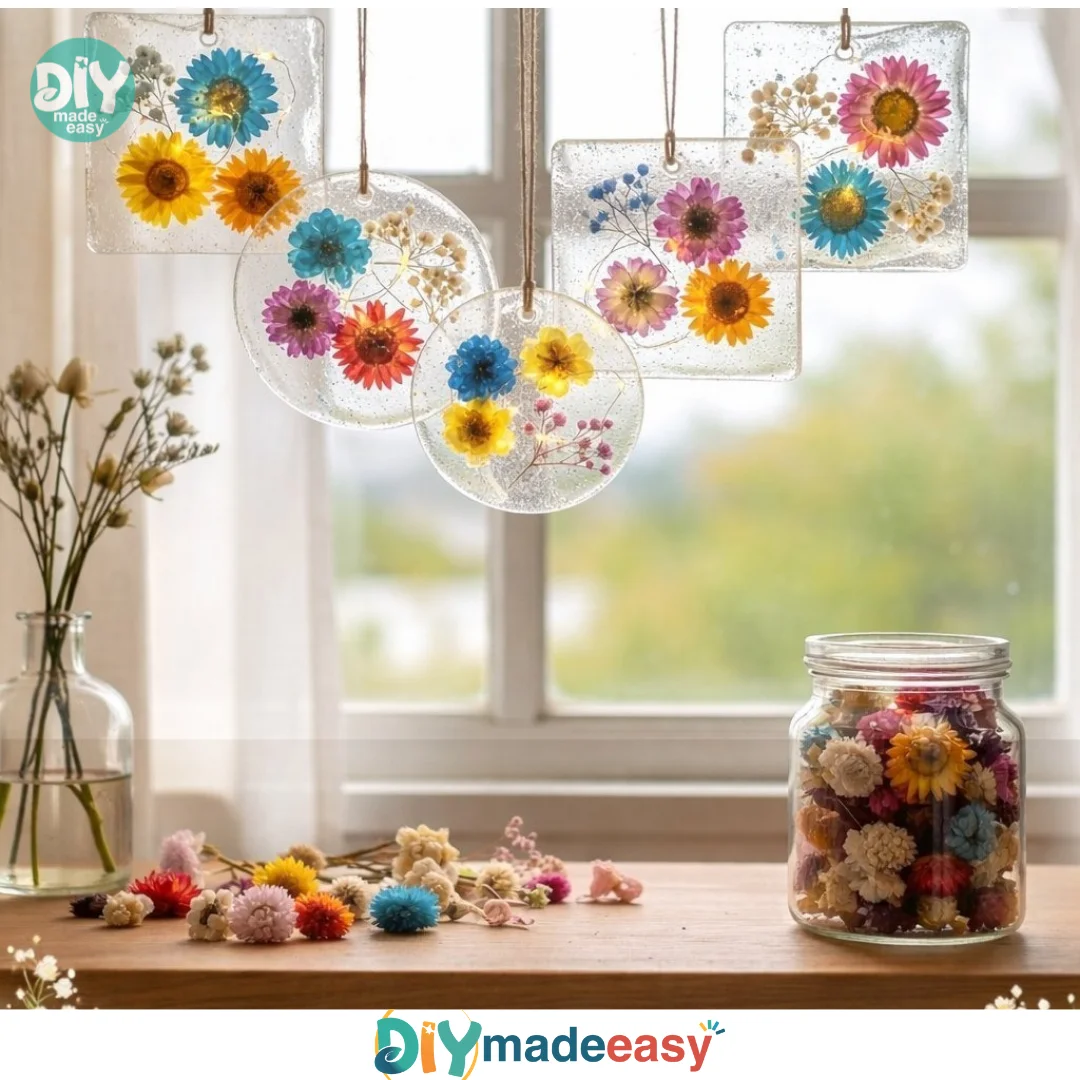
This project uses a simple material change to create something new. Gelatin comes from protein and forms a thin sheet as it cools and dries. Adding glycerin keeps that sheet flexible so it does not crack as easily.
Kids practice careful observation while the mixture changes from cloudy to clear. That change signals that the gelatin dissolved fully and the film will form well.
Fine motor skills improve when children arrange tiny petals and use tweezers. Those small movements build coordination and patience in a very natural way.
The project also teaches cause and effect. If the layer is too thick, drying takes longer and the film may warp. If it is too thin, it may tear when you try to peel it. Those simple, visible outcomes help kids learn quickly.
If you want to pair this with another window craft, try our bright crayon suncatcher ideas at blue crayon suncatchers.
Troubleshooting Common Issues
If your gelatin looks grainy, it usually means the powder did not fully dissolve.
Warm it gently and stir until it clears. Patience with low heat fixes most texture problems.
If petals float up or curl, press them down lightly once the mixture cools a bit.
Tweezers work well here. Work before the outer edge skins over.
If the film sticks badly to the tray, check your lining.
Switch to fresh parchment or a silicone mat next time. A little cooking spray on parchment is not necessary and can change clarity.
If the finished piece cracks when you handle it, it likely needed more glycerin or more drying time.
Try the full teaspoon of glycerin and give the film extra drying hours in a warm dry spot.
If edges tear when you peel the film, run your fingernail around the edge gently to separate it before lifting.
Peel slowly and support the film with a second hand under a corner.
Easy Variations to Try
Layered botanicals.
Make two thin films, place dried petals between them, then press the second film on top.
This creates a deeper, laminated look without added glue.
Tissue paper watercolor.
Use thin tissue paper instead of dried flowers for bright, translucent color.
Tear the tissue into small shapes and press flat for a soft stained-glass effect.
Seasonal themes.
Try small twigs and dried grasses for autumn, or tiny pressed evergreen sprigs for winter.
Adjust shapes and colors to match holidays or room decor.
Age-adjusted roles.
Young kids can choose and place bigger petals while adults handle pouring and the hot parts.
Older kids can measure, stir, and pour with supervision to build independence.
If you want ideas that pair well for beach or sea themes, check our crystal seashell project for similar display ideas at crystal seashells.
Storing or Reusing This Project
Store finished suncatchers flat in a cool, dry place if you do not hang them right away.
A shallow box lined with parchment keeps edges safe.
If a piece picks up dust, wipe gently with a soft dry cloth.
Do not soak or scrub; moisture can soften the bioplastic.
Leftover mixture does not store well once cooled.
Plan to make one tray at a time or reheat gently and use within a short window.
Save and reuse small leftover botanicals in other crafts.
Pressed flowers store well in a book until your next project, which reduces waste and stretches supplies.
FAQs About DIY Bioplastic Suncatchers
Will this get messy for a four-year-old?
It can be tidy if you set up clear roles. Have the child pick and arrange petals while an adult handles the hot saucepan and pouring. Keep paper towels and a small trash bowl nearby, and use tweezers to avoid sticky fingers. The main mess is gentle wiping rather than a full sink cleanup.
Is it safe to use glycerin and gelatin around kids?
Yes, these are common household items. Gelatin is a food product, and glycerin is non-toxic when used in small amounts. Keep the saucepan on low heat and handle the warm mixture yourself. Explain to kids that the liquid gets hot and stays away from it until you say it is cool.
Can I substitute ingredients if I do not have glycerin?
You will still make a film without glycerin, but it may become more brittle and crack. Glycerin helps flexibility. If you skip it, plan for a slightly more delicate finished piece and consider keeping the film thicker and drying it in stages.
How long will these suncatchers last?
They look lovely for a season or several months if you keep them out of direct sun for extended periods, which can fade delicate botanicals. They are craft-grade and not museum pieces. If you want to refresh them, you can make a new batch easily with the same simple steps.
What if the finished suncatcher bends or warps?
Bending often comes from uneven drying or a film that was too thick. Keep the tray level while drying and use a consistent thin layer. If a piece curls slightly, lay it flat on parchment and place a very light weight on top for a few hours to flatten it out gently.
A Final Helpful Note
Trust the process more than the first result.
The first time you make these, you learn about thickness, drying spots, and how your botanicals behave. That is normal and helpful.
Work with small batches so you can adjust without wasting supplies.
A single tray uses just a little gelatin and a few petals, so experimentation feels low-commitment.
Celebrate the imperfect pieces.
Small bubbles, tiny wrinkles, or uneven edges give each suncatcher character and tell the story of making it together.
Give yourself permission to try again.
This project rewards a few tries and hands-on learning more than perfect technique on the first pass.
Conclusion
If you want another walk-through of how these pieces form and what to watch for while drying, the How To Make A Bioplastic Suncatcher – Chemistry for Kids tutorial shows a similar approach with clear photos and timing notes. For inspiration on botanical layouts and display ideas, see Botanical Bioplastic Sun Catchers – Wineberry Woods which offers lovely examples and variations.
PrintDIY Bioplastic Suncatchers
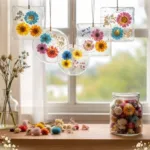
Create beautiful, lightweight bioplastic suncatchers using simple kitchen ingredients and pressed botanicals. Perfect for a hands-on family craft project.
- Prep Time: 15 minutes
- Cook Time: 30 minutes
- Total Time: 45 minutes
- Yield: 4–6 suncatchers 1x
- Category: Craft
- Method: Crafting
- Cuisine: N/A
- Diet: N/A
Ingredients
- 1 cup distilled or filtered water
- 2 tablespoons gelatin powder
- 1 teaspoon glycerin (optional but recommended)
- Dried flowers, thin leaves, small petals, or tissue paper
- Fishing line or thin ribbon for hanging
- Parchment paper or nonstick baking sheet (if not using silicone)
Instructions
- Warm 1 cup of water in a small saucepan until hot but not boiling.
- Sprinkle gelatin over the surface and let it bloom for a minute.
- Stir the mixture gently until gelatin fully dissolves.
- Add glycerin and stir to blend.
- Heat the mixture over low heat, stirring steadily until clear.
- Line a shallow tray with a silicone mat or parchment paper.
- Pour the gelatin mixture into the tray in a thin, even layer.
- Gently press botanicals into the liquid using tweezers.
- Allow the tray to rest undisturbed until the surface feels tacky (about 1 hour).
- Move the tray to a warm, dry spot to dry for 24-48 hours.
- Once firm, carefully peel the film from the tray.
- Poke a hole for hanging and attach fishing line or ribbon.
Notes
This project can take 15 to 30 minutes of active time for preparation and setup, while the drying time varies between 24-48 hours. It’s a great way to include kids in crafting and develop their fine motor skills.
Nutrition
- Serving Size: 1 suncatcher
- Calories: 0
- Sugar: 0g
- Sodium: 0mg
- Fat: 0g
- Saturated Fat: 0g
- Unsaturated Fat: 0g
- Trans Fat: 0g
- Carbohydrates: 0g
- Fiber: 0g
- Protein: 0g
- Cholesterol: 0mg