

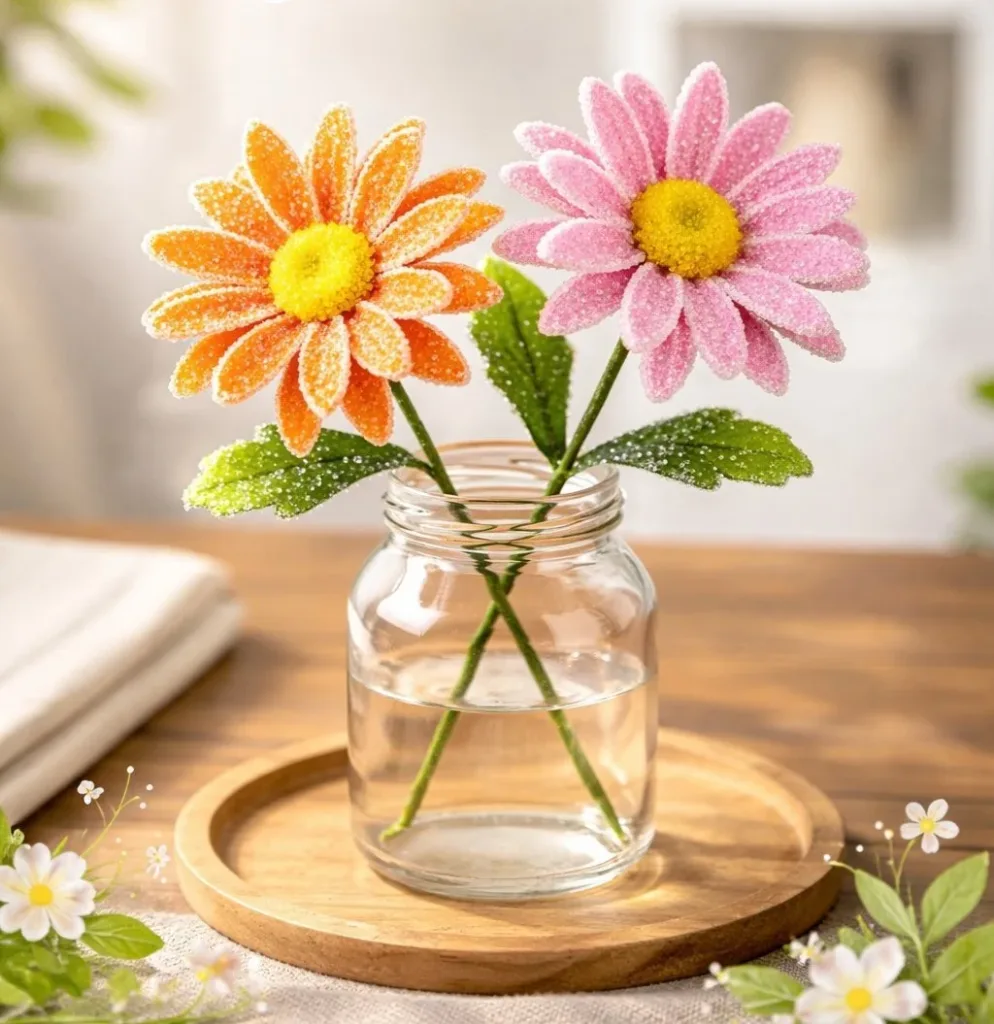
A busy afternoon, a quiet kitchen table, and the sudden request from two kids for something to make now. That exact moment made me pull simple supplies from the junk drawer and start Crystal Flowers with what I had on hand. Crystal Flowers land somewhere between a gentle science experiment and a crafty keepsake. They need little prep, use common items, and give a result that looks special even when things go a bit messy. If you want a low-fuss, satisfying project that fills an hour or two with calm curiosity, this one fits. For a deeper look at how other families make similar projects, check our broader Crystal Flowers guide for tips and photos.
Why You’ll Love Making Crystal Flowers
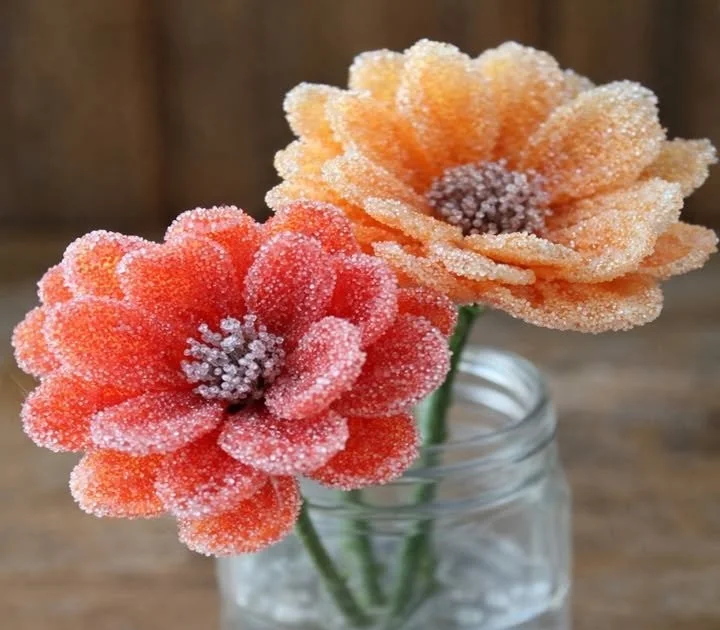
This project feels like magic without a lot of fuss. You set up in minutes, and most of the time the jar does the heavy lifting while you step back and watch crystals form. That makes Crystal Flowers great for busy days when you need a hands-off project that still looks impressive.
You do not need rare ingredients. Epsom salts or alum powder work, and paper or thin fabric turns into surprisingly delicate petals. The setup uses tools you already own, and cleanup stays simple if you keep a small tray under the jar.
Kids stay engaged with quick wins. Folding a coffee filter into a petal is a mini craft moment. Watching the first tiny sparkles appear is a real delight. If you like similar slow-build projects, you might also enjoy our baking soda rainbow crystal forest for a different look and technique.
A Quick Look Before You Begin
This project usually takes a short active time and a longer watching time. Plan 10 to 20 minutes to fold petals, make the solution, and suspend the petals. Then let the jar sit for several hours to overnight, checking once or twice a day.
Set up on a small towel or tray to catch drips. Expect a little splash when you pour boiling water, and keep kids at a safe distance while you handle hot water. Once the jar sits, only occasional adult supervision is needed. You will come back to steady growth, not a frantic cleanup.
The mess stays small if you prepare. A few salt grains on the counter wipes up easily. Crystals attach to fabric or paper more than to your hands, so gloves help for peace of mind. If you enjoy projects that sit and transform, this one fits perfectly and connects to other projects like our crystal forest series for more playful displays.
Materials You’ll Need
- Clear glass jar or mason jar, clean and dry – common household item
- Boiling water, handled with care – safety first
- Epsom salts or alum powder – budget-friendly crystal starter
- Paper or thin fabric petals (coffee filters, lightweight craft paper, or cotton fabric) – easy substitute choices
- Pipe cleaners or thin wire to form stems – common craft item
- String or thin thread to suspend petals – common household item
- Pencil or wooden skewer to balance the string across the jar – handy tool
- Food coloring or diluted watercolor paint (optional for a soft tint) – optional
- Small tray or towel to catch drips – helpful for cleanup
- Gloves or cloth to protect hands from hot water – safety accessory
- Tweezers or long wooden skewer for gentle adjustments (optional) – optional tool
These items stay simple and familiar. If you do not have alum powder, Epsom salts work reliably. If you want a softer color than food coloring gives, dilute a watercolor paint wash on the petal base before you suspend it and let it dry first. Keep everything near the workspace so you do not move around with a jar of hot water.
Step-by-Step Directions
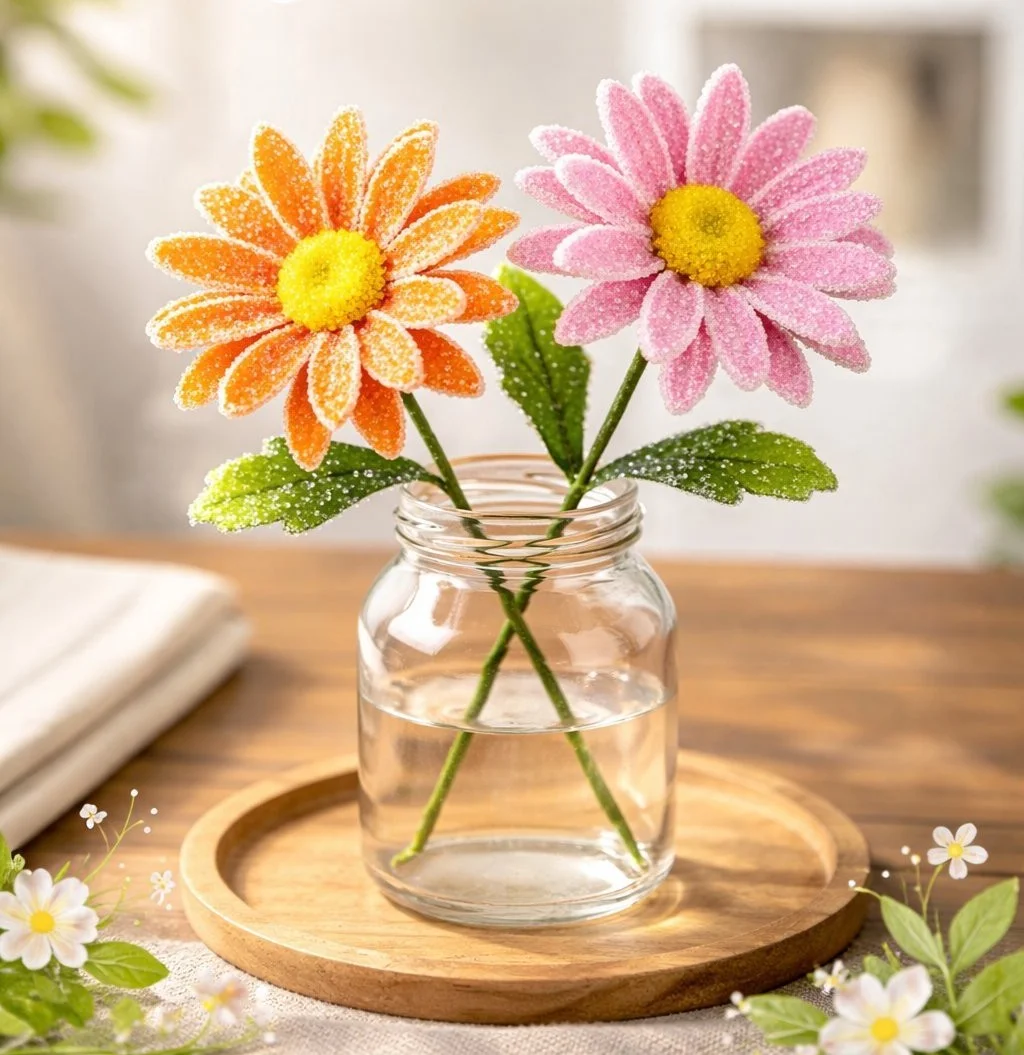
- Shape the base by taking a coffee filter or piece of thin cotton and folding it into a petal shape around a pipe cleaner stem.
Fold gently so the paper keeps some texture; a little ruffle makes crystals catch better. - Form the stem and hanger by bending a pipe cleaner into a stem and attaching your petal. Wrap a small length of thread around the stem tip to hang the petal and balance the thread over a pencil.
Balance the pencil across the jar mouth so the petal will hang without touching sides. - Make the saturated solution by pouring boiling water into the jar until it is three quarters full and stirring in Epsom salts or alum until the crystals no longer dissolve.
Stir slowly and watch the surface; when tiny undissolved grains remain, you have a saturated mix. - Add color gently if desired by dipping a toothpick into food coloring and touching it to the surface of the solution.
The color sinks softly and spreads; one toothpick dab usually gives a subtle tint without overpowering. - Suspend the petal by lowering it into the jar so it floats without touching the sides and cover the jar lightly with a cloth.
Make sure the thread keeps the petal centered; avoid contact with the glass to let crystals grow all over. - Wait and check the growth after a few hours and then once a day until the desired crystal look is reached.
You will see small sparkles first, then larger branches; growth often slows after 24 hours but can continue longer. - Remove and dry the petal slowly, letting excess solution drip back into the jar.
Lift straight up and set the petal on a tray; do not rub or shake it while wet. - Finish and adjust as needed, trimming rough edges on the pipe cleaner and setting your flower upright.
Shape the stem and trim for balance; let the crystal petal air dry completely before displaying.
What Kids Practice While Making This
This activity mixes small skill-building moments with a quiet science lesson. Children practice fine motor control when they fold petals, wrap thread, and balance a pencil across a jar. Those tiny maneuvers build finger strength and steady hands.
They also learn patience. Most of the fun comes from waiting and checking. Looking for the first glittering crystals teaches observational skills and introduces cause and effect: you did something, and it led to a visible change.
Simple measurement plays a role too. Stirring until the salts stop dissolving gives a hands-on sense of saturation. That moment feels concrete: the mixture changes texture, and you can see undissolved grains. These cues work well for kids and help them connect action to result without heavy words.
Troubleshooting Common Issues
If the crystals look sparse or uneven, the solution may not be fully saturated. Warm the water a bit and add a small spoon of salt, stirring until you see a few grains left. That usually kickstarts thicker growth.
If your petal touches the jar side, crystals will form in a flat strip instead of all over. Gently re-center the petal using a skewer or tweezers and make sure the thread keeps it suspended. A tiny shift can change where crystals choose to grow.
If the color looks blotchy, you likely added too much food coloring too close to the petal. Next time, use a toothpick and touch the solution surface farther from the petal so the dye spreads more evenly.
If the solution cools too quickly and seems cloudy or the crystals are tiny, give it more time. Some mixes take a full day to form noticeable branches. If growth stops entirely, prepare a fresh saturated mix and try again; sometimes impurities in the jar or water slow crystal formation.
If you want more troubleshooting ideas and photos of different outcomes, check our crystal growing experiment write-up for comparisons and fixes.
Easy Variations to Try
Try thinner or thicker petals. Use a single coffee filter for delicate petals or layer two filters for bolder growth. The extra layers give crystals more surface to cling to.
Use cotton fabric for a softer, textured look. A small square of thin cotton yields irregular crystals that feel a little fuzzy. This one looks great in a small grouping as a winter bouquet.
Make a tiny bouquet with 3 or 4 petals at different heights. Suspend each on its own thread across the pencil for a layered display. Watching multiple petals grow at different speeds gives a nice variety.
Try a faint color wash. Instead of adding dye to the solution, lightly tint the petal edge with a diluted watercolor before you suspend it. The color stays soft and does not interfere with crystal growth.
Seasonal twist: fold petals into star shapes for winter ornaments. Let them dry fully and hang them on a tree or in a window. Crystals give a pretty frosted effect that looks festive without much extra work.
These changes stay small and manageable. Treat them as gentle experiments rather than rules. The project works even if a petal grows smaller crystals, and those little differences make each flower unique.
Storing or Reusing This Project
You can keep the dry crystal petals as long as you store them out of direct humidity. A sealed box or display dome protects them from moisture that would dissolve the crystals again. Handle them gently because the crystals can flake.
Save reusable bits like pipe cleaners and pencils if they did not touch the solution. Anything that soaked the saturated mix will have crystal residue. You can carefully scrape and rinse metal or glass parts to reuse them for new batches.
To clean the jar and make a fresh solution, empty the jar into a sink while running plenty of water and use warm soapy water to remove residue. A little salt may remain; do not put highly concentrated alum or Epsom solutions down a drain without dilution.
If crystals break or you want to try a new color, gently dissolve the old crystals with warm water, rinse, dry the jar, and start again. Reuse keeps costs down and helps you try different looks without buying new supplies.
FAQs About Crystal Flowers
Will this get very messy, and how much cleanup should I expect?
This project stays low-mess if you set a tray under the jar and keep a small towel handy. You may see a few salt grains or a damp spot where the petal dripped. Those wipe away with a quick damp cloth. The real mess risk comes from handling boiling water, so focus on limiting spills there and the rest stays easy.
Is this safe for younger kids to do?
What age works best? Younger kids love folding the petals and choosing colors, but an adult should handle the boiling water and the moment of suspending petals over the jar. For independent crafting, this suits ages 6 and up with supervision. For toddlers, make the bases together and let them watch the jar grow crystals from a safe distance.
Can I use other salts or ingredients instead of Epsom or alum?
Epsom salts and alum powder work reliably and give good results at home. Other salts sometimes crystalize differently and can be less predictable. I recommend sticking with the listed options the first few tries. If you want to experiment later, treat it as a new trial and expect different textures.
What if my crystal flower looks different from pictures?
Did I do it wrong? Not at all. Crystal growth depends on little things like water temperature, how saturated the solution is, and how the petal hangs. Some petals form big branchy crystals, others make fine sparkles. Those differences make each flower unique. If you want a fuller look, try a warmer solution, a more saturated mix, or a slightly thicker base next time.
How long will a finished crystal petal last?
If you keep it dry and out of humid areas, a crystal petal can last a long time. Store it in a box or a simple glass dome to prevent moisture from dissolving the crystals again. Handle gently because the crystal structure can be fragile.
A Final Helpful Note
You do not need perfection to enjoy Crystal Flowers. The small surprises and the moments of watching growth bring the best part of this project. Start small, keep the setup simple, and treat each jar as an experiment you can repeat and refine. Trust the simple materials and the process; you will get a satisfying result that feels like a small celebration.
Conclusion
If you want a local florist-style inspiration for presentation ideas and arranging your finished pieces, I find useful ideas at Crystal Flower Shop for display suggestions and styling tips. For another step-by-step science take on crystal flowers with photos and classroom notes, see the clear guide at How To Make Crystal Flowers – Little Bins for Little Hands.
PrintCrystal Flowers
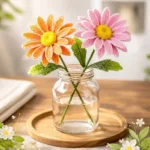
Create beautiful crystal flowers using simple household items. This hands-on project provides a fun science lesson for kids while keeping them engaged.
- Prep Time: 20 minutes
- Cook Time: 0 minutes
- Total Time: 120 minutes
- Yield: 1 crystal flower
- Category: Craft
- Method: Crafting
- Cuisine: Not Applicable
- Diet: Vegetarian
Ingredients
- Clear glass jar or mason jar, clean and dry
- Boiling water
- Epsom salts or alum powder
- Paper or thin fabric petals (coffee filters, lightweight craft paper, or cotton fabric)
- Pipe cleaners or thin wire
- String or thin thread
- Pencil or wooden skewer
- Food coloring or diluted watercolor paint (optional)
- Small tray or towel
- Gloves or cloth
- Tweezers or long wooden skewer (optional)
Instructions
- Shape the base by taking a coffee filter or piece of thin cotton and folding it into a petal shape around a pipe cleaner stem.
- Form the stem and hanger by bending a pipe cleaner into a stem and attaching your petal. Wrap a small length of thread around the stem tip to hang the petal.
- Make the saturated solution by pouring boiling water into the jar until it is three quarters full and stirring in Epsom salts or alum until the crystals no longer dissolve.
- Add color gently if desired by dipping a toothpick into food coloring and touching it to the surface of the solution.
- Suspend the petal by lowering it into the jar so it floats without touching the sides and cover the jar lightly with a cloth.
- Wait and check the growth after a few hours and then once a day until the desired crystal look is reached.
- Remove and dry the petal slowly, letting excess solution drip back into the jar.
- Finish and adjust as needed, trimming rough edges on the pipe cleaner and setting your flower upright.
Notes
This project is an engaging way to teach children about crystal formation while having fun. Ensure safety when handling boiling water.
Nutrition
- Serving Size: 1 flower
- Calories: 0
- Sugar: 0g
- Sodium: 0mg
- Fat: 0g
- Saturated Fat: 0g
- Unsaturated Fat: 0g
- Trans Fat: 0g
- Carbohydrates: 0g
- Fiber: 0g
- Protein: 0g
- Cholesterol: 0mg