
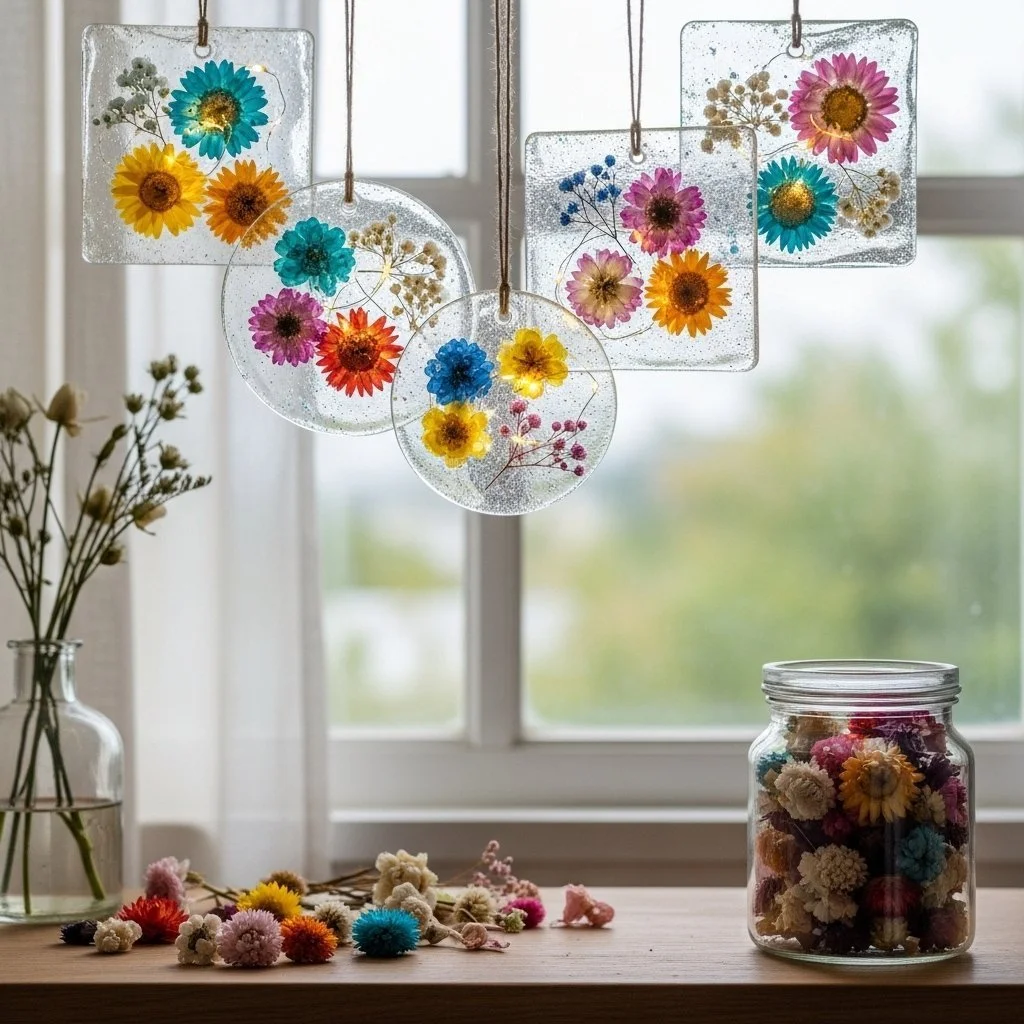
It was a busy afternoon, the kind where someone asked for a snack and another person wanted a quick craft right now. I cleared a small corner of the kitchen, set out a saucepan, a sheet of parchment, and a few dried flowers, and we made Colorful DIY Bioplastic Suncatchers while the timer ticked down on a baking sheet. This is the kind of last-minute activity that fits a real family day: low prep, quick to start, and rewarding to hang in the window. If you want a deeper recipe or background, I keep a simple recipe and tips ready that match this exact method.
Why You’ll Love Making Colorful DIY Bioplastic Suncatchers
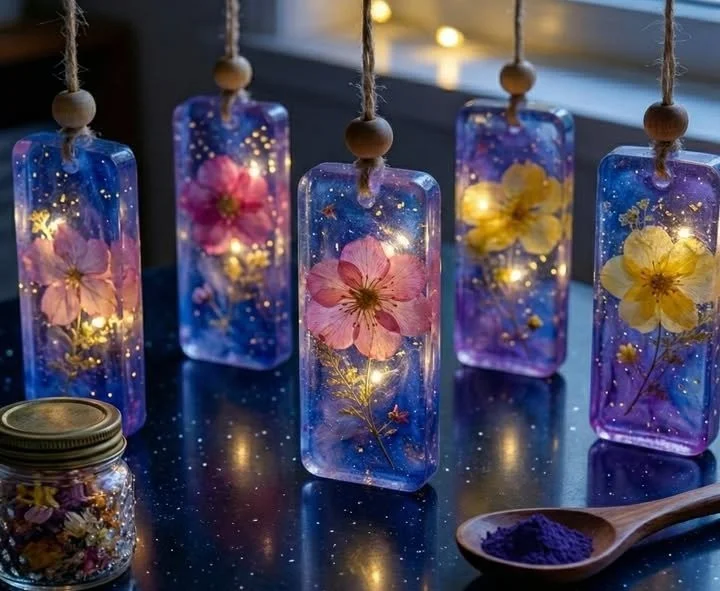
This project works well because it uses things you likely have on hand and small, manageable steps. You do not need special tools, and cleanup is easy if you act while the mixture is still warm. The mix sets into a clear, slightly flexible sheet that catches light beautifully, and kids see a quick payoff when the pieces go from glossy liquid to solid art.
It stays low-prep. Measuring uses simple proportions: two parts water, one part gelatin or cornstarch. That ratio keeps things consistent without exact scales. It fits into a real schedule. The active cooking time is short, and most of the waiting happens while the pieces dry. You can do the stirring and pouring in less than 15 minutes and leave the drying to happen while you get dinner ready.
This method keeps things approachable. The steps are predictable and repeatable, so you get steady, reliable results. If you want a slightly softer piece, you add a splash of glycerin. If you want bright color, you add a drop or two of food coloring. Those small choices give control without adding complexity. Overall, this project gives clear results with little fuss, and it plays well with curious kids.
A Quick Look Before You Begin
Before you start, think about timing, space, and mess. Count on about 10 to 20 minutes of hands-on time and a few hours to a couple of days for drying, depending on thickness. Choose a flat, well-ventilated spot for drying where pieces can lie undisturbed.
Set up a small station with your saucepan, a wooden spoon, parchment paper, and any bits you want to embed like dried flowers or small leaves. Keep a cup of warm water nearby for cleaning the spoon and the pan while the mix is still soft. The mixture can be sticky while warm, so wipe spills promptly with a damp cloth.
Expect a little mess. There is a shiny, sticky liquid to stir and pour. It cleans up easily with hot water if you rinse while still warm. Adult supervision matters for the heating step and for handling hot pans. For younger kids, assign the stirring or the decoration tasks instead of the stove work.
Materials You’ll Need
2 parts distilled water
1 part gelatin powder or cornstarch
Glycerin or vegetable glycerol (optional) – optional for flexibility, a small splash goes a long way
Food coloring or natural pigments (optional) – a little color brightens the final pieces
Dried flowers, tiny leaves, pressed botanicals, glitter, or translucent papers (optional embellishments) – choose small, flat bits for best results
Parchment paper for drying – nonstick and easy to lift pieces off
Tweezers for placing small decorative bits (optional) – helpful for delicate placement
Step-by-Step Directions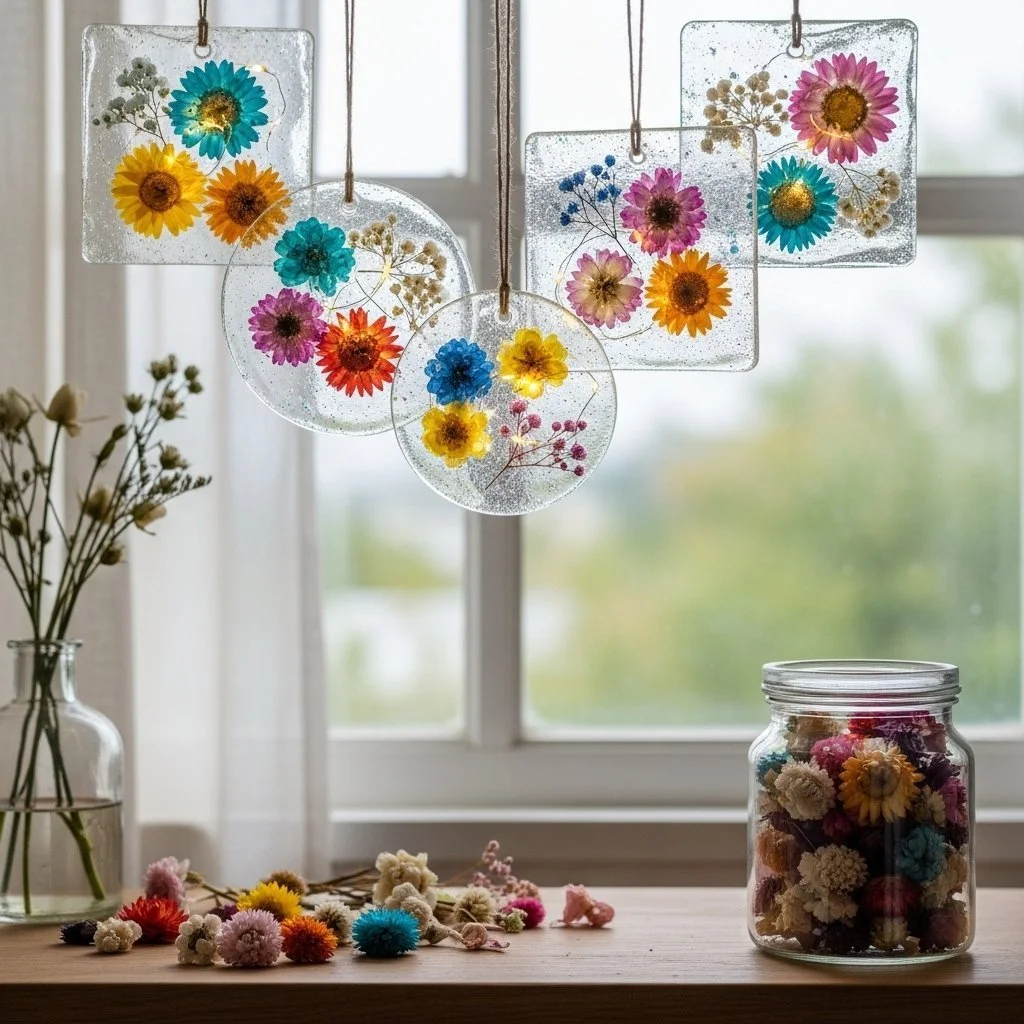
- Measure and combine the base ingredients in a small saucepan.
Warm two parts distilled water with one part gelatin or similar proportion for cornstarch mixes.
If desired, add a splash of glycerin for flexibility.
Heat gently and stir until smooth and glossy. - Continue stirring slowly until the mixture thickens and becomes clearer.
Stop when the liquid coats the spoon in slow ribbons.
You will notice the texture change from watery to syrupy; that ribbon is your cue.
Turn the heat down if it starts to bubble too much. - Add a small amount of food coloring or natural tint for color, and a few drops of essential oil for scent if desired.
Stir in color a drop at a time so you do not overdo it.
Scent is optional; only a drop or two will carry through once dry.
Taste is not involved so keep oils light and use only child-safe scents. - Carefully pour the mixture into molds.
If embedding flowers, use tweezers to place them within the mixture before it sets.
Work quickly but calmly so the pieces sit where you want them.
Parchment works well when you want flat shapes rather than rigid molds. - Create a hole for hanging with a straw or skewer.
Do this right after pouring while the mix is still soft but not too runny.
Make the hole slightly larger than the string you plan to use because the edges may tighten as it dries.
Keep the hole near an edge so the piece hangs well. - Let the pieces cool and dry in a well-ventilated area.
Drying can take several hours to days, depending on thickness.
Flip thinner pieces after a while if you want both sides to dry evenly.
Avoid humid rooms for faster drying. - Smooth edges with sandpaper if needed.
Once dry, hang them up to catch the light.
Fine sandpaper removes sharp bits and gives a finished look.
If a piece feels brittle, handle it gently when hanging.
What Kids Practice While Making This
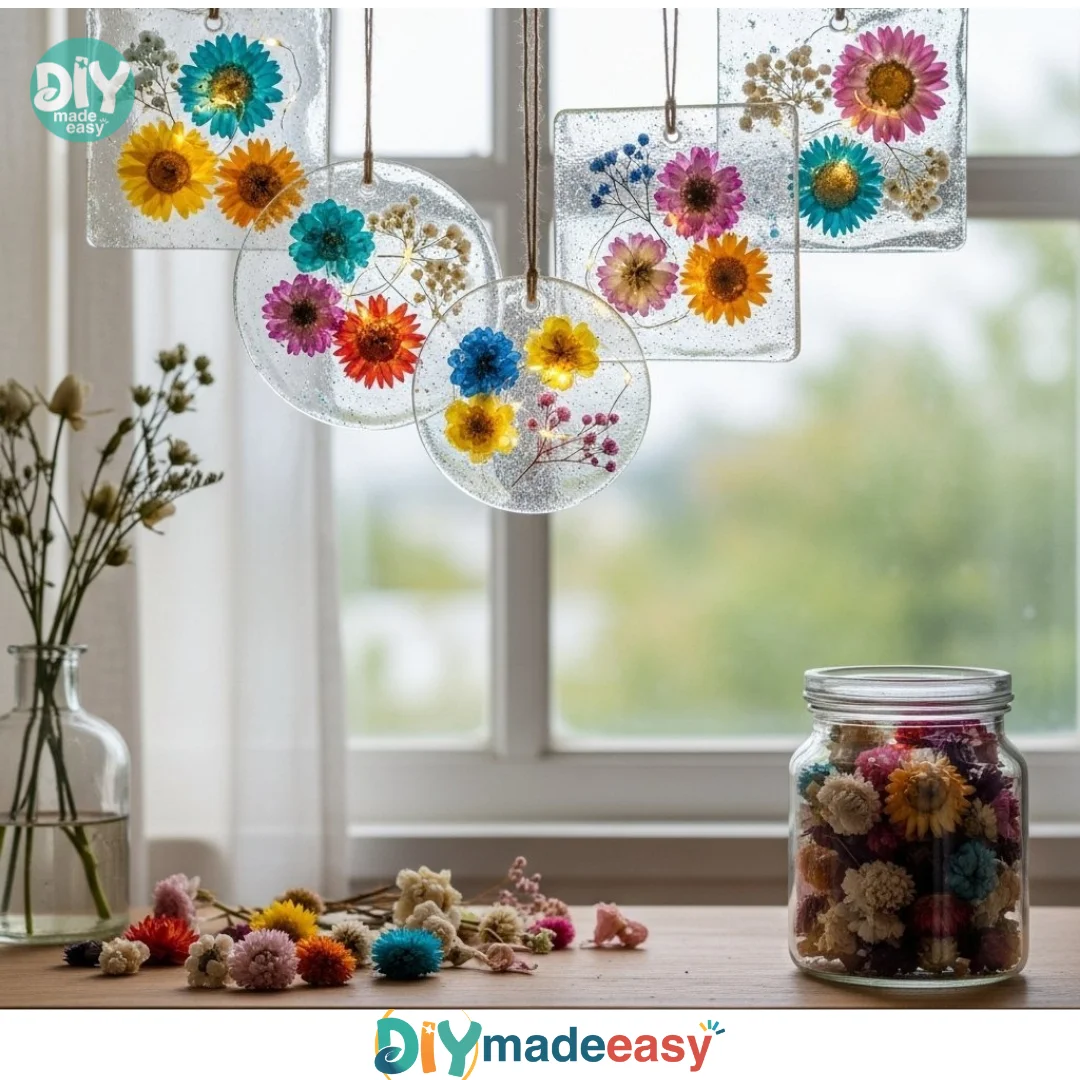
This activity builds simple but meaningful skills. Kids use measuring and counting when they work with the two-to-one ratio, which supports early math sense. Stirring a warm mixture develops wrist control and timing, while placing tiny flowers with tweezers strengthens fine motor skills and hand-eye coordination.
You also get cause and effect in a friendly package. Children see the clear liquid change as it heats and thickens. They learn that patience matters because drying takes time. This project encourages focused attention in short bursts, and it rewards that focus with a bright, tangible result to hang in the window.
As a bonus, the activity invites gentle conversation about materials. You can talk about why distilled water keeps things clear, why glycerin makes pieces less brittle, or how thin sheets dry faster than thick ones. Keep explanations light and tied to what you observe during the process.
Troubleshooting Common Issues
If Something Doesn’t Go as Planned
Problem: The mix stays cloudy or lumpy.
Why it happens: Gelatin or cornstarch needs steady warming and good stirring to dissolve completely.
Fix: Keep the heat low and stir until smooth; strain through a fine sieve for one quick fix if lumps persist.
Problem: Pieces crack or feel brittle when dry.
Why it happens: The mix may have dried too quickly or lacked glycerin.
Fix: For next time add a small splash of glycerin to keep flexibility, and let pieces dry out of direct sun if your home is very warm.
Problem: Embedded items float or move as the mixture cools.
Why it happens: Some decorations are buoyant or the mixture remained too runny.
Fix: Place heavier bits first, press them gently with tweezers, or pour a slight base layer, let it set a little, then add a second thinner layer on top.
Problem: The hole for hanging closes up while drying.
Why it happens: The material can pull inward slightly as it loses moisture.
Fix: Make holes a touch larger than you think you need and check them again when the piece becomes tacky. If small, ream them gently with a skewer after partial drying.
If you want a visual how-to for the basic chemistry and step order, I recommend looking at a clear, kid-friendly guide for reference while you work. That can help when you want to show older kids the whole process from a different source. Also, remember that small spills wipe up with warm water if you clean quickly. If you let the mix set on the pan, soak it before scrubbing.
Easy Variations to Try
- Tiny Botanical Layers
Make two thin pours instead of one thick piece. Press pressed flowers into the first thin layer, let it set until tacky, then pour a second thin layer on top. This keeps delicate items from floating and creates depth without bulk. - Glitter-Fade Ombre
Stir a pinch of fine glitter into the bottom third of the pour, then pause and add a second pour with less glitter, and a final pour without glitter. The result is a gentle fade. Use fine glitter sparingly and mix well. - Translucent Paper Collage
Cut thin, translucent paper into shapes and place them on the wet surface. The paper softens and becomes part of the sheet. This gives a stained-glass look without fragile botanicals. - Seasonal Motifs
Change colors and decorations by season: warm amber tones and tiny leaves for fall, pale blues and star shapes for winter, bright florals for spring, and citrus colors for summer. Each season gives a fresh palette while keeping the same simple steps. - Scented Sun Catchers
Add a drop or two of a child-safe essential oil to the warm mix for a subtle scent. Lavender or citrus can make the finished piece smell gentle in the space where it hangs.
For more shape ideas and different ways to press items into the mix, check a related project that uses crayons and similar hands-on cutting and decorating techniques to spark ideas when you want simpler cutting shapes for little hands.
Storing or Reusing This Project
What to Do With It After
Keep finished suncatchers out of direct sun for long periods if you want the colors to hold. Strong, constant sunlight can slowly fade some natural pigments. Bring them in at night to reduce exposure and to avoid sudden temperature swings that could make very thin pieces brittle.
Cleaning up tools is simple. Rinse the saucepan and spoon while they are still warm. If the mix sets on them, soak in hot water for a few minutes and the residue will slide off. Parchment peels away from finished pieces easily, which keeps your drying surface reusable.
Reuse any leftover mix with care. If you make too much, pour it into small flat molds and let it dry as test pieces, or wipe it up with paper towels while warm. Store unused dried decorations like pressed flowers in a small box for future projects.
To store finished suncatchers, hang them by a loop of thread or ribbon in a protected area, or lay them flat in a shallow box with tissue between layers. Avoid stacking without protection because surfaces can stick together in high humidity. If you plan to keep them for years, pick a cool, dry spot and handle gently.
FAQs About Colorful DIY Bioplastic Suncatchers
Can messy kids join in, or will this get out of hand?
Mess happens, and that is okay. The sticky part only lasts while the mix is warm. I let kids do the measuring, stirring with a grown-up nearby, and the decoration with tweezers. Keep a damp cloth and a bowl of warm water on the table to wipe hands and tools right away. The rest cleans up easily.
Is this safe for little children?
What age is best? This project works well with close adult supervision. The heat step stays with an adult, and younger children do safe tasks like choosing colors and pressing flowers. For independent work, try it with kids who are comfortable near a stovetop and can follow simple safety rules, usually older elementary age.
Can I swap gelatin for cornstarch or vice versa?
Yes, both work but behave a bit differently. Gelatin tends to give clearer, more flexible sheets. Cornstarch gives a more matte finish and can feel a touch stiffer. If you want a softer final piece, add a small splash of glycerin. Be honest about results: the textures will not match plastic exactly, but they will look lovely in the window.
What if my suncatcher stays cloudy or gets sticky after drying?
If cloudiness appears, you probably heated too fast or did not stir enough. For stickiness, let the piece dry longer in a low-humidity spot. If it stays tacky, place it somewhere with a fan or a gentle breeze and give it more time. You can also sand small sticky edges once mostly dry.
How should I store leftover decorations and finished pieces?
Keep dried botanicals flat in a box or envelope so they do not crumble. Store finished suncatchers on a flat surface with tissue between them, or hang them gently. Avoid stacking without protection because humidity can make them stick.
A Final Helpful Note
Ending This Project on a Good Note
Take a breath before you start. Set your space up with a clear plan for drying and a place to hang finished pieces. Keep the steps simple and let kids own the decorating. If something does not turn out perfect, it still becomes a learning piece or a gift bag tag or a fun test sample for the next round.
Be flexible with timing. Thinner pieces dry faster; thicker ones take time. Check pieces after the first few hours and adjust your expectations. Celebrate the effort and the bright result. These suncatchers offer a quick creative win and a small, handcrafted treasure to hang in the window.
Conclusion
If you want another friendly step-by-step visual guide, this page walks through making a bioplastic suncatcher with clear photos and kid-friendly notes: How To Make A Bioplastic Suncatcher – Chemistry for Kids. For inspiration that focuses on botanical designs and layering plants into the bioplastic, take a look at this project gallery and tutorial: Botanical Bioplastic Sun Catchers – Wineberry Woods.
PrintColorful DIY Bioplastic Suncatchers
Create vibrant suncatchers using simple ingredients and easy steps. Perfect for a fun family craft with kids!
- Prep Time: 15 minutes
- Cook Time: 15 minutes
- Total Time: 240 minutes
- Yield: Varies based on thickness and molds used
- Category: Craft
- Method: Crafting
- Cuisine: N/A
- Diet: N/A
Ingredients
- 2 parts distilled water
- 1 part gelatin powder or cornstarch
- Glycerin or vegetable glycerol (optional)
- Food coloring or natural pigments (optional)
- Dried flowers, tiny leaves, pressed botanicals, glitter, or translucent papers (optional)
- Parchment paper for drying
- Tweezers for placing small decorative bits (optional)
Instructions
- Measure and combine the base ingredients in a small saucepan.
- Warm two parts distilled water with one part gelatin or similar proportion for cornstarch mixes.
- Add a splash of glycerin for flexibility if desired.
- Heat gently and stir until smooth and glossy.
- Continue stirring slowly until the mixture thickens and becomes clearer.
- Stop when the liquid coats the spoon in slow ribbons.
- Add a small amount of food coloring or natural tint for color, and a few drops of essential oil for scent if desired.
- Pour the mixture into molds carefully.
- Create a hole for hanging with a straw or skewer immediately after pouring.
- Let the pieces cool and dry in a well-ventilated area.
- Smooth edges with sandpaper if needed once dry.
Notes
Kids practice measuring and fine motor skills with this craft. Supervision is necessary during the heating step.
Nutrition
- Serving Size: N/A
- Calories: N/A
- Sugar: N/A
- Sodium: N/A
- Fat: N/A
- Saturated Fat: N/A
- Unsaturated Fat: N/A
- Trans Fat: N/A
- Carbohydrates: N/A
- Fiber: N/A
- Protein: N/A
- Cholesterol: N/A