

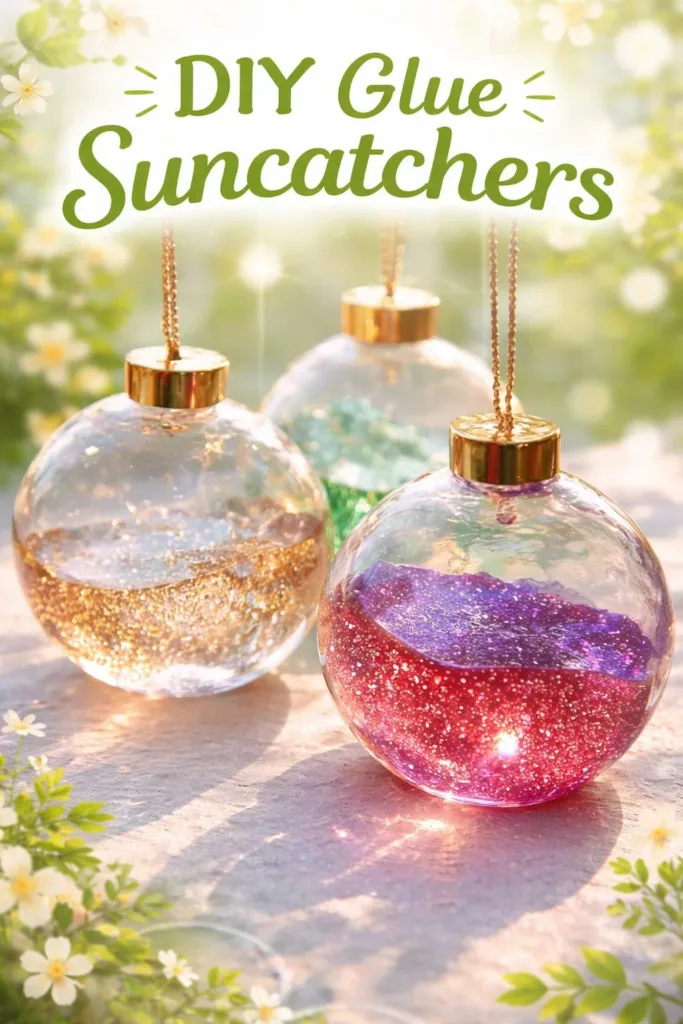
A rainy afternoon and two kids with extra energy. The kitchen table looks like a landing strip for last-minute crafts. You want something that feels special, does not need fancy tools, and will let everyone take home something pretty. DIY Glue Suncatchers fit that exact moment. They ask for tiny effort, a little color, and some quiet patience while glue dries. I often pull this one out when I need a calm, creative activity between errands. If you like projects that use things you already have, this will sit right with you. If you want another low-prep craft for an easy afternoon, try the crystal seashells recipe for a different kind of sparkle.
Why You’ll Love Making DIY Glue Suncatchers

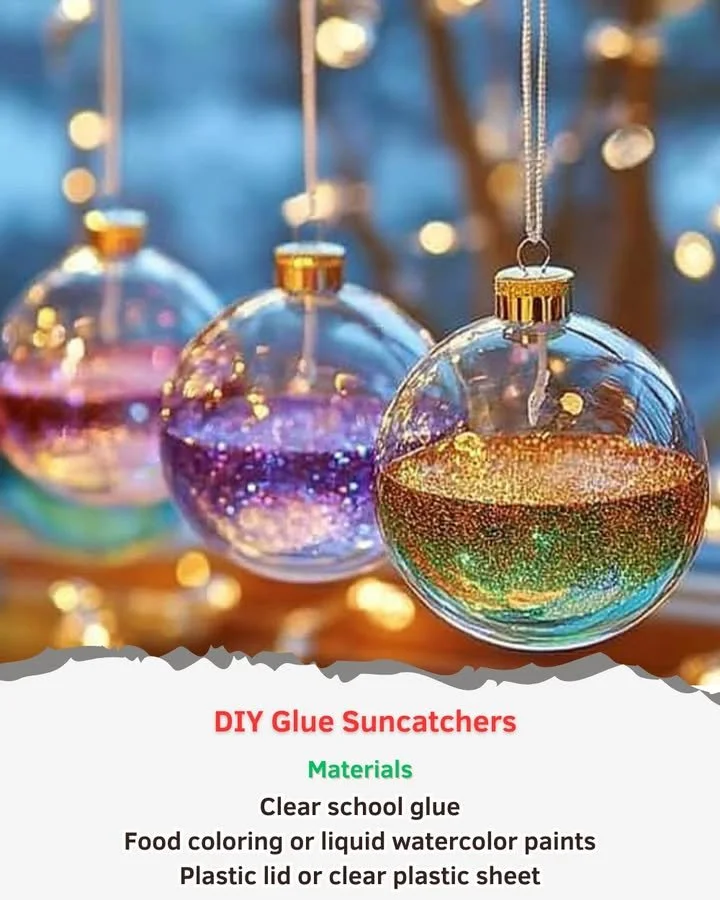
This project works well because it asks for one main material and a few small helpers. Clear craft glue gives you a window-like base that catches light when it dries. A drop of food coloring or liquid watercolor transforms that glue into soft washes of color. Pressed flowers and tissue bits add texture and a personal touch.
It stays low-prep. You do not need a lot of drying time steps or complex mixing. Lay down a nonstick surface, squeeze glue, add color, and shape. It fits between school pickup and dinner. It lets kids work with small motions so they practice careful hands without being trapped at the table for hours.
It is approachable for different ages. Younger kids enjoy spreading color and watching glitter swirl. Older kids and adults can make delicate details with a toothpick or paintbrush. The result looks real and pretty, even when it feels like a quick project. That reliability makes this a good go-to craft when you want something that gives calm and a visible reward.
A Quick Look Before You Begin
This one does not take long to set up. Plan on 10 minutes of hands-on time and several hours of drying time. You can pace it for nap time or let it dry while you do dinner prep.
The mess level stays low if you use a silicone mat or wax paper and keep a bowl of soapy water handy. Expect a few glue drips and color smudges, but those wipe away easily with warm water. You will need an adult nearby for the first few steps if kids are under six. After that, they usually work well on their own.
You will see changes as the glue dries. It goes from glossy and soft to firm with a slightly flexible feel. That tells you when to trim and add a hanger. Most pieces need overnight to reach a good depth of firmness. If you plan to make multiple suncatchers, stagger them so you always have something drying while you clean up.
Materials You’ll Need
Clear craft glue (school glue or a slightly thicker clear glue)
common household item; the heart of the project
Food coloring, liquid watercolors, or acrylic inks (a small bottle of each color)
pick a few favorite shades
Silicone baking mat or wax paper (nonstick surface)
keeps glue from sticking; silicone mat is reusable
Paintbrushes (soft, small round brushes)
good for thin washes and detail
Disposable cups or palettes for mixing
small cups are easy to toss after use
Toothpick or skewer for stirring and tiny design work
great for lines and pushing tiny bits into place
Small scissors and tweezers
tweezers help place pressed flowers without smudging
Pressed flowers, tissue scraps, or glitter (optional)
pressed flowers add nature; tissue gives stained glass looks
Thin string, thread, or fishing line (for hanging)
clear line makes the piece float in light
A straw or clear plastic pendant mold (optional)
straw can make a hole while glue is wet; mold gives shape
Paper towels and a small bowl of warm, soapy water for cleanup
clean brushes and sticky fingers fast
Step-by-Step Directions
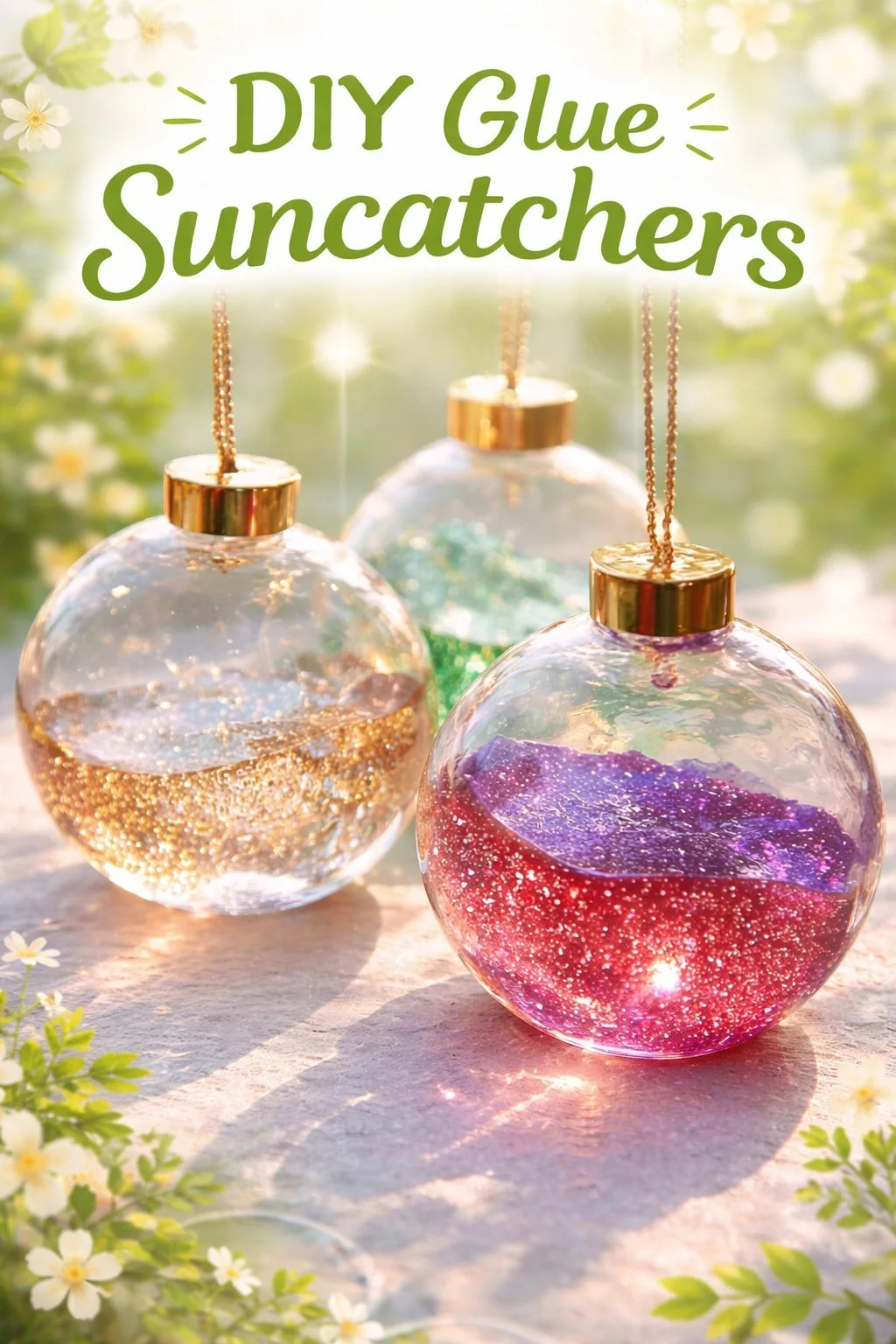
- Prepare a calm workspace and lay down a silicone mat or wax paper. Arrange your colors and tools.
Clear, simple layout helps hands move smoothly. Keep the glue bottle near the mat and cups of color within reach.
Have paper towels and the soapy bowl ready so a quick wipe does not interrupt the flow. - Squeeze a puddle of clear glue onto the mat.
Make a puddle about the size you want your suncatcher to be. A coin to palm size works well for kids.
If the glue spreads too thin, add a little more in the middle to build depth. - Mix a drop of color in a small cup with a little glue or water to create a tint.
Start with one drop of color. You can always darken it later. Mixing with a little glue keeps the color clear and glossy.
If you use water to thin, do so sparingly so the glue still sets firm. - Dip a soft brush and paint the tinted glue onto the clear puddle in thin washes.
Work from the center outward or from one side to the other to create a smooth gradient.
Thin washes let light pass through and give that stained glass look; thick paint will feel cloudy. - Add tiny details with a toothpick, such as lines or dots.
Use the toothpick to pull color into veins or swirl two colors together for marbling.
If a line looks too bold, drag a clean brush lightly to soften it. - Place pressed flowers or bits of tissue with tweezers and press lightly.
Tweezers keep your fingers from leaving smudges. Lay flowers flat and press gently so they settle into the glue.
If the flower edge lifts, add a thin wash of clear glue on top to seal it down. - Optionally, add glitter or a second color wash.
A light dusting of glitter catches extra light. If you add a second wash, wait until the first layer is tacky, not dry.
Too much additional water will create bubbles, so keep extra washes thin. - Let the piece sit undisturbed in a warm, dry spot to dry.
Place your mat in a warm area away from dust and pet hair. A sunny windowsill works but avoid direct heat.
Drying takes several hours to overnight. You will see the glue flatten and become firm. - Once firm but slightly flexible, trim edges and hang using string.
Use small scissors to tidy the edge. If you want a hole for hanging, poke one while the glue is still slightly soft with a straw.
Tie string or fishing line and hang where light can shine through your piece.
The sequence keeps things calm and steady. You will find a rhythm: color, wash, detail, and press. For me, the small rituals matter. The smell of warm glue, the drop of color spreading slowly, the quiet focus while pressing a tiny petal. These are the little making moments that make the project feel worth doing.
Skills This Activity Supports
This craft practices gentle hand control. Brushes and toothpicks ask for small, precise motions. Kids build fine motor skills without feeling like practice.
It teaches cause and effect. A thin wash gives light color. A thick blob makes a cloudy patch. When kids see how a tiny drop of color changes the whole puddle, they learn to predict results.
They get real experience with timing. Waiting while glue sets shows patience in a hands-on way. They learn that rushing the trim step can deform the piece. That understanding carries to other crafts too.
This activity also introduces simple color mixing. Kids learn that red and yellow make orange and that a little color can go a long way in a clear medium. The mixing feels playful and immediate.
Troubleshooting Common Issues
If the glue spreads too thin and looks watery, add a little more glue to the center and smooth it with a brush. Thin patches dry flat and may be fragile, so topping them helps.
If bubbles form when you add color, gently poke them with a toothpick and smooth the surface with a clean brush. Work slowly to avoid creating new bubbles. Let the glue sit for a minute after mixing so trapped air escapes.
If pressed flowers float or tilt, add a thin clear glue wash on top to weigh them down. Press gently with tweezers to avoid tearing delicate petals. For tissue bits that tear, place them with care and overlap edges to hide small rips.
If edges look jagged after drying, wait until the piece is firm but still flexible before trimming. Scissors cut cleaner at this stage. If the glue cracks when you trim, it dried too hard; try trimming earlier next time.
If the piece does not hang straight, pull a tiny amount of glue through the hanging hole and reshape the edge before it fully hardens. If the hole closes or the straw leaves a rough edge, use scissors to neaten it once the glue firms.
Easy Variations to Try
Make a seasonal series by using pressed leaves and warm colors for fall or pastel tissue scraps for spring. Arrange a row of small suncatchers and hang them like a tiny window curtain.
Create a pendant-sized suncatcher using a small amount of glue and a clear plastic pendant mold. This makes wearable art. Keep color washes thin so the piece stays light and not too thick for a necklace.
Try marble effects by dropping two colors next to each other and then pulling a toothpick through both. The swirl looks complicated but stays simple to execute. Let older kids experiment with wave patterns and veins.
Make a grouping where each suncatcher builds on the last. Start with one color, and then add another layer of suncatchers that use the leftover shades. This teaches planning and color harmony without pressure.
For a classroom or group setting, set up an assembly line. One person squeezes glue, another adds color, and a third places the flowers. This reduces wait time and lets everyone focus on one small task.
You can also adapt this project to teach small science ideas in a playful way. For more hands-on little experiments that pair well with artsy projects, try the salt volcano science experiment for a break between drying times.
Storing or Reusing This Project
Store finished suncatchers flat until fully dry to prevent bending. A shallow box or a drawer keeps dust off. Place parchment paper between pieces if you stack several.
Reuse leftover glue by putting the cap back on tightly and storing it upright. If the glue skin forms on top, remove the skin and stir lightly. For small dried globs on the mat, peel them off once the mat cools.
Save leftover tissue scraps and pressed petals in a small jar for the next session. Pressed flowers keep best between book pages for a week or two. If you find a lot of waste, cut tissue into small squares before you start to reduce scraps.
If you plan to keep the suncatchers for years, avoid hanging them in direct sun where inks might fade. A bright window works, but rotating displays from time to time helps preserve color. If a piece curls at the edge, place it under a flat board with a soft cloth until it relaxes.
FAQs About DIY Glue Suncatchers
Will this be too messy for my kitchen table if my child is five?
Mess that happens is usually small and easy to clean. Cover the table with a silicone mat or wax paper, and keep a bowl of warm, soapy water near the work spot. If a child squeezes glue on fingers, it wipes away with warm water and soap. You will likely get a few drops of color on hands. That does not mean the whole table will be ruined. I often work with my youngest at the counter and wipe up the same minute. The quick clean routine keeps it simple.
How old should my child be to make one safely?
Kids three to four can join with close adult help for squeezing glue and placing flowers. By five to six, many kids can do most steps with supervision. The toothpick step needs gentle hands and focus. If you are unsure, stand nearby for the first few pieces to show technique and help with the straw if you make hanging holes.
Can I substitute anything if I do not have liquid watercolors or acrylic inks?
Yes. A little food coloring in a small amount of glue or mixed with a drop of water works well. Start with one drop and build up. If you use too much water the glue can take longer to set or become cloudy. I have used food coloring for years and gotten soft, translucent tones that kids loved.
What if my suncatcher looks cloudy or has bubbles after drying?
Cloudy spots often come from thick color or adding too much water. Bubbles form when air gets mixed while stirring. For bubbles, poke gently with a toothpick while the glue is wet. If a piece dries with a cloudy patch, you can embellish with another thin wash and small details to make it look intentional. It will not ruin the piece; it will just be different.
How long will they last once I hang them?
Most suncatchers last a long time if you avoid direct sun for long stretches and handle them gently. The glue remains slightly flexible. If a hanger loosens, you can add a dab of clear glue to reattach the string. Store extras flat and avoid heavy handling until they fully firm up.
A Final Helpful Note
This craft works best when you let it be simple. Focus on small wins: a clean wash of color, a gently pressed petal, a tiny swirl that makes everyone say wow. Do not aim for perfect shapes. The charm of these suncatchers comes from small imperfections and the hands that made them.
When you set out materials, include one extra cup of clean water and an extra brush. Those little extras save a lot of stop-and-start moments. Give kids permission to experiment and to “fix” by adding tiny layers. Most of the things that feel like mistakes turn into happy surprises once the glue dries.
Trust the slow drying and the light. Hang pieces low at first so kids can admire their work. Let them show friends. The project gives tangible results without heavy prep. That feeling of ease and a visible reward makes this an activity you will reach for again.
Conclusion
If you want another visual glue-based craft with clear instructions and pretty results, see this step-by-step inspiration at Colorful DIY Glue Suncatcher Craft – Mombrite for a different twist on mixing color and floral bits. For a version that uses shaped molds and has alternate hanging ideas, check the visual guide at DIY Suncatcher – A girl and a glue gun.
PrintDIY Glue Suncatchers

A fun and easy craft for kids using clear glue and colorful additives to create beautiful suncatchers.
- Prep Time: 10 minutes
- Cook Time: 180 minutes
- Total Time: 190 minutes
- Yield: Multiple suncatchers
- Category: Craft
- Method: Crafting
- Cuisine: N/A
- Diet: N/A
Ingredients
- Clear craft glue
- Food coloring or liquid watercolors
- Silicone baking mat or wax paper
- Paintbrushes
- Disposable cups or palettes
- Toothpick or skewer
- Small scissors and tweezers
- Pressed flowers, tissue scraps, or glitter (optional)
- Thin string, thread, or fishing line
- A straw or clear plastic pendant mold (optional)
- Paper towels
- Small bowl of warm, soapy water
Instructions
- Prepare a calm workspace and lay down a silicone mat or wax paper. Arrange your colors and tools.
- Squeeze a puddle of clear glue onto the mat.
- Mix a drop of color in a small cup with a little glue or water to create a tint.
- Dip a soft brush and paint the tinted glue onto the clear puddle in thin washes.
- Add tiny details with a toothpick.
- Place pressed flowers or bits of tissue with tweezers and press lightly.
- Optionally, add glitter or a second color wash.
- Let the piece sit undisturbed in a warm, dry spot to dry.
- Once firm, trim edges and hang using string.
Notes
Keep a bowl of soapy water handy for easy cleanup, and use a nonstick surface to minimize mess.
Nutrition
- Serving Size: 1 suncatcher
- Calories: N/A
- Sugar: N/A
- Sodium: N/A
- Fat: N/A
- Saturated Fat: N/A
- Unsaturated Fat: N/A
- Trans Fat: N/A
- Carbohydrates: N/A
- Fiber: N/A
- Protein: N/A
- Cholesterol: N/A