


A busy afternoon, kids knocking on the kitchen door asking for something to do, and you want a quick, tidy activity that looks like a little win. Seashell Crystal Art fits that moment perfectly. With a few clean shells, some hot water, and salt-like crystals, you can make sparkly, museum-like shells that feel special without needing a lot of fuss. I reached for this project when my own kids begged for something hands-on between homework and dinner, and it turned into quiet, focused time and a row of shells drying on the windowsill by bedtime. If you want an approachable craft that uses things you mostly already have, this one works great and feels a little magical.
If you like trying different crystal looks, you might also enjoy the step-by-step approach used in the turquoise crystal seashells project, which uses similar materials and gives helpful color ideas.
Why You’ll Love Making Seashell Crystal Art
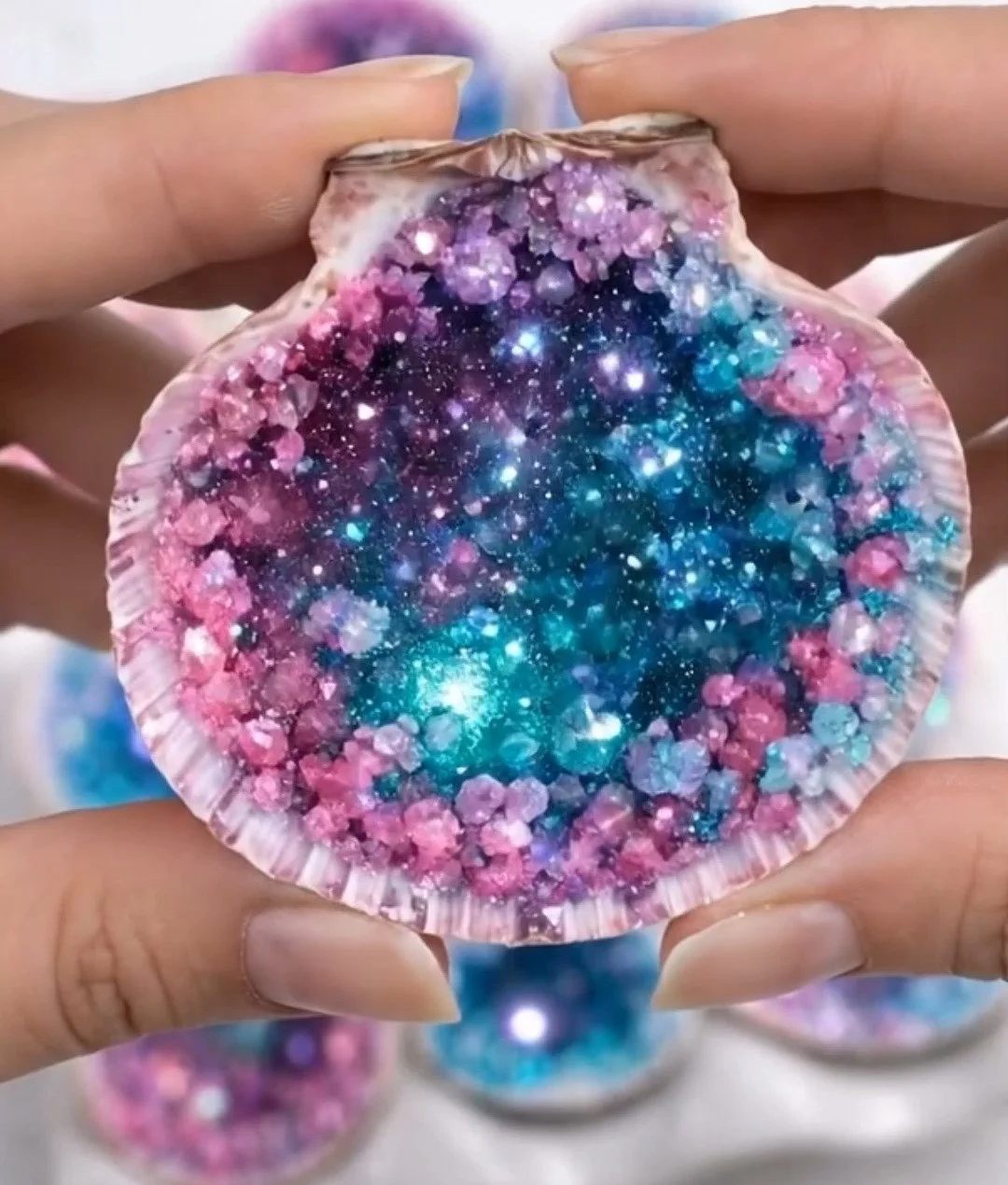
This project asks for very little prep. You clean and sort shells, warm water, mix in a common crystal material, and let it do its work. That makes it low-prep and friendly for busy schedules.
It feels approachable because the steps are short and predictable. Mixing Epsom salt or borax into hot water gives a clear solution you pour over shells. Then you wait. The waiting is peaceful and gives kids something to check on later.
It proves reliable more than once. Even when a batch did not form crystals right away for me, a gentle reheat and a fresh pour fixed it. That reliability matters on noisy evenings when you want an easy success.
You can tailor timing to your day. Start in the afternoon and check after a few hours, or set up in the morning and let it sit until the next day. The project scales from one shell to a whole trayful without much extra work.
Keep it simple and you get real-looking crystals that look elegant on a shelf. That feeling of turning beach finds into keepsake art is why families come back to this again and again.
A Quick Look Before You Begin
Think of this as a short kitchen experiment. You set up, do a few small tasks that take 10 to 20 minutes, then let gravity and evaporation do the rest.
Setup takes five minutes. Cleaning shells can take a little longer if sand is stubborn. Mixing the crystal solution takes under five minutes. The crystals form while you relax, usually within several hours to overnight.
Mess stays small if you line a tray or towel beneath your work. The warm solution might drip as you pour, so a tray saves you the scrub. If you use borax, plan for gloves and a mask and keep kids at a safe distance during mixing.
Adult help matters mainly for heating water and pouring if the children are young. Older kids can do almost every step while an adult supervises. Expect a calm cleanup: rinse jars, fold the towel, and dry the tray.
If you want a preview of a similar crystal-focused activity and color ideas, try the Rainbow Crystal Heart tutorial. It uses a similar dissolve-and-grow idea and shows how coloring changes the final look.
Materials You’ll Need
Seashells, clean and dry
small beach finds or shop-bought shells, cleaned and fully dry
Hot water, boiled or from kettle
steaming water makes the crystals dissolve better
Epsom salt, borax, or table salt
Epsom and borax make nicer crystals; table salt works in a pinch
Clear shallow dish or glass jar
holds the shells and solution; shallow works best for coverage
Measuring cup and spoon
for the right salt-to-water mix
Small funnel or spoon for pouring (optional)
handy for neat pouring into small spaces
Fine sand or sand-sized beads for texture (optional)
adds grain or a sparkly base in shells
Clear-drying craft glue or hot glue gun (optional)
useful to secure beads or fix shells together
Food coloring or mica powder for color (optional)
adds subtle or bold color to crystals
Thin string or wire for hanging (optional)
turn shells into ornaments after sealing
Gloves and a mask (if using borax)
safety gear when working with borax powder
A tray or cloth to catch spills
keeps your table tidy and cleanup easy
Materials note: All of these items come from the authoritative list for this project. The optional items help you personalize the shells, but they are not required to make crystals form.
STEP-BY-STEP DIRECTIONS
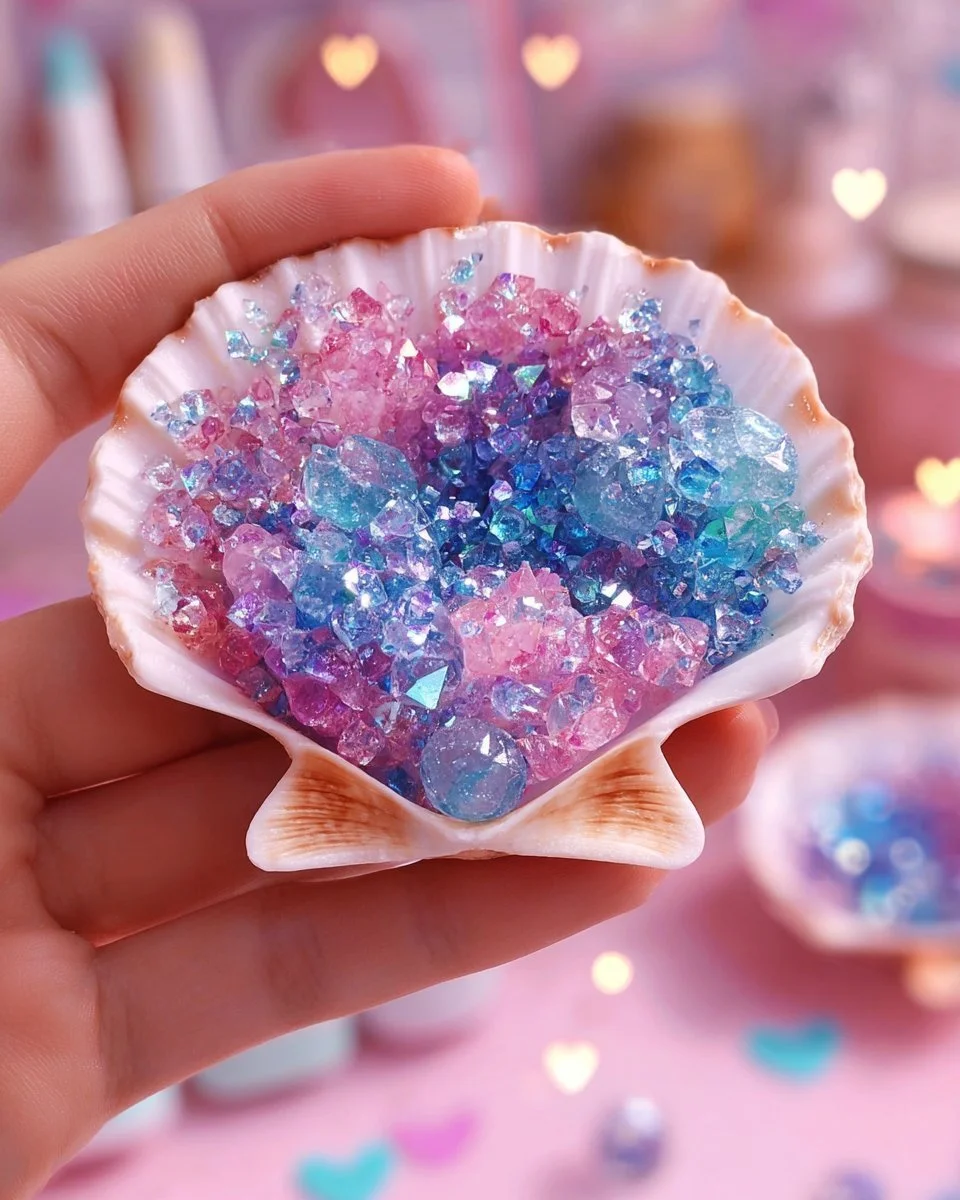
- Prepare your workspace and gather materials. Clean the surface and set up a tray or towel.
Arrange shells and measuring tools nearby so you can move smoothly through the steps. - Clean and sort your shells, then let them dry.
Scrub gently with a soft brush if needed; let shells fully dry or the solution will dilute. - Heat water until steaming and carefully pour it into a heatproof jar.
Use boiled or kettle water and move carefully to avoid burns. - Measure and dissolve your chosen crystal material: for Epsom salt, use 2 parts salt to 1 part hot water; for borax, use 3 tablespoons per cup of water.
Stir until the mixture runs clear and you see no grains left. - If desired, add food coloring or mica powder to the solution.
A drop or pinch spreads color without changing how crystals form. - Place the shells in a shallow dish, then pour the warm solution slowly over them.
Pour steadily so the liquid reaches crevices but does not overflow the dish. - Set the dish in a quiet place, covering it loosely to keep dust out, and leave undisturbed for several hours to overnight.
A calm, draft-free spot gives the best crystal growth. - Check gently after a few hours.
Look for tiny crystal seeds forming; avoid touching the shells until they feel stable. - Once crystals are stable, remove the shells and let them air dry.
Lift shells carefully; place them on paper or a soft cloth to finish drying. - Seal if desired with spray sealant.
A clear coat protects delicate crystals and helps them last longer on display. - Clean workspace and store any unused materials safely.
Rinse jars, fold the towel, and keep borax or salts out of reach of kids and pets.
SECTION NOTES: While following these steps, you will feel small textures change under your fingers. The solution goes from cloudy to clear as you dissolve salts. You may notice a fine film where crystals begin to form. If a pour leaves a bead of liquid on the shell, let it sit; that bead often turns into a tiny cluster you will enjoy.
What Kids Practice While Making This
Seashell Crystal Art covers many small learning moments without feeling like a lesson. Children practice fine motor control when spooning salt into the jar, steady hands while pouring, and safe handling around warm water.
They learn cause and effect by watching the solution evaporate and crystals grow. You can ask simple questions like what they think will happen overnight. The answers often surprise them and lead to curiosity about how and why.
Mixing and coloring builds decision-making. Choosing how much color to add or where to place beads makes each shell unique. Small steps like wiping a spill or sorting shells teach responsibility and tidy-up habits.
Counting and measuring fit naturally into the process. Younger kids can count spoonfuls while older kids measure ratios and compare results. The craft reinforces observation skills: note bubbles, the speed of evaporation, or the feel of the crystals when they are ready.
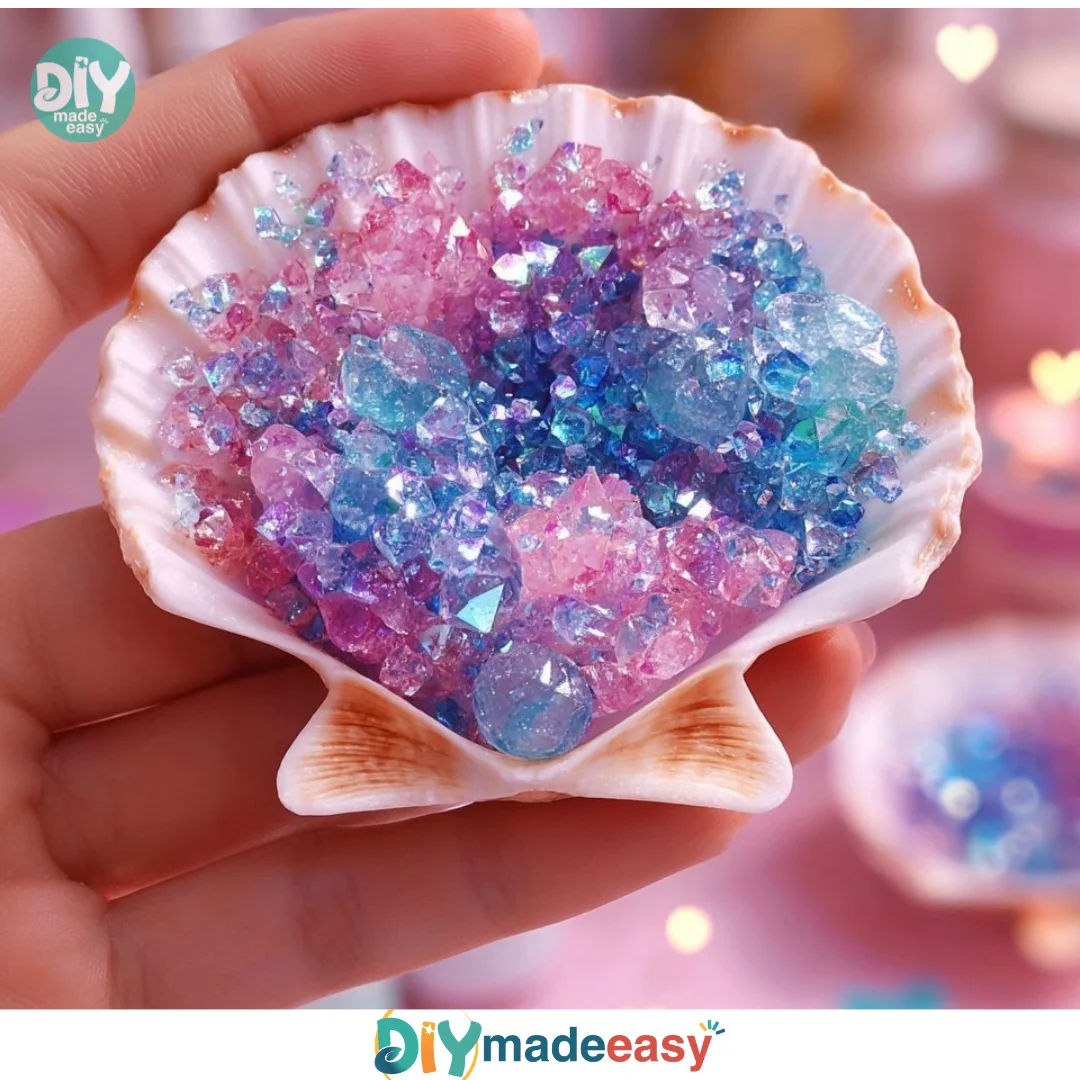
Parents can turn this into a calm teaching moment without pressure. Keep instructions short and use simple language about safety and what to expect. Praise patience; crystal growth rewards waiting.
Troubleshooting Common Issues
If crystals do not form well, the solution may have cooled too much before pouring.
Rewarm gently, stir, and pour again. Slight reheating can dissolve more crystals into solution and restart growth.
If the mixture looks cloudy and never clears, you may not have stirred enough or the ratio was off.
Stir until the water looks clear. For Epsom salt, try the 2-to-1 ratio again and use steaming water.
If crystals form unevenly or clump in one place, the surface may have oil or residue.
Clean the shells again with a mild soap and warm water, rinse well, and dry fully. Oil repels the solution and keeps crystals from sticking.
If dust or lint hides among crystals, cover the dish loosely while it grows.
A light cover keeps dust away but still allows evaporation.
If crystals flake off easily after drying, they might have dried too quickly or not bonded to the shell surface.
Try a light mist of clear sealant, or glue a thin layer of sand or beads first to give crystals something to hold onto.
If you find a strange smell or you used borax and feel unsure, ventilate the area and use gloves and a mask.
Borax is common in crafts but needs careful handling. If a child sneezes or seems uncomfortable, move the project outside next time.
If the result looks dull, a small amount of mica powder or a fine spray of sealant can bring back shine.
Test the seal on an extra shell first to see the final look.
These fixes work in most cases and take the intimidation out of imperfect runs. The craft tolerates small mistakes, and a little rework usually leads to a better batch.
Easy Variations to Try
Color play: Add food coloring or mica for pastel or bold crystals.
Try one drop for tint or a pinch of mica for shimmer.
Texture base: Sprinkle fine sand or sand-sized beads in the shell before pouring.
The crystals will grow around the grains and create a textured effect.
Cluster ornaments: Use thin string or wire to suspend shells and let crystals form while hanging.
This makes lightweight ornaments once sealed.
Layered growth: Pour a clear solution first, let it set slightly, then pour a colored solution for bands of color.
This takes more patience but gives a unique striped look.
Mini arrangements: Glue a few shells together before the crystal pour to make a small sculpture.
Glue first, let it dry, then pour the solution to unify the pieces with crystals.
Try one or two variations at a time. Keep expectations calm and see what each tweak does. If something looks too busy, simplify at the next try.
Storing or Reusing This Project
Display your shells on a shelf, in a shadow box, or on a windowsill away from direct moisture.
A sealed shell lasts longer and keeps its crystals intact.
If you want to reuse materials, carefully scrape unused crystals back into a jar and re-dissolve them in hot water.
Keep in mind reusing can mean a weaker solution, so top up with fresh material if needed.
Store leftover salts and powders in labeled containers and keep them dry.
If you used borax, store it out of reach of children and pets.
Clean the dish and measuring tools after use. Warm soap and water remove residues easily.
Allow glassware to dry completely before storing to prevent clumps and mold.
If you plan seasonal decorations, wrap sealed shells in tissue and store them in a box with silica packets.
That prevents moisture and keeps crystals from degrading.
Repurpose imperfect shells by gluing them into magnets or small frames and sealing them.
This gives a second life to pieces that did not crystalize perfectly.
FAQs About Seashell Crystal Art
How messy will this be and how much cleanup should I expect?
This project stays tidy if you use a tray or towel under your workspace. You might get a few drips when pouring, and salt residue can sit on the tray. Wipe the tray and rinse jars with warm water. If a child spills, blot up the solution quickly and rinse the area. I have learned that a towel under everything saves time and frustration, and most cleanup is quick.
Is this safe for younger kids to do on their own?
Young children should have adult supervision for heating water and pouring. Older kids can handle most steps with guidance. Borax needs gloves and a mask and should only be used by adults or older teens with supervision. If you want a fully child-safe option, use Epsom salt and keep hot water handling to adults. In practice, I let kids mix and pour warm not boiling water while I hold the kettle.
What if I do not have Epsom salt or borax; can I use table salt?
Table salt can work, though crystals tend to be smaller and less dramatic. Epsom salt and borax usually give a larger, clearer crystal. If table salt is all you have, use the same steps and expect more subtle results. I have run batches with table salt when in a pinch, and they still look pretty on a small display.
How long will it take to see crystals and how durable are they afterward?
You usually see tiny crystals within a few hours and a fuller growth by overnight. Drying may take longer depending on humidity. Once dry, the crystals hold up well if you do not handle them roughly. A light spray sealant helps them resist flaking and dust. In my experience, sealing turned fragile clusters into sturdy keepsakes.
Can I store the finished shells or use them as ornaments?
Yes. A clear spray sealant helps protect the crystals and keeps them from shedding. Use thin string or wire to turn shells into ornaments before sealing, or place them in a shadow box for display. I have hung sealed shells on a small seasonal tree and kept others on a bookshelf; both look good and last when sealed.
A Final Helpful Note
You do not need perfect shells or perfect crystals to enjoy this. The point is the small, quiet ritual of mixing, pouring, and watching. Expect tiny surprises. If a batch does not look like a magazine photo, it still holds the memory of a shared afternoon and probably looks better up close than you think.
Be patient with timing and gentle with the shells as you remove them. Keep safety simple: gloves for borax, a tray for spills, and adult help for hot water. Trust the process and try small changes next time. This craft rewards curiosity and repetition, and each batch teaches you one more way to make it yours.
Conclusion
If you want a decorative vessel-style idea for displaying a small group of your finished shells, this glass basin gives a stylish backdrop for a seashell arrangement like the ones you make here: Ruvati 19 inch art glass vessel. For families who want a lasting keepsake or a more memorial piece, you can explore how similar crystal techniques are used in crafted urns and memorial art at this specialized service: Seashell Crystal Art cremation adult urn.
Keep it simple, enjoy the process, and let a little kitchen science brighten a busy day.
PrintSeashell Crystal Art
Create beautiful, sparkly seashells using common materials like salt and hot water. A fun craft for the whole family!
- Prep Time: 10 minutes
- Cook Time: 240 minutes
- Total Time: 250 minutes
- Yield: Varies based on the number of shells used
- Category: Craft
- Method: DIY Crafting
- Cuisine: N/A
- Diet: N/A
Ingredients
- Seashells, clean and dry
- Hot water, boiled or from kettle
- Epsom salt, borax, or table salt
- Clear shallow dish or glass jar
- Measuring cup and spoon
- Small funnel or spoon for pouring (optional)
- Fine sand or sand-sized beads for texture (optional)
- Clear-drying craft glue or hot glue gun (optional)
- Food coloring or mica powder for color (optional)
- Thin string or wire for hanging (optional)
- Gloves and a mask (if using borax)
- A tray or cloth to catch spills
Instructions
- Prepare your workspace and gather materials. Clean the surface and set up a tray or towel.
- Clean and sort your shells, then let them dry.
- Heat water until steaming and carefully pour it into a heatproof jar.
- Measure and dissolve your chosen crystal material.
- If desired, add food coloring or mica powder to the solution.
- Place the shells in a shallow dish and pour the warm solution over them.
- Set the dish in a quiet place and leave undisturbed for several hours to overnight.
- Check gently after a few hours for crystal formation.
- Once crystals are stable, remove the shells and let them air dry.
- Seal if desired with spray sealant.
- Clean workspace and store any unused materials safely.
Notes
An enjoyable craft that requires little prep and encourages children to explore cause and effect while creating.
Nutrition
- Serving Size: 1 craft
- Calories: 0
- Sugar: 0g
- Sodium: 0mg
- Fat: 0g
- Saturated Fat: 0g
- Unsaturated Fat: 0g
- Trans Fat: 0g
- Carbohydrates: 0g
- Fiber: 0g
- Protein: 0g
- Cholesterol: 0mg