

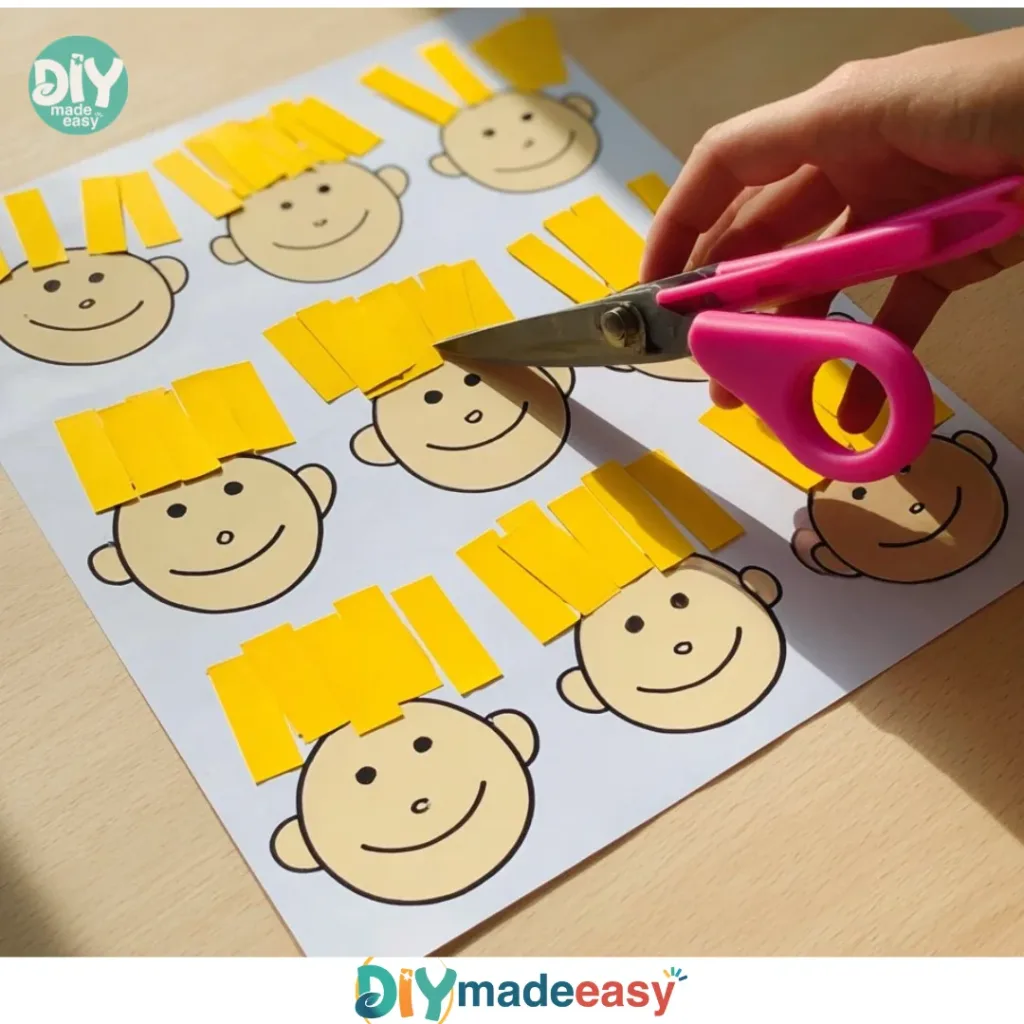
A rainy afternoon, snack time running late, and a child asking for something to do now turned into a small, lively math moment at my kitchen table. I set up a quick Subtraction Haircut using Sticky Notes with a stack of colorful notes and a marker. In ten minutes we had counting fun, a little giggle when a “hair” went flying, and a fresh way to practice taking away that felt like play instead of work.
Why You’ll Love Making Subtraction Haircut using Sticky Notes
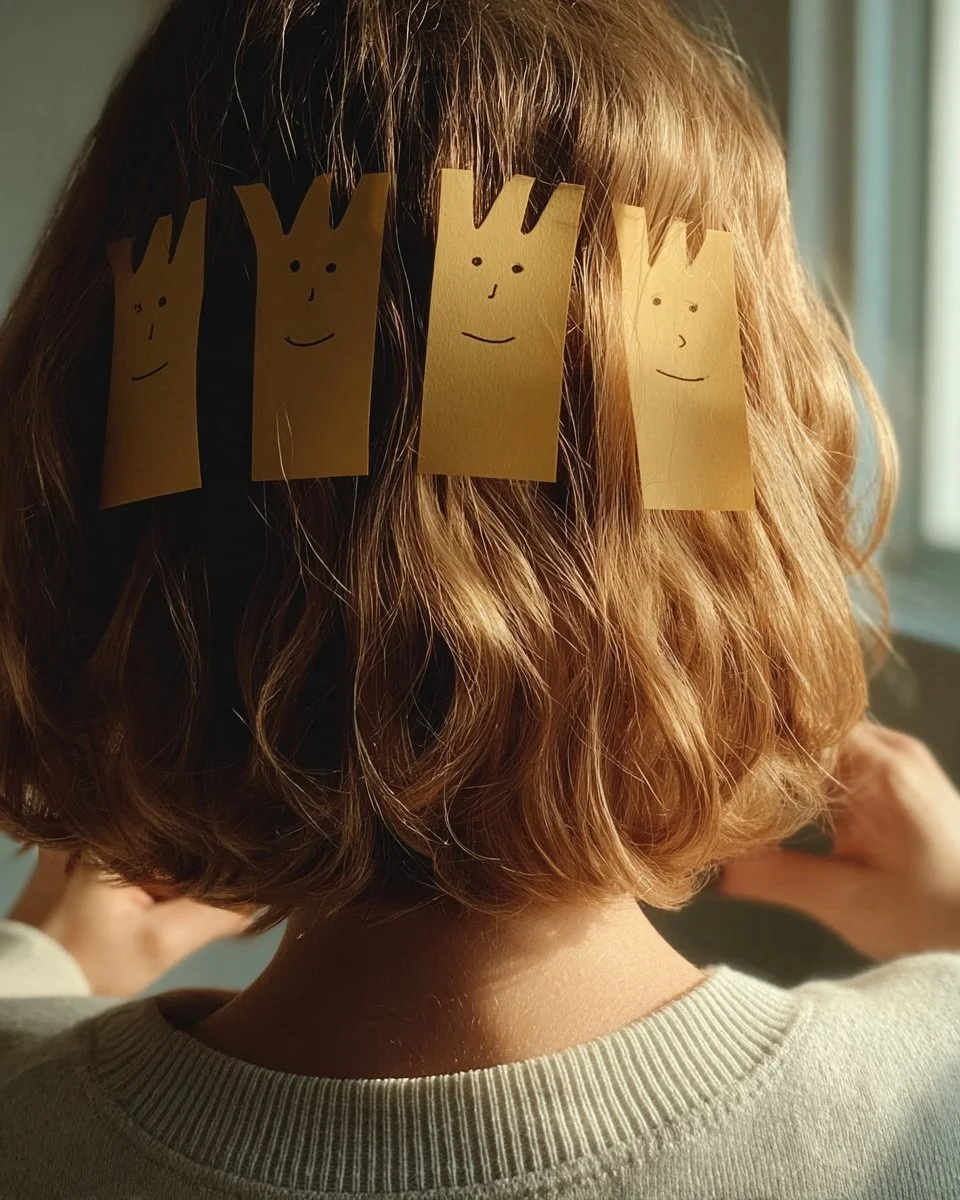
This activity works because it blends a simple prop with a clear goal. Sticky notes provide bold, visible pieces that children can move and feel. The “hairline” idea makes subtraction concrete and playful. You do not need special supplies or a big block of time. It fits between snack and screen time and still leaves the kitchen tidy.
It stays low-prep since the materials sit in most homes already. It stays approachable because the child sees the math happening in real time. It stays reliable because you can repeat rounds quickly and gradually change the difficulty. For busy days, this gives a short, focused moment that still teaches something useful.
A Quick Look Before You Begin
This game takes about five to ten minutes per round, depending on how chatty your child is. Set up on a flat surface or a placemat so notes do not slide. Mess is minimal. You only use sticky notes and a marker. An adult can sit nearby to guide counting or step away for independent play.
Plan for several quick rounds. Each round uses the same basic setup but you can change the starting number to make it harder. If you want, keep paper or index cards nearby to jot down equations. Cleanup takes seconds: peel the notes and stack them for reuse or recycle them.
Materials You’ll Need
Sticky notes, several colors or sizes
common household item; use bright colors for contrast
Marker or pen, easy to read and bold
write large numbers so kids can see them from across the table
Child-safe scissors (optional)
only if you want to trim notes or let kids practice safe cutting
Flat surface or placemat
keeps notes steady and creates a defined workspace
Paper or index cards for recording answers (optional)
optional for older kids who want to write equations or keep score
STEP-BY-STEP DIRECTIONS
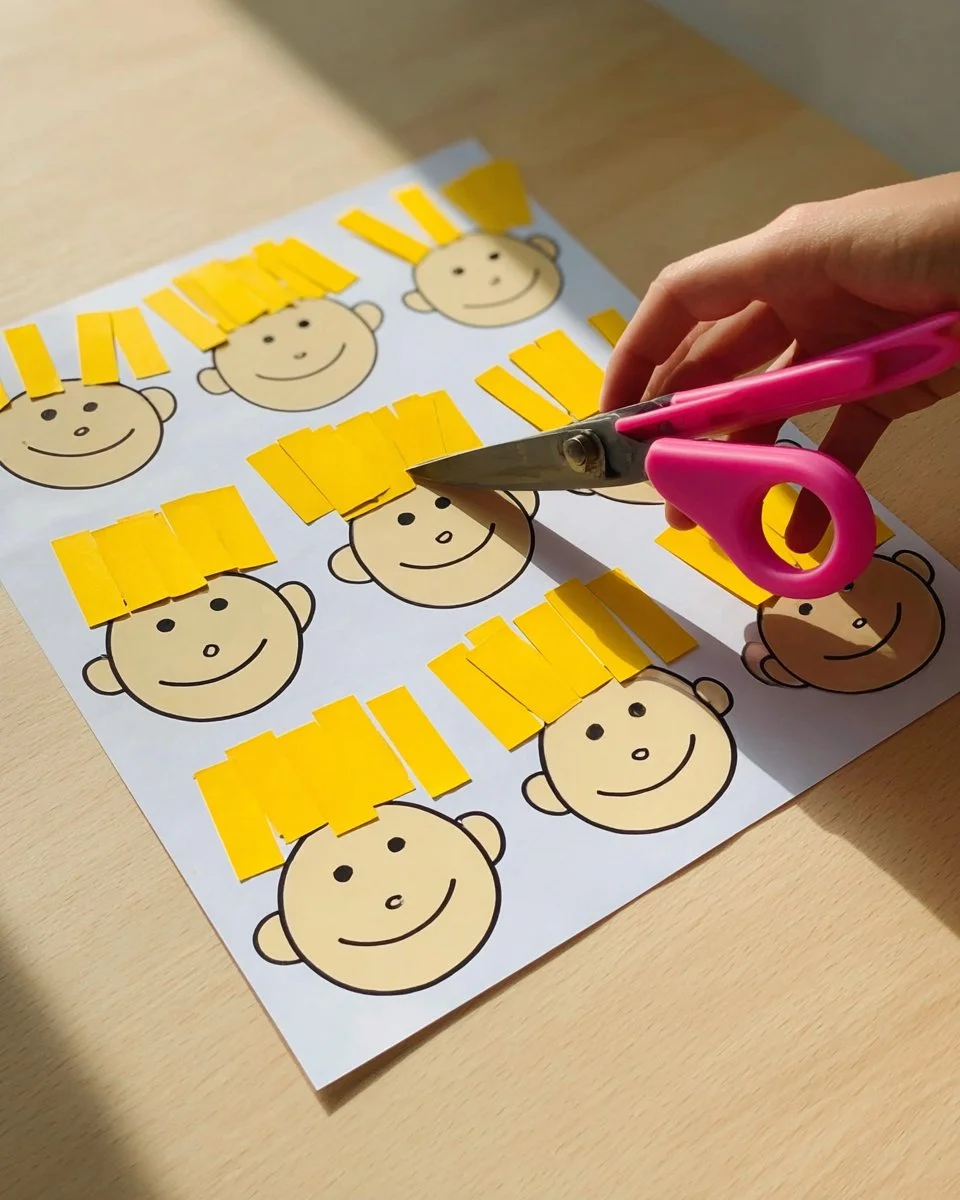
- Write a starting number on a sticky note and place it at the top as the ‘hairline.’ Make the number clear and large.
Choose a number that matches your child’s skill level and write it in thick marker.
Stick that note high on your placemat or table so it reads like the head’s hairline. - Stick a row of sticky notes below the hairline to act as ‘hair.’ Use a different color for hair.
Lay the hair notes close together so they look like a fringe under the hairline.
Use one color for the hair row and another for the hairline for quick visual contrast. - Ask the child to remove a certain number of hair notes to match a subtraction problem.
Say a subtraction sentence out loud, for example, “10 minus 3.”
Ask the child to peel off the correct number of hair notes from the row. - Have the child count the notes they remove and then count the notes left. Ask them to say the subtraction sentence out loud.
Count removed pieces slowly and then count the remaining hair together.
Encourage the child to say “10 minus 3 equals 7” so they connect action with words. - Replace the hair notes or change the starting number for a new round.
Either stick the same notes back in place or switch colors to reset the scene.
If the child wants a challenge, pick a larger starting number for the next round. - If a mistake happens, pause and show how to add the notes back or swap them out.
Gently model how to press a note back onto the surface or trade one note for another.
Treat mistakes as part of play; explain calmly how undoing an action changes the math. - End the game with a review: count total hair removed and total hair left, celebrating small wins.
Wrap up by counting how many notes were removed across rounds and how many stayed.
Give a cheer for correct answers and a nod for effort to keep the experience positive.
Discover Easy Kids Activities
Looking for simple, fun ideas for kids? Explore our Low Prep Kids Activities and find quick projects that spark creativity without long prep time.
The Learning Behind This DIY
Kids practice number sense and basic subtraction while they play with notes. The activity makes the abstract idea of taking away into a visible, tactile moment. When a child peels off notes, they see the quantity drop. That visual feedback links the spoken subtraction sentence to the physical result.
Fine motor skills improve too. Removing sticky notes requires controlled fingers and steady hands. Older preschoolers and early elementary kids get practice with one-to-one counting and short term memory as they track removed notes. The repetition builds confidence. You can increase complexity by changing starting numbers or by asking the child to remove the notes in groups, which supports early place value skills.
Troubleshooting Common Issues
If the sticky notes keep sliding, your surface might be too slick. Move to a placemat or a slightly textured table. Press each note firmly when you place it so it sticks better. If a note rips, don’t throw it away right away. Smooth the tear and use it as a practice piece for adding notes back during a mistake.
If your child peels too many at once, slow the pace. Count out loud with them and place a hand over the row to steady it. If a child loses interest, switch colors or use a silly voice for the subtraction sentences. If numbers feel too hard, lower the starting number or let them remove one note at a time until confidence grows.
Easy Variations to Try
Try odd and even haircuts: ask the child to remove only odd-numbered notes or only even ones, which practices number patterns.
Make a timed round: set a short timer and see how many subtraction problems the child can solve correctly in a few minutes to add gentle excitement.
Use two rows of hair in different colors and subtract from one row, then compare which row has more left for a visual comparison activity.
Turn it into story play: the hair belongs to a stuffed animal, and each haircut tells a story about where the hair goes, building language alongside math.
Storing or Reusing This Project
Keep sticky notes together in a small tray or a zipper pouch so you can pull them out quickly next time. If notes lose stickiness, press used notes together sticky-to-sticky to refresh the adhesive for a short time. For longer reuse, move notes to a paper backing between sessions. Recycle notes after a few uses to reduce waste.
Paper or index cards that record answers can store several rounds of equations. Hole punch a stack and keep them on a ring for a little subtraction notebook. Child-safe scissors and any scraps can go in a small craft box for future projects.
FAQs About Subtraction Haircut using Sticky Notes
What if I am worried about the mess or notes sticking to clothes?
I have done this activity on the couch and at the table, and mess stays tiny. The main issue is notes landing on clothing once in a while. I tell kids to keep the game on the placemat and to check pockets and sleeves at the end. If a note sticks to fabric, gently peel it off; it usually comes off clean. A quick damp cloth will remove any faint marker smudges.
Is this okay for younger kids, or should I wait until they are older?
I use this with preschoolers all the way to early elementary. For younger kids, keep numbers small and sit with them for counting. For older kids, raise the starting number and ask them to do subtraction in steps. Supervision matters only for scissors and for gentle guidance with counting. The activity scales easily so you can match your child’s current level.
Can I swap materials if I do not have sticky notes in many colors?
Sticky notes are the point of the activity, but if you only have one color, you can still play. Use a contrasting hairline note in darker marker so it stands out. You can also cut plain paper into small squares and use a little tape, but that does add a tiny step. Sticky notes keep the setup fast and clean, which is why we recommend them as the main item.
How long does it usually take to see progress?
You will see small improvements in a few sessions. Kids usually start noticing that removing three from five leaves two after just a couple of rounds. The real change happens when you repeat this in short bursts over days. Expect little wins first and steady improvement after a week or two of short practice.
What about safety with scissors or small kids?
Use child-safe scissors and supervise any cutting. You do not need scissors for the basic game. I only bring scissors out when a child wants to trim notes for a special effect and I stay close. If you worry about small pieces, keep the area clear of toddlers and pets during the game.
A Final Helpful Note
Start simple and follow your child’s pace. The goal is confidence and curiosity, not a perfect score. Celebrate attempts as much as correct answers. If a round goes sideways, take a breath and show how to add notes back. Kids notice calmness and copy it. This activity fits into busy afternoons easily and gives you a predictable, short window of hands-on learning.
Conclusion
If you want more sticky note math ideas that use the same playful approach, this collection gives similar quick games you can try at home: Easy Sticky Notes Ice Cream Math Activities for Kids – Happy Tot Shelf. For a sense of how schools sometimes include simple math practice in supply lists and summer work, take a look at this sample school resource: Summer 2023 – Saint Denis-Saint Columba School.
You can pull this project together in minutes, use what you have, and repeat it tomorrow with a new number. Keep your voice light, count together, and reward effort. Subtraction Haircut using Sticky Notes stays fun, focused, and genuinely helpful.
PrintSubtraction Haircut using Sticky Notes
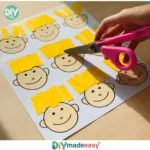
A fun and interactive way to teach children subtraction using sticky notes.
- Prep Time: 10 minutes
- Cook Time: 0 minutes
- Total Time: 10 minutes
- Yield: 1 game session
- Category: Educational Activity
- Method: Hands-on Learning
- Cuisine: N/A
- Diet: N/A
Ingredients
- Sticky notes, several colors or sizes
- Marker or pen, easy to read and bold
- Child-safe scissors (optional)
- Flat surface or placemat
- Paper or index cards for recording answers (optional)
Instructions
- Write a starting number on a sticky note and place it at the top as the ‘hairline’.
- Stick a row of sticky notes below the hairline to act as ‘hair’.
- Ask the child to remove a certain number of hair notes to match a subtraction problem.
- Have the child count the notes they remove and then count the notes left.
- Replace the hair notes or change the starting number for a new round.
- If a mistake happens, pause and show how to add the notes back or swap them out.
- End the game with a review: count total hair removed and total hair left, celebrating small wins.
Notes
This activity stays low-prep and is engaging, making math feel like a game.
Nutrition
- Serving Size: 1 session
- Calories: 0
- Sugar: 0g
- Sodium: 0mg
- Fat: 0g
- Saturated Fat: 0g
- Unsaturated Fat: 0g
- Trans Fat: 0g
- Carbohydrates: 0g
- Fiber: 0g
- Protein: 0g
- Cholesterol: 0mg