

A busy afternoon, the kettle still warm, and three kids at the table asking for something fun right now—that is how this idea began. I pulled together a few simple cupboards items and a paper towel, set out a tray, and we turned a last-minute quiet hour into Exciting Valentine’s Day Science Activities for Elementary Kids ❤️🔬. The experiments took less than an hour, used things I already had, and the kids made tiny messes but big smiles. If you like low-prep kitchen science, you might also enjoy our colorful light-and-shadow play, which uses similar ideas and household supplies like these creative science and craft projects to stretch your supplies further.
Why This Exciting Valentine’s Day Science Activities for Elementary Kids ❤️🔬 Works So Well
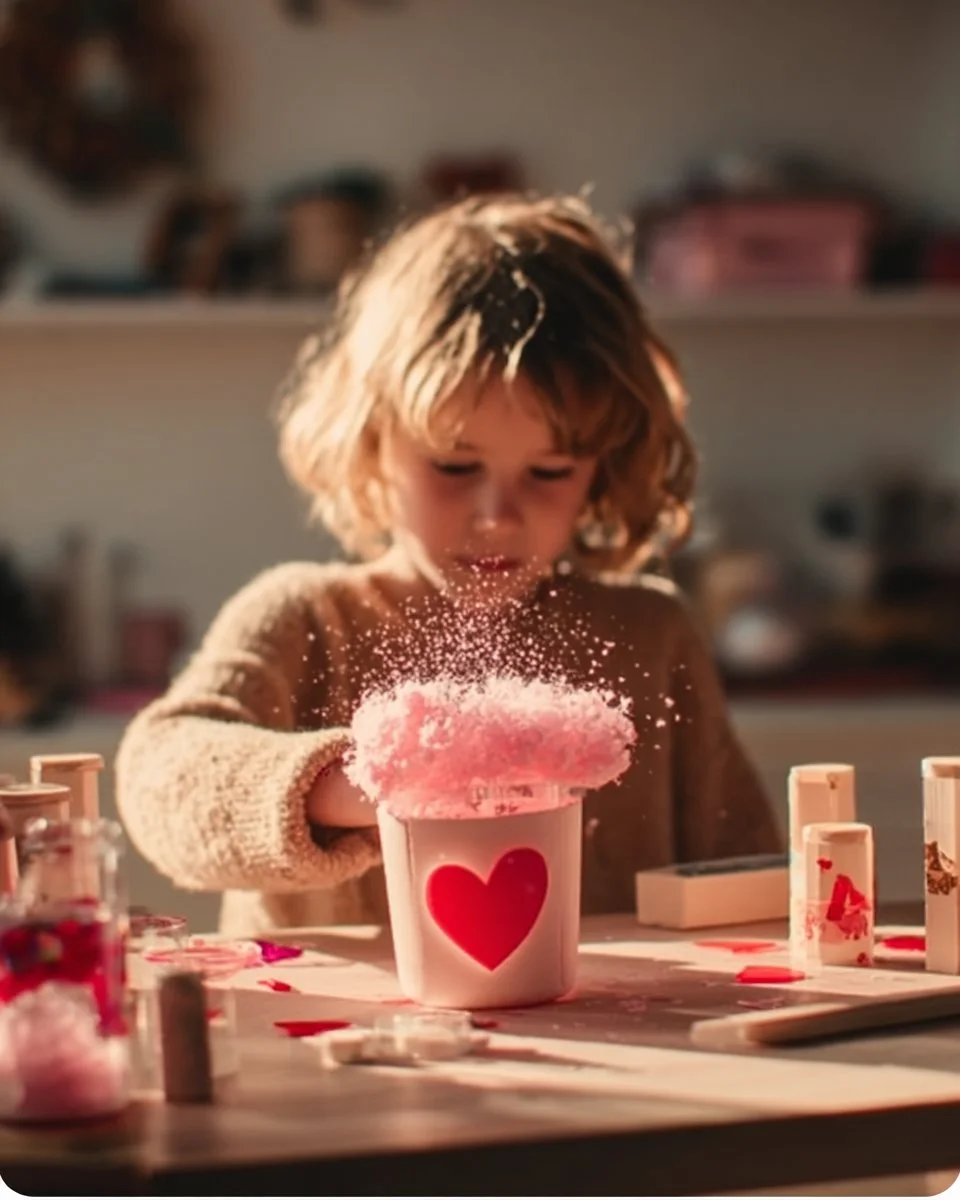
These activities work because they use things you already have. You do not need special tools or a long prep time. That keeps the whole project approachable when schedules are tight.
Kids get fast feedback. Baking soda fizzes up nearly instantly. Colors spread across milk in a swirl the moment soap touches the surface. Those wins keep interest high and make adults feel good about the timing.
Cleanup stays reasonable. Lay down a tray or a towel and you will catch most spills. A quick wipe with warm soapy water usually does the trick. That makes it easy to fit into an afternoon or after-dinner plan.
Finally, these ideas work for different ages. Younger kids can watch and point while older kids can measure and predict. The same simple setup supports different kinds of play and learning without extra prep.
A Quick Look Before You Begin
These projects take about 20 to 45 minutes total, depending on how many experiments you try and how much free play you allow afterward.
Set up at a kitchen table or on a tray. Wear old shirts or aprons if you want to avoid stains. Keep paper towels and a small bowl of water nearby for quick cleanup.
Mess level is low to medium. The fizzy experiment can splash, and food coloring will stain porous surfaces, so use a protected space. Most items rinse away easily from plastic and ceramic.
Plan on light adult involvement. An adult should handle liquids like vinegar, help with measuring, and stay nearby to guide safe cleanup. Kids can do pouring, stirring, and decorating with confidence.
Materials You’ll Need
Baking soda — common household item
White vinegar — common household item
Small plastic cups or ramekins — easy substitute: yogurt cups
Food coloring — food-safe color drops
Liquid dish soap — common household item
Whole milk — not skim; works best
Cotton swabs — easy substitute: toothpicks
Pipe cleaners or straws — optional for stirring or making hearts
Glue (white school glue) — for salt painting
Table salt — common household item
Construction paper or cardstock — budget-friendly
A tray or large sheet of paper towel — for easy cleanup
Step-by-Step Directions
- Set up your workspace by placing a tray and paper towels on the table.
Place the small cups in a row and pour a thin layer of baking soda into the bottom of each one.
Keep vinegar in a larger container for easy pouring and control. - Add food coloring drops to each baking soda cup.
Use one or two drops per cup and mix gently with a cotton swab.
This gives each fizz a clear color and makes the reaction more fun to watch. - Pour a small amount of vinegar into the first colored baking soda cup.
Pour slowly and stand back; the fizz will bubble up quickly and may overflow a bit.
If it overflows, dab gently with a paper towel and continue with the next cup. - For the milk and color experiment, pour a shallow layer of whole milk into a wide dish.
Add a few drops of different food colors, spaced apart, across the milk surface.
Keep the drops visible and do not stir them. - Dip a cotton swab into liquid dish soap and then touch it to the center of one food color drop.
Watch as the colors explode outward in little swirls and shapes.
You can repeat with fresh swabs and new positions to see different patterns. - To make salt paintings, draw a simple heart or shape with white glue on cardstock.
Sprinkle table salt over the glue while it is still wet and shake off the excess.
You should see a raised, grainy outline of the shape from the salt. - Use a dropper or spoon to place tiny food color drops onto the salted glue.
Watch as the color spreads along the salt lines and creates a watercolor effect.
Add more color slowly to avoid oversaturating the paper. - Turn pipe cleaners or straws into heart shapes for a hands-on twist.
Kids can dip these into colored mixtures and stamp them onto paper, or use them to gently stir small cups.
This simple crafting step keeps hands busy and helps develop grip skills. - Encourage kids to predict what will happen before pouring or touching.
Ask which color will move fastest or which cup will fizz highest.
This small talk builds observation skills and makes the activity more intentional. - When experiments finish, rinse cups and tools in warm water and soap.
Wipe the table and dispose of used paper towels.
If food coloring stuck to hands, a little dish soap and warm water usually removes it. - Save any art pieces to dry on a flat surface.
Salt paintings will dry solid in a few hours and keep as simple holiday art.
Fizzy cups and used milk should be emptied and rinsed immediately to avoid lingering smells. - Reflect with the kids about what they noticed and what surprised them.
Take a photo of your favorite fizz or swirl and add the artwork to the fridge or a classroom card.
Small celebrations help kids feel proud of their experiments.
The Simple Science or Skills at Work
These activities combine chemistry and surface tension in ways kids can see right away.
Baking soda and vinegar create carbon dioxide gas when they mix. The gas forms bubbles that push liquid up and out, which is the fizz kids love. That is why you see quick height and motion when vinegar meets baking soda.
Milk and dish soap show surface tension changes. The soap breaks the surface tension of milk so the colored drops spread outward. Whole milk works best because its fat helps the colors move more dramatically.
Salt paintings use capillary action. The salt soaks up water and pulls color along the glue lines slowly. That makes pretty, predictable spreads that look like watercolor.
Besides science, these projects build fine motor skills. Kids practice pouring, squeezing droppers, and placing drops carefully. They learn cause and effect too: they see that adding a little soap makes a big visual change.
Troubleshooting Common Issues
If the fizz is too small, check your baking soda amount and pour the vinegar faster.
A slow pour can give a smaller reaction because gas escapes steadily instead of building.
Try a larger, more sudden pour but stand back so nothing splashes.
If food coloring stains the table, blot immediately with a wet paper towel.
Use a mild dish soap and warm water to scrub any leftover marks.
For fabric stains, treat quickly with laundry soap before they set.
If colors do not move in the milk, switch to whole milk instead of skim.
Fat in the milk helps the soap interact and move the pigments.
Also make sure the soap touches the surface directly; a dab on a swab works best.
If salt painting colors run too much, use fewer drops and let each one spread fully before adding the next.
Work slowly so the salt can absorb the water.
If the paper buckles, use heavier cardstock or let the glue dry under a book flat.
Easy Variations to Try
Try fizzy heart volcanoes by shaping balls of baking soda into paper cupcake liners.
Drop in colored vinegar and watch a rainbow of fizz.
This makes a bigger display and is great for older kids who like dramatic effects.
Turn milk swirls into cards by placing a piece of paper gently on the milk surface after the colors move.
Lift carefully and blot the back; you get a marbled pattern perfect for homemade Valentine cards.
This step needs gentle hands and clear instructions.
Use cookie cutters and glue to make shaped salt paintings.
Pipe glue into a cutter and sprinkle salt in the shape, then add color drops.
This creates cleaner shapes for younger kids to decorate.
Add a scent by using vanilla or citrus extract in place of part of the vinegar for a milder smell.
Use only small amounts and be cautious with strong fragrances around young children.
Scale experiments up for a group by setting stations with one activity each.
Rotate kids every 10 minutes so everyone tries each experiment.
This works well for small classroom parties or a family gathering.
Storing or Reusing This Project
Rinse and reuse plastic cups, droppers, and spoons right away.
Leftover baking soda and salt are fine to save in a sealed container for future activities.
Label the container so kids know it is for science play, not for cooking.
Salt paintings store well flat in a dry place.
Keep them under a book or in a folder to prevent bending.
They make inexpensive cards or framed keepsakes after drying.
Collect leftover food coloring bottles and store in a small bin for crafts.
A little goes a long way, and having a dedicated spot makes setup even faster next time.
Compost any paper towels used for cleanups if they contain only food-safe mess.
Rinse plastic tools before putting them in a dish rack.
Quick cleanup encourages you to try these ideas again without dread.
FAQs About Exciting Valentine’s Day Science Activities for Elementary Kids ❤️🔬
Will these experiments stain clothes or carpets?
They can. Food coloring will stain porous fabrics and some surfaces. I always have kids wear old shirts or aprons and place a tray or towel under the work area. If a spill happens, blot immediately with cold water and treat with laundry soap. Being prepared with a quick cleanup plan keeps stress low and lets kids explore without fear.
Are these activities safe for younger kids?
They work best with adult supervision. The materials are common household items, but vinegar and food coloring should not be ingested. Keep small children from putting droppers or swabs in their mouths and stay close during the steps that use pouring or smaller tools. You can adapt by having an adult pour while little ones make predictions and watch.
Can I swap ingredients if I do not have something?
You can, but be realistic. Whole milk gives better results than skim in the milk experiment. If you do not have milk, try a shallow dish of diluted cream or even a plain soap-and-water test for surface tension, but expect different effects. For fizz, baking soda and vinegar are the reliable pair; substitutes do not react the same way.
How long do the projects take and can I run multiple stations?
Each experiment takes about 5 to 15 minutes. If you plan stations, let kids rotate in 10-minute blocks. That keeps interest high and reduces crowding. Plan a little buffer time for cleanup between stations so the next group starts fresh.
What if the fizz overflows or the experiment gets messy?
That happens and it is okay. Stand back, dab with a paper towel, and explain to kids why the gas made bubbles rise. A small overflow gives a strong teaching moment. Keep cleanup supplies nearby to make this feel like a normal part of the process rather than a setback.
A Final Helpful Note
Start small and plan for a short window of active play followed by cleanup.
That keeps energy steady and prevents fatigue or frustration.
Celebrate small discoveries and take photos of your favorite moments so kids feel proud.
These experiments are meant to be fun, flexible, and repeatable.
Conclusion
If you want more ideas that blend simple supplies with playful learning, check this local school’s creative classroom updates at Carmichael Elementary School for inspiration on how teachers set up quick science moments. For more Valentine-themed craft and science ideas you can try at home, see this roundup of seasonal activities at Fun Valentine’s Day Activities and Crafts for Kids.
PrintExciting Valentine’s Day Science Activities for Elementary Kids

Engage children with fun and quick science experiments using common household items that lead to big smiles.
- Prep Time: 15 minutes
- Cook Time: 30 minutes
- Total Time: 45 minutes
- Yield: 4 servings
- Category: Science Activities
- Method: Experimentation
- Cuisine: N/A
- Diet: N/A
Ingredients
- Baking soda
- White vinegar
- Small plastic cups or ramekins
- Food coloring
- Liquid dish soap
- Whole milk
- Cotton swabs
- Pipe cleaners or straws
- White school glue
- Table salt
- Construction paper or cardstock
- A tray or large sheet of paper towels
Instructions
- Set up your workspace by placing a tray and paper towels on the table.
- Place the small cups in a row and pour a thin layer of baking soda into the bottom of each one.
- Add food coloring drops to each baking soda cup and mix gently with a cotton swab.
- Pour a small amount of vinegar into the first colored baking soda cup and stand back to observe the fizz.
- For the milk and color experiment, pour a shallow layer of whole milk into a wide dish and add drops of food colors spaced apart.
- Dip a cotton swab into liquid dish soap and touch it to the center of one food color drop to watch the colors spread.
- To make salt paintings, draw a shape with white glue on cardstock, sprinkle salt, and then add food color drops.
- Encourage kids to predict outcomes before experimenting.
- When finished, rinse cups and tools in warm soapy water, and clean the workspace.
- Reflect with the kids about their discoveries.
Notes
Wear old shirts or aprons to avoid stains. Cleanup is easy with warm soapy water for spills.
Nutrition
- Serving Size: 1 serving
- Calories: 0
- Sugar: 0g
- Sodium: 0mg
- Fat: 0g
- Saturated Fat: 0g
- Unsaturated Fat: 0g
- Trans Fat: 0g
- Carbohydrates: 0g
- Fiber: 0g
- Protein: 0g
- Cholesterol: 0mg